
America’s affordable housing crisis is well documented. We’re currently short millions of homes, and the number doesn’t seem to be going down.
The problem is more complicated, but more solvable, than it appears. Factory-built housing—such as manufactured and mobile homes—has helped fill the gap for decades, and the capacity to build substantially more already exists.
Now, new products are entering the market. Galiano Tiramani, co-founder and CEO of modular home manufacturer BOXABL, is spearheading the effort to produce their own model of affordable housing at scale.
But as you’re about to hear, the greatest obstacle isn’t manufacturing, construction, supply, or even shipping. The real constraint is regulatory. Zoning restrictions, entitlement delays, and density limitations continue to determine where—and how—homes can be built.
Unless these outdated policies evolve, we’ll be discussing the same housing shortage five, 10, or even 20 years from now.
The technology exists, the capacity exists, and the demand is undeniable. The future of affordable housing is here; now we need to make room for it.
Insights from today’s episode:
- The state of affordable housing in 2026 (and why it’s still an issue)
- Why innovation alone won’t solve the affordable housing crisis
- The model BOXABL is using to bring mass-produced modular homes to the market
- The different types of factory-built housing solutions (and how they work)
- How regulatory constraints have created an affordable housing bottleneck
—
Connect with Galiano on LinkedIn
Recommended Resources:
- If you’re a high-net-worth investor with capital to deploy in the next 12 months and you want to build passive income and wealth with a trusted partner, click here for opportunities to invest in real estate projects alongside Kevin and his team.
- Accredited Investors, you’re invited to Join the Cash Flow Investor Club to learn how you can partner with Kevin Bupp on current and upcoming opportunities to create passive cash flow and build wealth. Join the Club!
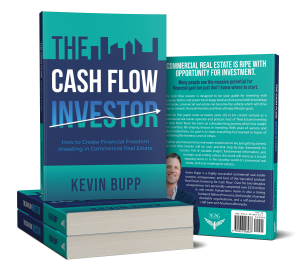
- Looking for the ultimate guide to passive investing? Grab a copy of my latest book, The Cash Flow Investor at KevinBupp.com.
- Tap into a wealth of free information on Commercial Real Estate Investing by listening to past podcast episodes at KevinBupp.com/Podcast.
Disclaimer: This podcast is for educational purposes only and does not constitute financial, tax, or legal advice. Consult with a qualified professional before making any investment decisions.
Chapters:
00:00 Intro
01:13 Building BOXABL
03:02 How Modular Homes Work
04:27 The Factory-Built “Umbrella”
10:42 Huge Regulatory Challenges
18:13 Production Is Ramping Up
19:49 The Future of Factory-Built Housing
Episode Transcript
Episode Summary
This episode examines the structural mechanics of America’s affordable housing shortage, contrasting emerging modular housing technologies with established manufactured housing models. Featuring BOXABL co-founder and CEO Galiano Tiramani alongside host Kevin Bupp, the discussion centers on factory-built construction principles, operational scale, and the fundamental economic bottlenecks facing modern housing development. While technological innovations like BOXABL’s standardized, foldable room modules streamline production, lower transport costs, and optimize assembly line efficiencies, physical manufacturing remains only a fraction of the total development pipeline.
The core thesis highlights that manufacturing capabilities are not the primary constraint on affordable housing delivery; rather, regulatory frameworks represent the true bottleneck. Outdated zoning ordinances, entitlement delays, density restrictions, and local land-use policies significantly limit housing volume regardless of construction speed. Furthermore, the discussion distinguishes between HUD-code manufactured housing, modular construction, and accessory dwelling units (ADUs), emphasizing how regulatory classifications dictate capital deployment, financing structures, permitting speed, and underwriting criteria. To achieve repeatable financial returns and meaningful unit density, real estate investors and developers must evaluate whole-community infrastructure, site preparation economics, and municipal approval processes rather than focusing solely on unit innovation. Ultimately, scaling affordable residential real estate requires policy modernization alongside factory-floor execution.
Key Takeaways
- Factory-built housing addresses construction speed and unit costs, but municipal zoning and land entitlement remain the primary constraints on delivery scale.
- Structural classification differences between HUD-code manufactured housing and modular systems directly impact project financing, permitting timelines, appraisals, and investor underwriting.
- Standardized manufacturing and foldable design reduce shipping costs by eliminating wide-load escort requirements, enabling centralized production for regional distribution.
- Real estate development risks extend beyond physical construction to include site infrastructure, utility connections, local inspections, and extended sales-to-installation timelines.
- Long-term affordable housing scalability depends on community-level execution, professional asset management, and operating systems rather than isolated unit technology.
Key Topics Covered
- Modular vs. Manufactured Housing Classifications
- Factory Assembly Line Principles in Construction
- Municipal Zoning, Entitlements, and Regulatory Bottlenecks
- BOXABL Folding Technology and Shipping Logistics
- Accessory Dwelling Units (ADUs) and Workforce Housing
- Community Infrastructure and Site Development Economics
- Long-Term Asset Management in Manufactured Housing
- Real Estate Investment Underwriting and Financing Considerations
Episode Chapters
00:00 Intro
Kevin Bupp introduces the episode, framing the broader economic debate surrounding factory-built housing, technology startups, and the long-standing infrastructure of affordable real estate.
01:13 Building BOXABL
Galiano Tiramani details the founding vision of BOXABL, applying high-volume automotive assembly line principles to residential housing construction.
03:02 How Modular Homes Work
Galiano Tiramani explains BOXABL’s core folding design, standard legal-load shipping capabilities, and mass-produced standardized room modules.
04:27 The Factory-Built “Umbrella”
Kevin Bupp defines the primary legal and structural distinctions between HUD-code manufactured homes, state-coded modular homes, site-built ADUs, and alternative housing formats.
10:42 Huge Regulatory Challenges
Galiano Tiramani outlines the regulatory, permitting, and state-level approval hurdles encountered when transitioning from military contracts to consumer residential markets.
18:13 Production Is Ramping Up
Galiano Tiramani reviews current manufacturing output, factory capacity in Las Vegas, customer sales funnels, and site preparation timelines.
19:49 The Future of Factory-Built Housing
Kevin Bupp synthesizes the role of innovative factory housing alongside traditional manufactured housing communities to address systemic supply shortages.
Full Transcript
[Transcript begins]
Kevin Bupp: Welcome back to the Real Estate Investing for Cashflow podcast. I’m your host, Kevin Bupp. And today’s episode, it’s a little different than what we originally had planned. A few weeks back, I had the opportunity to sit down with Galliano Tiramani, who is the co-founder of Boxable. I’m sure you’ve heard of it. It’s been all over the media and the news as of recent. And if you’ve spent any time following innovation in the housing industry, chances are that you’ve probably have heard of Boxman. You’ve seen a news report, probably a posting of social media feed, something of that nature, you’re probably familiar with the name. They’ve been over the years to generate tremendous amount of attention with their factory built housing concept. And their mission is to help solve America’s affordable housing crisis. Galliano is clearly passionate about what they’re building. And I generally enjoyed hearing about their vision for the future of housing. But after we finished recording, something really stuck with me. The more I reflected on our conversation, the more I realized that the most interesting part wasn’t necessarily Boxful itself. It was the bigger question that their company raises. You know, are we actually witnessing the future of affordable housing? Are we just simply rediscovering a solution that’s been sitting right in front of us for decades? So I think you’re going to find the conversation incredibly valuable. So let’s go ahead and jump in. Probably the bigger question, what I’m hoping to extract here today isn’t whether, you know, whether Boxful is interesting because it’s incredibly interesting. I mean, it’s a very compelling story and excited to unpack it here today. But it’s what I really like to dive into is whether or not, it actually changes the economics of real estate development, you know, as we know it today. And so, you know, where does it pencil? Where does it break? And, you know, you guys have been around for a number of years now, but before Boxville became, you know, somewhat of a household name, right? Even if they don’t know exactly what it is, they’ve heard of it. They’ve heard of it at this point in time. What was it that you and your father saw that made you believe that housing really needed to be changed? It needed to be manufactured differently. What was the vision way back when?
Galliano Tiramani: Yeah, thank you. And just to start off, I’ll say, you know, we’re trying to set up basically the largest mass production of housing ever done. So when I look at it, I look at the way automobiles are built. If anyone’s ever seen video of a Tesla or a Ford factory, it’s amazing. Massive assembly line. They’re putting out one car every minute. There’s automation and robotics and all this crazy stuff. They’re getting the fastest, best quality, lowest cost. And that’s what we’re trying to, those principles are what we’re trying to apply to housing. But yeah. Yeah, we actually got started. Paolo had the idea to fold the house up, which was the initial innovation. And that’s what allows us to actually ship these things. And because we can ship them cost effectively, we can have a big factory. That’s what most other guys can’t do. And he built a house using traditional modular construction. And he just kind of learned about it, learned about the issues with it. and thought, you know, there’s got to be a better way than this. And then we started down the path of Boxable with the idea and the first website and then eventually the first prototype. And now we have this 400,000 square feet of manufacturing space in Las Vegas.
Kevin Bupp: Aside from it being foldable, is a factory, is there a significant difference between how you guys do things, you know, minus the foldable aspect to that of maybe how a traditional modular or even a manufactured home is built within a factory?
Galliano Tiramani: Certainly what we’re doing is not a manufactured home, so like a HUD mobile home. It’s kind of like a separate product category with a smaller market, obviously trailer park house stuff. But what we’re doing is modular house, so same code as any regular residential built house, but done in a factory. And as I mentioned, the first thing we did was we solved that shipping issue. So we’re able to ship these units. not as a wide load as a standard legal load without having an escort vehicle. That makes it actually cost-effective, but we’re still finishing everything in the factory. So kitchen, bathroom, plumbing, windows, all that stuff, everything we can do in the factory is done. Then the next thing beyond that is we actually have a system of room modules. Let’s say we have three sizes of rooms, and we mass-produced those in our factory with a lot of standardization. And then you connect those rooms together on site and give them a different clouding or architectural style to meet most of the needs of the market. So we are… engineering everything to fit into an assembly line so that it works for the factory principles.
Kevin Bupp: That’s why you’re seeing so much attention focused on alternative housing solutions. You know, we’ve got tiny homes that are coming out of the woodwork. That didn’t even exist 10 years ago. You’ve got ADUs or accessory dwelling units that are being plopped in people’s backyards. You’ve got prehab housing. You’ve got modular housing. panelized construction. Now we’re talking about even 3D printed homes, right? Like who would have thought we were in a world where 3D, you know, a 3D printer would be literally printing homes that potentially will be living at some point in time. And then you’ve got companies like Boxable. You know, everybody is looking for a faster, cheaper, and more efficient way to build housing because again, we talked about the need. It’s real. It’s here. The demand is real. The affordability problem is very real. In fact, you know, Recent industry data shows that manufactured housing shipments have hovered around just over 100,000 homes annually over the past couple of years. While that may sound like a large number, it really only represents only a small percentage of all new housing starts across the country. Think about that for a minute. You know, one of the most affordable forms of homeownership available in America represents only a fraction of new housing production. Now, that should immediately raise a question. You might ask why. Well, if we all agree that affordability is one of the nation’s biggest challenges, then why aren’t we building substantially more affordable housing? That’s a question that we should all be asking. And honestly, I think we are. I just don’t think that There’s a solution in place today or the solution is there and we’re going to get into that. But ultimately, it’s not being recognized. One of the biggest misconceptions that I encounter, whether I’m speaking at conferences or talking with investors, is that manufacturer housing is somehow a new idea. You know, it’s something that only a lot of folks have been hearing about for maybe the past decade or so. But it’s not. Manufactured housing has been built inside factories for multiple decades now. Long before companies like Boxville entered the conversation, manufacturers were building high-quality homes inside climate-controlled facilities using assembly line processes that dramatically reduce waste, improve efficiency, and lower overall cost. Sound familiar? Because that’s essentially the same manufacturing philosophy many of today’s housing startups are promoting. You know, the difference is that manufactured housing has already proven that it works. Now, let’s clear up some terminology. When someone says mobile home, they’re usually referring to any type of factory built home. And, you know, technically speaking, that’s incorrect. A true mobile home is a home built before June 15th of 1976. And, you know, why does that date matter? Because that’s when the federal government adopted what’s known as the HUD code. Now let’s compare that to modular housing. Again, modular homes are also built inside factories. The difference is that they generally are constructed to state or local residential building codes rather than that of the federal HUD code. The modules are then transported separately to a site and assembled on permanent foundations. From the finished product, many modular homes are virtually indistinguishable from traditional site-built homes. And then you have ADUs, or accessory dwelling units. Again, this is something that’s fairly new over the last decade. Those are simply smaller secondary homes located on an existing property. An ADU could actually be stick-built. It could be modular, manufactured, or another factory-built format, depending on local regulations. The point to all this is that factory-built housing isn’t a single product category. It’s very much an umbrella. Manufacturer housing sits underneath that umbrella. Modular housing also sits underneath that same umbrella. Panelized construction, prehab systems, ADUs, and companies like Boxpool all occupy different places within that broader factory-built ecosystem. And so why does this distinction matter? It matters because financing changes, insurance changes, appraisals change, permitting changes, zoning changes, lender requirements change, investor underwriting changes. Even resale values can be affected depending on how a particular housing product is classified. And those aren’t minor details. They’re critical components of whether a housing concept actually works in the real world. And that’s something that we’ll come back to later in this episode. Now let’s shift the conversation from the home itself to something that’s even more important. the community. Because here’s what I think many people miss. Affordable housing isn’t simply about building a less expensive house. It’s about creating an entire housing ecosystem that actually works. Now over the last 15 years, again, my team at Sunrise Capital Investors, we’ve acquired manufactured housing communities throughout the country. We’ve invested significant capital improving infrastructure, updating roads, modernizing utilities, bringing in brand new homes, improving the management, enhancing the amenities for the community itself, and creating neighborhoods where people genuinely want to live. Now I’ve had the privilege of walking through countless communities and meeting families who never imagined that they could own a home. For many of them manufactured housing, it wasn’t their second choice. It was their opportunity. It gave them something that they may have never achieved through traditional housing, home ownership, a backyard for their children, a place to build equity, a stable neighborhood, predictable housing costs, a sense of pride. Because affordability isn’t just about the purchase price. It’s about sustainability. You know, can they build financial stability? Can they avoid becoming cost burdened every single month? manufactured housing often answers those questions remarkably well. But here’s what I think is even more important. The home itself isn’t the product. The community is. You know, roads have to be built. Utilities have to be installed. Water systems have to function. Sewer infrastructure has to be maintained. Management has to be in place. Rules have to be enforced fairly. Residents in a safe, well-maintained neighborhood. That’s the system. And that’s one of the reasons I believe that manufactured housing communities remain one of the most scalable, affordable housing solutions available today. And again, the system already exists. The operating model is already here. The financing ecosystem already exists. Manufacturers are already there building product. Lenders understand that product. Operators understand the product. And residents understand the product as well. Could it be improved? Absolutely. Should we continue innovating? Without question. But we shouldn’t overlook decades of proven success simply because something newer captures the headlines. Again, innovation is incredibly exciting. Execution, though, is what ultimately changes lives. And that’s where I think the conversation starts becoming really interesting. Let me, let me take it from a different angle here. I guess what, what did you, um, along this ride here, what did you under, uh, underestimate the most about, again, taking this great product, this great idea and now building it at scale? I mean, just things break. Obviously there’s challenges every day. You guys are like, you know, running with your hair on fire and, uh, and surely every day is a new day and with a new challenge associated with it. But, um, Maybe if you had to take a look back a couple years and then look to the present day, what did you underestimate the most? Maybe you can speak from your perspective, your followership perspective, maybe combined perspectives. But just what did you think and what was real today?
Galliano Tiramani: Yeah, I think the regulatory was harder than we anticipated and the manufacturing was actually easier than we anticipated. And, you know, it set us back a lot with the regulatory. And I think we got kind of lulled into a false sense of security day one because very early on, you know, we got this order from the military for over 100 houses. And that’s how we started the company. And they didn’t have any rules. They didn’t have any approvals. There was no building department. They just ordered a product and we made it and we shipped it. All good. Then when we went to actually sell this to regular residential real estate projects, we had a lot of pushback from regulators. We had a lot of time and money spent. getting approved. But I think we’ve overcome that hurdle now. And we do have a number of states approved. We do have a very large population out of the United States. So we can sell to big markets. Texas, we just got a week ago. And things are starting to roll now. Things are starting to move. People are getting more familiar with what we’re doing. And we’re kind of breaking through that. On the front end, that was harder. But on the back end, it’s actually easier because it’s So if you buy a house from us, you’re going to skip a lot of steps, certainly on the building of the house. And then regulatory, you’re not going to have that building department coming, visiting your job site multiple times. You’re not going to be, you know, scheduling that government bureaucrat to come and figure out, you know, if you did your electrical right, because that all that happens in our factory by a third party that we hired. And then also even the plans are approved kind of at the state level. in many cases. So that reduces the burden there when you’re applying for the project as well. So we do end up with a better situation on that front, you know, once we’ve done the work, which we have now on the factory side.
Kevin Bupp: One of the biggest lessons that I’ve learned over the last 20 plus years in commercial real estate is this. The building is really the most complicated part of the project. Whether we’re building a manufactured housing community, developing new lots, or even repositioning an existing asset, the physical structure is often just one component of a much larger system. So let’s assume for a moment that someone invents the perfect factory-built home. Again, it’s beautiful. It’s energy efficient. It’s affordable. It rolls off the production line really quickly. That’s all fantastic. But you’ve got to ask yourself this next question. Where is it going? Because before someone can move into that home, a tremendous amount of work has to happen. You need to land. That land needs to be appropriately zoned. Engineering plans, environmental studies, utility connections, again, water, sewer, electric, all those things, stormwater management. Got to put in roads. You got to put in driveways. Right. Got to get the permits approved. Got to have inspections. Again, lots of transportation logistics going into play here. You’ve got insurance, appraisals, property management, maintenance. And if you’re developing an entire neighborhood, multiply those challenges by hundreds of homes. This is something that newer companies entering into the housing space often discover rather quickly. Manufacturing is different. Real estate development is even harder. And during my conversation with Galliano, one of the comments that really stood out to me was his acknowledgement that manufacturing wasn’t necessarily the biggest obstacle. The biggest one has been everything that happens after the home leaves the factory. And honestly, I appreciate that because that’s exactly what we’ve experienced throughout our career. The housing isn’t the project. The development itself is the project. The neighborhood’s the project. The entitlement process, the infrastructure, the financing, all those things are the actual project. And if you solve manufacturing but don’t solve those other challenges, you haven’t solved affordable housing. You’ve simply built an affordable house. And those are two very different things. And that’s why I always encourage investors to think beyond the product itself, to Just don’t ask whether the home is innovative. Ask whether the entire business model is repeatable. Can it be financed? Can it be permitted? Can it be insured? Can municipalities understand and approve it quickly? And can developers actually make the economics work? Because if the answer to those questions is no, then even the best housing product will struggle to achieve meaningful scale. Now we arrive at what I believe is the single biggest obstacle staying in the way of affordable housing in America. And surprisingly, it’s not construction costs. It’s not about the labor shortages. It’s not the manufacturing technology. It’s regulation. Think about this for a moment. Almost every city in America will tell you that they have an affordable housing problem. City councils, they acknowledge the housing problem. Planning departments, they acknowledge it as well. State governments, they all talk about it. Yet many of those same communities make it extraordinarily difficult to build the very housing that they say they desperately need. We’ve seen it firsthand for many, many decades now. You can spend millions of dollars acquiring land, months putting together development plans, thousands of hours working with engineers, architects, attorneys and the like, only to find yourself spending another year or two navigating public hearings, zoning challenges, neighborhood opposition and political uncertainty. You know, sometimes projects are delayed. Sometimes they’re scaled back and sometimes they’re just denied altogether. In fact, I’d say that the denial piece is the biggest challenge. And unfortunately, manufactured housing communities often face even greater resistance. And why is that? It’s because that many people still picture manufactured housing through the lens of 50 years ago. They imagine deteriorating trailer parks in the 1960s and 70s, you know, the drug sex and rock and roll. And, you know, that’s not what modern manufactured housing looks like. Today’s manufactured homes are incredibly attractive. Again, they’re energy efficient, they’re professionally managed, and they’re located in communities that often rival traditional subdivisions in appearance and in quality. Yet those outdated perceptions continue to shape public policy. And again, that’s where I believe that we have an enormous opportunity as an industry. We need to continue educating municipalities. We need to show planners and elected officials and community leaders what modern manufactured housing actually looks like. Because… I’ve seen this firsthand. Once people visit well-operated manufactured housing communities, many of those old assumptions begin to disappear. People leave saying, you know, that’s not what I expected. And again, exactly. That’s that’s the whole point here. The stigma has lasted far beyond the reality. And and, you know, here’s the irony behind it all. We don’t have a shortage of companies capable of building affordable homes. We have a shortage of places where those homes are allowed to go. That’s an entirely different problem. And until we address zoning restrictions, entitlement delays, again, density limitations, and all these outdated regulations, we’re gonna continue having the same affordable housing conversation 10 years from now. Because the bottleneck isn’t the factory, the bottleneck is policy. We already know how to build affordable housing. What we haven’t yet figured out is how to make it politically easier to deliver it at the scale America desperately needs. What is your production look like today? And I guess maybe let’s just speak to the Casita model. I mean, how many units you guys putting out on an annual basis? Maybe what did you do in 2025 and then what’s the projection for the calendar year of 2026?
Galliano Tiramani: We’ve built about 800 total so far and we’re currently ramping up our sales process, new sales team, new online process. We’re ordering, we’re seeing an acceleration in that. I think the factory can do thousands of units per year, thousands of room modules, depending on the mix that we’re building in the factory. One thing we also bumped into was that the sales cycle for a product like this is long because it’s not like, oh, it’s this little widget and they order it and then we put it in a FedEx envelope and ship it to them. No, it’s a house. It’s a big decision. It’s a lot of money. Then we have to do financing, permits, site preparation. So there’s a little lag between when the customer comes in and then when they’re actually ready to order the unit. So I think the direct-to-consumer customer who wants a backyard ADU, they’re going to go on our website. They’re going to pay a small fee to start the order. Then we’re going to put them through financing if they need it. And then we’re going to apply for permits. And depending on how long it takes to building an apartment to okay it, which I think happens faster and faster the more units we do because they’ll get used to us and they won’t ask questions. Then you do your foundation utilities trenching. And then we put our house on a truck, ship it out, set it up in a couple of days, and you’re good to go.
Kevin Bupp: So where does all this leave us? Well, after spending more than two decades investing in manufactured housing, I’ve come to one simple conclusion. Again, this isn’t an either-or conversation. It’s not manufactured housing versus modular. It’s not traditional builders versus companies like Boxable. Different housing products solve different problems. I can absolutely see companies like Boxwell playing an important role in areas like ADUs or workforce housing, disaster relief, hospitality projects, or infill development. Innovation like this pushes the entire industry forward, and I think that’s a great thing. But when I think about delivering affordable homeownership at scale, manufactured housing communities remain one of the most proven solutions that we have. Why is that? Well, it’s because they represent much more than a home. They represent an entire ecosystem. You know, the manufacturers already exist. The financing is already there. The transportation network is in place. Operators understand how to run these communities. Lenders understand the asset class. And millions of Americans already call these communities home. It’s a proven model. It doesn’t mean that we stop innovating though. In fact, I hope companies like Box Bowl succeed because the more innovation that we have in factory-built housing, the better off our industry will be. But we also shouldn’t overlook the fact that manufacturer housing has already been quietly delivering affordable homeownership for decades, right? Again, I think that’s the thing we keep ignoring here. Sometimes the best solution isn’t inventing something entirely new. Sometimes it’s expanding and improving what’s already been working for a long time. Well, righty, guys, I hope you enjoyed the conversation with Galliano. And one thing I think we can all agree on is that America needs more affordable housing, and it’s going to take innovation to help solve that challenge. And companies like Boxpool, they’re pushing the industry to think differently, and I think that’s a great thing. But if there’s one takeaway from today’s interview with Galliano, it’s this. The biggest challenge, it’s not about building affordable homes. Again, we already know how to do that, and we’ve been doing it for many decades now. The real challenge is creating the regulatory environment that allows those homes to be delivered at scale. That is the biggest barrier that we’re facing. And that’s why I continue to believe that manufactured housing communities are one of the most important solutions to America’s housing shortage. Again, the product has been proven for decades now, many, many decades. And now we just need to remove the barriers that are limiting its growth. Thanks so much for tuning in. You know, if you enjoyed today’s episode, please do subscribe, leave a rating and review and share it with somebody who would find value in the conversation. And as always, continue learning, continue growing, and most importantly, continue investing with intention. We’ll see you on the next episode. Take care.
[Transcript ends]