
Many get into real estate with the goal of scaling a massive portfolio. Not enough stop to ask whether they should. The truth is that success doesn’t come from chasing every last opportunity. It’s about identifying where you have an edge, choosing your partners carefully, and having the discipline to walk away when a deal doesn’t quite fit.
John McNellis is the founder of McNellis Partners and author of the commercial real estate classic, Making It in Real Estate. Over the course of a 50-year career, he’s completed roughly 100 real estate deals—most of which have been ground-up commercial development projects. Through thick and thin, John has stuck with retail real estate—even while others were predicting its downfall—and the asset class has made him very wealthy.
But stay in real estate for long enough, and you’re bound to lose money. John opens up about the disastrous deal that nearly wiped him out, the three critical mistakes that caused it, and why he no longer works with big financial partners on his development deals. He also discusses the biggest mistakes new real estate developers make early in their careers and the million-dollar question every investor is trying to answer: what is “enough”?
Insights from today’s episode:
- How John scaled a large commercial real estate portfolio through strategic partnerships
- Crucial lessons learned across a 50-year real estate development career
- When to stop accumulating assets and start pruning your portfolio
- How retail real estate has evolved over the last few decades
- What to know before structuring an investing partnership
- The three most common mistakes made on commercial development deals
—
Recommended Resources:
- If you’re a high-net-worth investor with capital to deploy in the next 12 months and you want to build passive income and wealth with a trusted partner, click here for opportunities to invest in real estate projects alongside Kevin and his team.
- Accredited Investors, you’re invited to Join the Cash Flow Investor Club to learn how you can partner with Kevin Bupp on current and upcoming opportunities to create passive cash flow and build wealth. Join the Club!
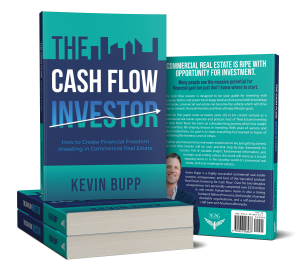
- Looking for the ultimate guide to passive investing? Grab a copy of my latest book, The Cash Flow Investor at KevinBupp.com.
- Tap into a wealth of free information on Commercial Real Estate Investing by listening to past podcast episodes at KevinBupp.com/Podcast.
Disclaimer: This podcast is for educational purposes only and does not constitute financial, tax, or legal advice. Consult with a qualified professional before making any investment decisions.
Chapters:
00:00 Intro
01:38 Discovering Real Estate Development
07:42 Structuring His First Partnership
10:26 John’s Current Portfolio
15:12 The “Problem” with Scaling
18:51 How Retail Real Estate Has Evolved
22:37 Finding the Ideal Tenant
27:40 Commercial Investing Challenges
34:46 Working with Financial Partners
41:55 5 Rapid Fire Questions
47:13 Connect with John!
Episode Transcript
Episode Summary
In this episode of the Real Estate Investing for Cash Flow podcast, host Kevin Bupp interviews John McNellis, founder of McNellis Partners and author of Making It in Real Estate. Spanning a nearly 50-year commercial real estate career with roughly 100 completed development projects, McNellis shares core strategies and hard-learned lessons around retail real estate development, strategic partnerships, and scaling. He outlines his evolution from an attorney completing small residential deals to partnering with experienced developers and building a portfolio focused heavily on neighborhood shopping centers.
McNellis explains his fundamental strategy of maximizing net worth rather than portfolio size, which led to selling 70% of his developments to hold only premier, highly defensible assets. He details why staying local within the San Francisco Bay Area provides a distinct competitive advantage over expanding nationally. Unpacking his biggest career setback—the Bird Cage Walk development—McNellis highlights the critical dangers of overpaying, overleveraging, and over-relying on large institutional financial partners. Decision-makers learn actionable filters for choosing property locations over tenants, managing property management evolution, negotiating tenant exclusivity clauses, and identifying when an investor has achieved “enough” wealth to prioritize peace of mind over raw asset accumulation.
Key Takeaways Takeaway 1 Focus on growing total net worth rather than the size of a portfolio, selling assets in secondary markets while retaining prime, high-barrier locations long term.
Takeaway 2 Avoid overleveraging and overpaying for complex redevelopment projects that rely on aggressive assumptions or unpredictable financial partner backing.
Takeaway 3 Prioritize local market knowledge and geographic proximity to maintain a distinct competitive advantage over larger national competitors.
Takeaway 4 Resist granting broad tenant exclusivity clauses during lease negotiations, as flexible tenant mixes create stronger long-term property synergy.
Takeaway 5 Shift from pursuing institutional financial partners toward direct ownership and clear control, reducing external conflict and preserving decision-making autonomy.
Key Topics Covered
- Commercial Real Estate Development
- Retail Real Estate Strategy
- Portfolio Optimization and Asset Pruning
- Geographic Focus and Local Market Advantage
- Partnership Structuring and Equity Control
- Risk Management and Personal Guarantees
- Retail Tenant Mix and Exclusivity Clauses
- Redevelopment Mistakes and Debt Recovery
- Property Management Transitioning
- Defining Financial Independence (“Enough”)
Episode Chapters
00:00 Intro Kevin Bupp introduces guest John McNellis, founder of McNellis Partners and author of Making It in Real Estate, setting up a discussion on commercial development, retail strategy, and key career mistakes.
01:38 Discovering Real Estate Development John McNellis shares his transition from journalism to law and how doing small residential deals led him into commercial shopping center development.
07:42 Structuring His First Partnership McNellis discusses how partnering with an experienced developer compensated for his early lack of construction knowledge and helped launch his first commercial project in Healdsburg.
10:26 John’s Current Portfolio McNellis outlines his business strategy of building net worth over portfolio size, explaining why he has sold 70% of his deals while holding prime Bay Area assets.
15:12 The “Problem” with Scaling McNellis explains why staying local in Northern California provided a strong competitive edge over expanding into unfamiliar distant markets.
18:85 How Retail Real Estate Has Evolved McNellis details the evolution of neighborhood shopping centers from traditional anchor-and-shop layouts to service- and restaurant-heavy convenience centers.
22:37 Finding the Ideal Tenant McNellis addresses tenant selection, space allocation, restaurant parking requirements, and the ongoing challenge of negotiating tenant exclusivity clauses.
27:40 Commercial Investing Challenges McNellis reflects on the Bird Cage Walk project, detailing the costly mistakes of overpaying, overleveraging, and chasing a complex redevelopment dream during a major recession.
34:46 Working with Financial Partners McNellis explains why he eliminated institutional financial partners from his business model following the Bird Cage Walk foreclosure in order to retain full project control.
41:55 5 Rapid Fire Questions McNellis answers rapid-fire questions covering capital raising, personal guarantees, seller motivation, and defining success and “enough” in real estate.
47:13 Connect with John! McNellis shares where listeners can find his book, read his monthly business columns, and connect with McNellis Partners online.
Full Transcript
[Transcript begins]
John McNellis: What killed us was our dreams. This was a 300,000 ft center that had been built dozen years before. It had never been more than 80% leased. Some of the spaces had never even been looked at. No one ever went shopping there. True story. After we bought it, within a couple of years, there was a nationwide manhunt for I wouldn’t call him a serial killer, but the guy had killed a lot of people. The guy hid out successfully for a couple days at Bird Cage because nobody went there. The center was a mess. and the only way we were going to make money was to do a major major redevelopment of it. And we followed that dream too many years and then suddenly the big recession in the early 90s came. It took me we probably lost it in the mid ‘9s. It took me like four or five years to pay off all my debts on that. So I had this tremendous liquidity crisis. You know, I wasn’t broke, but I had no money.
Kevin Bupp: That wasn’t just one bad deal. This deal became one of the defining moments in a career spanning nearly 50 years and roughly 100 commercial real estate projects. We will go deeper on the realizations and the impact in a bit. Welcome back to the real estate investing for cash flow podcast. I’m Kevin Bupp and my mission is to help you build long-term wealth and cash flow through real estate investing. My guest today is John McNellis, founder of McNellis Partners and the well-regarded author of Making It in Real Estate, a longtime urban land institute bestseller that’s taught in many of the top collegiate real estate programs across the country. I plan to unpack with John where he’s had an edge, which risks deserve his capital, what type of partners deserve a voice, and how he thinks about choosing to walk away from deals in his business. John, I’m excited to have you with us today. Welcome to the show.
John McNellis: Thank you, Kevin. Delighted to be joining you.
Kevin Bupp: Yeah. No, excited to talk shop with you. I know you’ve got quite a you’ve multiple decades, you know, four plus decades in the real estate space. most of it being as a developer and so excited to talk shop with you and just unpack you know what has been a long and successful career and so let’s but let’s back it up a little bit hit the rewind button and you know I know before you came became the developer you were actually an attorney and while you’re an attorney you were buying smaller investment properties on the side so let’s let’s walk back to that point in your career and I guess more specific when did you actually realize that you wanted to build and own real estate rather than simply advising others that were actually doing it.
John McNellis: Well, let me take a step even further back than that. In college, I was a journalism major. And Kevin, one of my most brilliant decisions in my life as senior year was I don’t want to be a journalist. I don’t want to write about what other people are doing. But the drawback was I had no talent. You know, I could talk. You know, I was lippy, I guess you could say. So, what am I going to do? I decide to go to law school. I go to law school and just like every other kid who goes to law school, you know, I wanted to be the guy with the suspenders getting people, innocent people off, going to court, you know, strutting around. I tried that. So, I got a job with a fancy law firm in San Francisco. Took me more than a couple hours, but not much more than a couple months before I realized I hated litigation. Absolutely soulkilling, stultifying. It’s just paper wars back and forth. Fortunately for me, the firm had a real estate department, you know, business. And so I begged and pleaded with a managing partner and I said, “Please let me become a business lawyer.” Meanwhile, on the side, you know, I always had kind of an itch for real estate. I think I was 24 when I bought my first duplex, and that probably cost around 24,000. I got lucky with that. It was caught it in a rising market, sold it a year later for about 60. got lucky with that, traded into a fourplex, sold that a year later for about 120,000. And I’ll stop right there. Spoiler alert, I’ve never had a return better in the last almost 50 years than going from about 2,000 in down payment up to like 90,000 in equity. But so then I’m doing these little baby deals on the side, you know, buy a house, paint petunias, fix it up. And then I start working with developers. That kind of helped me jump up, kind of skip a couple levels, you know, go from rookie ball up to double A very quickly because I started learning how deals are put together, how to finance them, equity, partnerships and all that. Meanwhile, I think I’m making about 15,000 a year then, 15 20,000 a year. And guys, not that much, not much, not that much older than I are coming in because we represented the money. these young developers are coming in and they’re making like a million bucks on a deal. And I’m saying, “Oh my god, I’m as smart as these guys.” And it’s looks like a lot more fun to be in business than to be a lawyer. So, I kept waiting for one of my clients to hire me, you know, to say, “John, you’re a brilliant guy. You know you you need to join our development firm.” Didn’t happen. Nobody recognized how brilliant I was. So, but I got lucky. I had an older client so I’m in my kind of mid late 20s and this guy was in his early 40s. He was a successful enough shopping center developer. He and I’m talking about neighborhood shopping centers, supermarket, drugstore, typical, you know, 100,000 ft over 10 acres, McDonald’s and a Bank of America in front. So he was doing those and as it turned out his company went out of business. He had one site in a town called Healdsburg, which is a really fancy wine town in Northern California, about an hour north of San Francisco. The guy was a good developer, but he could not raise money to save his life. You know, he he couldn’t sell snow in Africa. You know, he just he was not a gifted salesman. And at that time, you know, I was pretty good, but I’m I’m in my 20s. There was no way I could sell myself as a developer, you know, but I could sell him. I could say, “Hey, here’s my older partner. This guy knows what he’s doing.” And we built the shopping center in Healdsburg. And we opened it in 1984. So, what is that, 42 years ago, we still own that center. So, that’s how I kind of I got into the shopping center development world, and that’s pretty much where I’ve been for the rest of my career.
Kevin Bupp: Okay. No, that that’s a great backstory. You’ll be curious to know at what point in time from that first partnership and then moving forward did you actually start viewing yourself as a developer rather than just an attorney?
John McNellis: That’s a great question. No one’s quite asked me that. I’ll tell you, I don’t know exactly when, but the first time that a newspaper called me a developer, I was thrilled, you know, having to go to some public hearing, you know, developer McNellis says blah blah blah. It took a while. You know the problem with with development is as I’m sure you and all your listeners know there’s no cash flow in the beginning. There’s just like zero. So I kept practicing law for five or six years that that I was doing development because you know the money in development is always five or six years down the road. So gradually as my my law practice if you think of it was up here and then it just kind of dropped over the five years as my income went the other direction from the development and so it was probably in the early 90s you know before and then I continued to practice law on behalf of my partnership and that lasted maybe 10 years until somebody at Safeway one of the the execs at Safeways we were doing a deal and he said you know John you probably should stop representing yourself. And I thought, ah, smart. Yeah, I got to hire a real estate lawyer to do it for me.
Kevin Bupp: I would love to unpack a little bit more of that first partnership and maybe the the partnership and and maybe more specifically the first couple of projects that you that you guys did together and what would you say some of the big biggest takeaways were in those earlier projects that you might not have been able to learn yourself from just practicing law or just studying real estate and doing deals on the side?
John McNellis: What I just said I was wellversed in finance and partnerships and deal structuring but I didn’t I didn’t know anything about construction I didn’t know about how you lay out a shopping center, you know, whether 60degree parking is is better than than 90 degree, where truck where the trucks go, how deep the truck docks are. I I had none of that. So, you know, I was learning that on the job, you know, with my older partner who was experienced at that.
Kevin Bupp: Got it. Got it. Now, that make that makes sense. And I know that again, this this is a, you know, a first of many partnerships throughout your career. Um, you know, I know quite a bit of your back your backstory. Um and so I I know that you know partnerships have been very critical to to the growth and your overall success. And so would love to know how your thinking so going back you know 40 plus years ago that first partnership to you know what your business looks like today and how is your thinking about partnerships evolved throughout those four plus decades.
John McNellis: Okay. It’s a little complicated. So that older partner and I were were never the best friends. He was a competent developer but we went our separate ways. In the first four or five years Kevin we needed each other. like I didn’t know what I was doing. He needed me to to to raise money to to put the deals together. But gradually, like they say, we grew apart. But to two of the employees at the time, Beth Walter and Mike Powers, she was a property manager and he was inside finance guy. They’ve been my partners ever since. So Beth, Mike and I have been partners for 43 years. I think operating partners are critical. You can’t if if you want to grow beyond doing flipping houses, you know, you can be a one-man band if you’re doing houses and duplexes and you want to do all the work yourself, and there’s nothing wrong with that. But if you want to take it up from from rookie ball to double A, AAA, you need a team. And so my partner Beth, she does all the property management and all of the construction management. Mike, he runs the company. He’s got the Harvard MBA. He he does all the the the the bank relationships, the government stuff, the you know, all the the tax reporting, all the stuff that frankly I don’t want to do and I probably…
Kevin Bupp: You don’t deal with, yeah.
John McNellis: Yeah. I’m I’m the front man. I’m the deal guy, which is frankly a lot more fun.
Kevin Bupp: Got it. And what does the rest of the team look like today? I mean, just and maybe the maybe the overall business. I mean, you know, as far as I know that, and we’ll get to this later in the episode. I know that you tend to focus predominantly in in Cal in the state of California and correct me if I’m wrong there, but then also um you know the size of the company today um you know the assets under management how many you know properties are in your portfolio today and then you know is there more than just the three of you? I’m assuming that you’ve got a a broader team and just generally speaking what does that look like?
John McNellis: All right just to back up a little bit so the philosophy ours was always to grow net worth not portfolio. So of that hundred deals you mentioned that we’ve done over call it closer to 50 years but let’s say 45 years. So we’ve averaged about two deals a year Kevin and 85% of those were development by the way but we’ve sold 70%. So the portfolio right now is about 30 odd properties and it our peak and what I always wanted to do you know that old joke rent it rather than buy it. We relied heavily on outside contractors, architects, title company, but we didn’t we didn’t bring any of construction. In fact, we had our outside construction guy. They were all consultants. We’ve purposely kept our company as small as possible to keep our overhead down. At our peak, we were at 11. And this goes back maybe a dozen years. And as you can tell by looking at me, I don’t have another dozen years to go. we’re down to five including my partners. And what we’ve done, we’ve shifted in the early days, we did all of our property management internally in order to you know pay all the overhead and that was our philosophy and we always wanted to keep our overhead to a minimum and offset it with management fees. But then as we all kind of grew old fat and lazy we said okay there are other things to do than chasing broken pipes. So now I think 20 of the properties give or take are in the hands of third party managers. So no, so we’re kind of evolving gradually or devolving perhaps and do more of an asset management position.
Kevin Bupp: Got it. And and you know you mentioned that you’ve sold about 70% of the the overall properties and projects that you’ve been involved in. What what does that selection process look like? It sounds like maybe maybe it’s a you know they keep the 30% those are the cream of the crop. Those are the very stabilized properties and those are the one that maybe you’re more comfortable just handing off to third party management. Is that is was that part of the evolution of the strategy?
John McNellis: Yeah. Well, actually, if you called me today and said, “Hey, John, there’s there’s a deal here in Modesto 2 hours away. You need to take a look at it. It’s a great asset.” And I went down, I look at it, and I say, “What do you know?” Kevin’s right. I want this one. I will know on that first day whether I want it to sell it two years later once I turn it around or whether it wow this is a killer property. You know, you have the the moat around it. That there’s there’s no way I can get slammed from the side by new competition. You know that that’s one we’re going to keep. And actually what we tend to do is where we build outside the greater Bay Area more than say more than an hour away, we tend to sell almost all of those. And then the ones for those of you who know California, the properties that we have that run along US 101 and that right through the Bay Area, we tend to keep those because it’s so difficult to develop here. you know, the politics are insanely difficult and the the the the cities are pretty well built out. So, that first center that we built in Healdsburg, still own that today. Because that is a very tough town to develop in and you know, we love that one.
Kevin Bupp: Is is is the you know selection process of which ones we sell versus the ones we keep if we had to distill that down is it really just come down to risk associated with barriers of entry whereas the ones inside the Bay Area like the the risk is very low because the barrier entry is incredibly high whereas that might not be the case in our outside of town?
John McNellis: Yeah essentially that’s close enough we put a lot more emphasis on the where than the who said the tenants come and go you can say oh my god this is it Walmart’s been a great partner for us great tenant. You know, we own a number of Walmarts, but you know, they they may be brilliant a 100 years from now, but you know, history says not. You know, companies come and go. But the best locations, you know, they they tend to stay around forever. So, so if we we will keep an asset that’s in in a best location, even if it has a mediocre tenant, but a brilliant tenant in a mediocre location who will sell right away.
Kevin Bupp: I’m I’m assuming over your career you you’ve had probably many opportunities to expand you know outside of Northern California and you know I think a lot of folks get caught up in you know earlier stages of their career they’re having successes or like they’re looking to scale and they start scaling outside their immediate marketplace they go to different states you know completing different geographies and I know that that truly was an opportunity maybe it’s probably probably even a topic of conversation on many occasions internally inside your inside the firm there but I guess at some point I I heard heard you say on another interview that I listened to that at some point you felt that staying local wasn’t a limitation that a lot of people saw it as and it really for you it started feeling like more of a competitive advantage. So talk talk us through that a little bit and that that overall investment philosophy and why in your mind staying local was it allows you to be much more competitively you know competitive to your your peers and and just do better than what you might be able to do if you expand to a much farther reach.
John McNellis: Okay. So, let let’s be a little bit practical or cynical. Let’s say that there’s a great that a broker calls me from Miami and says, “John, you’ve got to see this deal.” Well, I’m going to assume almost immediately that he or she has tried all of the smart brokers in in Miami first, that I am not the first call. And then, despite the size of my ego, I’m going to assume that there are guys in Miami who are every bit as smart and connected as I am. And so, why am I going to do that? So that’s part of it. You know, you’re right that there’s a great temptation to say, “Oh, here’s this terrific deal, you know, wherever it is.” So I I don’t think that the the deal that I’m going to hear about that’s 3,000 miles away is going to be that great a deal. The other is and I’m in retail and retail is all about the right town, the right intersection, the right side of that intersection. you know, of the four corners, there’s going to be one corner that’s better. I can know that pretty well in the Bay Area and with a little help from Google Earth. So that if you were to call me and say, “Hey, John, there there’s a site here in Mountain View.” And I say, “Oh, where is it?” “Oh, it’s on Central Expressway.” Okay. Yeah, I know that. You know, I can decide instantly, you know, with between Google Earth and my local knowledge, you know, we save a ton of time by by staying local. I can compete say Regency Centers publicly traded REIT they’re great company they’re the biggest player in my niche which is neighborhood centers you know I can compete just fine with them here in the Bay Area but I couldn’t if if if I wanted to and I don’t there’s also a lazy factor you know business travel is is as overrated as home cooking frankly…
Kevin Bupp: I agree with that I agree.
John McNellis: When I travel my mother was a terrible cook. When when I travel, it’s it’s for fun. And you know, I like to be able to go out. I I get up early. If I’ve got a property under construction or a city council I have to talk to, I like to be able to get out, do it in the morning, and be back by lunchtime. You know, you can’t do that. The other thing I have managed over the last few years with a couple of junior partners to pick up centers, one in Orange County, Southern California, and one in Oregon. And there’s a problem with that. You know, I think if you’re properly managing property, you’re seeing them, you or somebody you really trust every month. And having them that far away, it’s it’s a pain to get up and do it. So brokers in those two areas, I probably will sell those two centers in the next half a dozen years, you know, as as we cull the herd.
Kevin Bupp: Yeah. No, that makes sense. I appreciate you unpacking that a little bit. So I you know be curious to know about just retail itself as an asset class and again you’ve been at it now 40 years you know just like every other asset class they go through their evolution you know evolution cycles and you know the product the product changes you know goes through many different forms over the years and so what what does you know what did it look like back then is it is it a similar product that you bought 40 years ago to what you’re actually developing today or is it a drastic difference?
John McNellis: Another great question nobody’s asked me it has evolved, Kevin, but in the old days, you know, the 45 years ago, the the typical shopping center was what we would call a barbell center. There was a a big supermarket on one end, you know, 50,000 ft and then a thin row of shops, you know, the bar, let’s say 30 40,000 ft, and then a drugstore typically. So that too big connected. What’s happened is and then the idea in those days was that you do at best a break even deal with the supermarket, maybe a slight profit on the drug and you’d make all your money on the shops. H well over the years the markets and I think when I first started supermarkets were still in the 40,000 foot range and now you know they’re up you know the the battleship size the the full-size markets even a traditional market they’re at 60,000 ft and what they what they started to do was incorporate the Chinese food the florist you know all these little departments are now inside the the supermarkets so it’s physically evolved the markets are bigger we have fewer shops the you know the particularly with the the internet there are fewer hard goods soft goods there are fewer like a sweater shop you don’t see those in in a convenience center anymore so that has changed when I first started is recollection is a little dim but I think we were relatively popular if you think of there’s like five six seven silos or different kinds of commercial real estate office retail residential you know forale housing hotel and so on we were kind of in the middle of the pack. Starting at about 2000 about 20 years ago, 21 years ago, the Wall Street Journal and everybody else said retail is dead. Retail is dead. The internet’s coming. I remember I was at an industry function and some futurist, you know, some idiot says supermarkets are dead. Everyone’s going to buy all their groceries online. And so in those days, so I went in the break, called my partner Mike, who sits next door, and I said, “Hey, we got to sell all the all of our markets.” But anyway, for about 20 years, well, these, let’s see, from 2006 to 2020 to the co, we were the last choice of the Wall Street, the institutional investors put retail at the bottom because, you know, retail’s going out. They didn’t want to invest in us. And so our stuff, our cap rates were a bit higher, you know, prices lower. Not good for selling, but great for buying, right?
Kevin Bupp: Yeah. Yeah. Yeah. Yeah.
John McNellis: You got higher yields and then we were we were fat and happy. We were fine. But CO came along and CO proved that minage the neighborhood center with convenience center, call it essential retail, whatever you like. We came through that with flying colors. And so now I think shopping centers at retail are back to like the number one investment choice and of course office is last. Hotels are always kind of out there. But anyway, yeah, it has changed, but you’d if you went back in time or forward in time, they’d look pretty similar and you still still have a gas station and a bank and it’s open market.
Kevin Bupp: How about the you know the tenant type? And I I’m not a retail guy, but just from, you know, being a consumer, my perspective, you know, some of the changes I’ve seen is, you know, maybe 20 years ago, you would have never seen a dental office or a, you know, a walk-in clinic or, you know, you know, emergency ER in a retail strip center, whereas that is the case. It almost seems to be common practice. And I’m sure that there’s so there’s probably been quite a bit of evolution of what type of tenants you might find, you know, 30 years ago versus what you’ll find today in your typical retail neighborhood shopping center.
John McNellis: Another great point. Yeah. Yeah, absolutely that is the case. But just a step back much more food now than there was you know back when I was young people actually cooked at home. Not so much anymore. So we have far more restaurants and more of the pads are devoted to restaurants. But you’re right. And I’ve had to argue this time and time again with cities who say retail means selling soft goods or hard goods. And I said no that doesn’t mean that anymore. It’s now it’s retail services, you know, now it’s a dentist, now it’s an accountant, you know, H&R Block, now it’s a yoga studio, a workout place. We’ve added all kinds of stuff like that. Many hospitals, urgency care, urgent care rather. Yeah, it that those shops, there are fewer of them and and the the character of the shops has changed quite a bit.
Kevin Bupp: What goes into the when you’re you’re looking to develop a new center? um what considerations are put in place? Um you you mentioned that now there’s quite a bit more restaurants. That wasn’t necessarily the case, you know, 30 years ago. Obviously, restaurants um you know, there’s there’s, you know, major credit tenants in the space and, you know, there’s new concepts that are just, you know, coming about that don’t necessarily have, you know, long legs just yet and don’t don’t have the proven track record. But I guess, you know, when you’re developing something new, how do you take in consideration the allocation that goes in? Like how many, you know, how what percentage of this 100,000 square foot shopping center do I will I allow to be restaurants versus that of professional services versus out of just basic consumer goods? Like is there a breakdown from a risk perspective that you put on each one and there’s limitations on each?
John McNellis: I I would love to BS you and say, “Oh, yeah, it’s 10% this, 10% that.” But, you know, we usually don’t have that luxury, Kevin. It’s usually, okay, okay, we’ve got our anchor now. How the hell are we going to finish fill up this 30,000 ft, you know? So, but there is a limitation on restaurants require much more parking than any other use. So, you can’t have a center that’s nothing but restaurants or you’ll never be able to park it. So we we try to to limit it, you know, when we have a choice, you know, we’ll say, “Okay, we’ll put in two restaurants.” Say, and then we’ll go, you’re trying for a symbiotic use like this, this little restaurant is great for breakfast and lunch. This one is lunch, dinner, you know, that works. We try to do it that way and and that that seems to work.
Kevin Bupp: I’m sure then you have to have considerations as well. Like surely you don’t necessarily want competing businesses in the same center, right? Um like you you you want them all to thrive, you know. You don’t necessarily want to put two brand new, you know, you know, the quick food concepts like the Chipotle and Kadoba or whatever the brand, you know, like they’re very similar in nature. You’re not going to put both those in the same shopping center, right?
John McNellis: Well, this is an age-old battle and the public service announcement to all of you young fledgling retail developers, every tenant that you talk to wants an exclusive. Absolutely. a little dance studio that that has zero credit says we need an exclusive. What you try to do is never give exclusives. And you argue it, and I’ve been making this argument pretty much unsuccessfully for 40 years. You say, “Look, go to London, go to Savile Row, all the tailor right next door to each other. Go to German Street, all the shirt makers are right next door to each other. you actually and and then that was nobody bought that argument. Then somehow in the last 30 years, I don’t know when it happened because I’m not in that world, the auto guys figured it out.
Kevin Bupp: I was about to say auto dealerships. I mean, literally they’re all in the same spot.
John McNellis: So, I argue that all the time. And then the big tenants, the you know Walmarts of the world, Safeway, you Costco, they insist on exclusives and and and of course we have we have to give them. But you know, I argue that all the time. I don’t think it’s necessarily bad and I I truly believe that if you’ve got like four shoe shops in a row, you know, okay, that that’s where I’m going to go shop for shoes. But the tenants all hate it. It’s a constant argument. But that is true. If we have a like a good little Mexican restaurant, and then along comes a national chain that wants to come in, we’ll say, “Nah, we’re not going to do that, Tam.” You know, it’s kind of case by case.
Kevin Bupp: No. Got it. Got it. Would love to switch gears if we could, John. I want to talk about either and we can pick either either one or maybe hit on both of them at a high level, but Bird Cage Walk and Sanita Plaza. You know, the you know, I too too often and I think we’re all guilty of this. We always talk about the wins. You know, everything goes perfectly as planned. You know, we made a lot of money. You know, there were, you know, not many unforeseen challenges. Uh we slept good that night. You know, no undue stress in our lives because of a deal that’s going sideways. But as as you and I both know that if you’re in this business long enough, then it’s inevitable that you’re going to have deals that just don’t go as planned, right? They don’t meet expectations. They, you know, they just they cause undue stress and complexities in your life that you just could do without. And so, my understanding is that you you probably have had a few of those. And, again, I brought up the two names here, and you could choose a different one if you so choose. But I do believe that we we learn way more from our mistakes than we do our successes. And, so I love the old, you know, the old adage of, you know, fail forward fast. You get get the failures out of the way so that you can learn how to avoid them, you know, in future deals. But let’s let’s unpack one of those if you would or again, you know, maybe you have a better example of what you’d like to unpack. What was a deal? What, you know, what were the original expectations? And then ultimately what didn’t go as planned and I think the most important piece of it is you how’d you get out of it right or how’d you write the ship at the end of the day?
John McNellis: As you know that my book making it in real estate it’s in his third edition and it first edition was 10 years ago and then you know I’m on the lecture circuit talking to colleges and organizations and I people like you asked me questions did the second edition in 2020 when when things were at a a standstill third edition, which just came out this year in in the spring. I decided, okay, I’m old enough. I’m going to just open it up and I’m going to add an entire section on my worst mistakes and how, you know, and if kind of tongue and cheeks, 10 great ways to lose money in commercial real estate. But before I get into that, to echo your point, another public service announcement. Listeners, viewers, if you do more than a handful of real estate deals, you are going to lose money. you’re just it’s absolutely guaranteed. And anybody who says that they’ve never lost money is an outlier. And I’ll emphasize the last two syllables of that. You know, it’s just the business is too hard. There are too many ways to get slammed. Co, perfect example. Or this year, I had a couple deals all set to go. The Iran war happens. Whoops. That just blows my escrow. So, bird cage walk. This is where I get PTSD. 1983, I think I’m just barely 30 years old. Uh, if you put your thumb and forefinger together, this was how much cash I had. And I and I had, you know, we’d done five or six deals. Maybe I had a million dollars in highly illquid, you know, subordinated general partnership interest. We see Bert Cage walk. Oh, a little more background. the early 90s, President Reagan was elected. He deregulated the savings alone industry. Before until that time, all a savings alone could do anywhere in the country was make a first loan on a single family residence. Very boring, very safe business. Reagan deregulated it and they could invest in anything and suddenly, you know, so that trillions of dollars start flowing into the savings and loan industry and they start throwing money at people like us. still had that older partner. One of his classmates from Harvard ran a savings loan in Texas. I guess I won’t mention the name. He he said he he wants to give us some money. We tie up a shopping center called Bird Cage Walk, 300,000 ft open air center in Sacramento. And I think price in the redevelopment budget, we were about $20 million, which is about 60 million in today’s money in today’s dollars, which is way bigger than any deal I’ve ever done since that time. Mistake one, because the money was being thrown at us and we said, “Why not?” We paid way too much for this property. mistake two, we overleveraged it. And by overleveraged it, I mean ridiculously. We had 100% financing plus we got fees. We got fees out of it. So it was like 103% financing. So So mistake one overpay. Mistake two over finance. But the the and those were critical, but they didn’t necessarily kill us. What killed us was our dreams. So this was a 300,000 ft center that had been built dozen years before. It had never been more than 80% leased. Some of the spaces had never even been looked at because it it the center had been a pet project of one of the West Coast top retail developers. It he was retiring. Rather than build a kind of standard normal center that faces the street, he built this ye old English village of rambling shops that it was very very easy to get lost in. In fact, and no one ever went shopping there. True story. A after we bought it, within a couple of years, there was a nationwide manhunt for a I wouldn’t call him a serial killer, but the guy had killed a lot of people. You know, Bonnie and Clyde kind of thing. The guy hid out successfully for a couple days at Bird Cage because nobody went there. Anyway, so the the center was a mess and and the only way we were going to make money was to do a major major redevelopment of it. And on one side of the center to the south was a Macy’s and on the other side was a J C Penies. And so our idea was we would cut a deal with Macy’s and we’d get rid of J C Penney buy that building, tear it down, put in a Nordstrom, and then then we do an enclosed high-end mall anchored by Nordstrom and Macy’s. And we followed that dream too many years. And then suddenly the the the big recession in the early 90s came and you to cut already too long a story a little bit short. We lost it in foreclosure. We pivoted too late and we finally came around to this is what we should do. Just tear a couple buildings down, open up the the parking, open up the visibility and make it more of a a midstream convenience center. In fact, we were going to put a target anyway. We lost it. I had it took me we probably lost it in the mid 90s. It took me like four or five years to pay off all my debts on that. So I had this tremendous liquidity crisis. You know I wasn’t broke but I had no money and I had to borrow from you know family, friends, everybody, you know, to pay off this enormous debt I owed the IRS. You know you know you lose a property on foreclosure and yet with a negative basis you’re screwed. Yeah, I learned a lot on that. One of the other things I learned was I didn’t want fancy financial partners anymore.
Kevin Bupp: Yeah, that that’s a great point you you make there as far as fancy financial partners. So, let’s let’s let’s talk about that a little bit because I think your business looks a little different today and and correct me if I’m wrong, but what I what I’ve gathered is that for the most part um you don’t have any partners out. It’s all your own money, all your own internal funding of of how you guys source and and and fund your deals. How did that negative experience with that with bird cage how did that ultimately you know change how you look at your business today?
John McNellis: Let’s say 1980 John has zero net worth. Okay. Just just and then throughout the 80s John and partner we start with family and friends money. We burn through you know if your name’s not Rockefeller you burn through family and friends pretty quick if you’re successful. And then so then then we move on to institutional partners and we had four or five through the 80s. Then when the dust settles in and the recession in the early 90s I think was pretty much the equivalent of the great recession. What you find out is the financial partners, you know, it’s you think you’re happy because it’s nonreourse to you and in the the partnership agreement. Well, it’s non-reourse to them, too. So on that bird cage deal, just to add another a little bit more of a nuance to it, we actually came up with the right plan. you know, the middle of the road convenience center plan, but we did it too late. We went to Boston to see our financial partner and said, “Here, here’s the plan. We’re good to go.” And then, you know, we make the the pitch to the their board. They say, you know, guys, go to lunch. And then we’ll we’ll talk it over and get back to you. We come back from lunch, they say, “Here are the keys. We’re out. We’re not we’re not going to fund it. We’re not going to give you the 10 million or whatever it was.” And so again, it’s not exactly Saul on the road to Tarsus, but the epiphany was I don’t want any more financial partners, you know, rather than do which let’s call it a $60 million deal, rather than own 10% of that, you know, so 6 million, you know, I’d rather own a 100% of a million dollar deal. So I said, no more financial partners. And we haven’t had an outside financial partner since the early 90s. Which means we do fewer deals. But that’s fine. You know, I think that the real bottleneck for a good developer is, you know, there’s plenty of money out there if you can find a good deal. The bottleneck is finding great deals. And so if you’re doing fewer, you’re less likely to make mistakes.
Kevin Bupp: No, that’s a great point. You know, it’s it’s an interesting conversation u that we have on a regular basis inside our our company today. you know, for the last, you know, we started just like you, you know, many, many years back, it was just friends and family, and you outgrow that fairly quickly. Um, you know, for the last, you know, 12 or 13 years, we we’ve spent a lot of time, energy, and focus building a more of a retail platform. So, all of our, you know, all of our capital and our equity comes in from high net worth, folks. Um, but, you know, that that retail capital is very different than that of institutional capital, you know, professional investment partners. And um you know there’s we have not hit a limitation to our reach. And we have never had a project not be able to get funded because we weren’t able to raise the capital. But there’s obviously quite a bit more moving parts with having hundreds of retail capital partners than that of maybe a you know one or two larger institutional partners that can write a one big check. Um so there’s the allure of of having that type of institutional partner. But along with that allure and and the benefit of getting just one partner to write a check is ultimately they’ve got quite a bit more control decision-making power over how you’re what what happens in your business. I mean you you kind of have to forego and give up some of the decision-making power as I think as you just alluded to with the bird cage deal. And so maybe maybe I’d like to you know kind of talk through that a little bit more with you if you could. So, and I know today your business you no longer have, you know, financial partners, but what were I mean, was it was it for the most part was that the was that the pivotal moment the bird cage and was it mostly related to like their unwillingness to basically cooperate and you know, like you guys are the developers, you guys know what’s best, right? Like your boots in the ground. You really had a good plan in place, but ultimately they didn’t agree with it. And so for that reason that the whole project completely died and went into foreclosure. I mean, was that the one pivotal moment? Was a lot of it due to their kind of their control over the entire situation?
John McNellis: Well, it wasn’t all on this one savings alone, Kevin. So, we had three or four institutions that we were working with and they all kind of got out of the business. But what I learned along the way is the point you just made, if you have an institutional financial partner, they are going to have control. They are going to be able to say we’re selling today or we’re not selling today. And so, and I saw it in my deals and I saw it in others deals where president of the company says who some guy you barely heard his name you’re never going to meet says, “We’re overweighted in real estate,” or the call to pension letter, whatever. Let’s get out of real estate or we’re overweighted in retail. And they and so then your counterpart, the vice president who you’ve been drinking and playing golf with all this time, he calls you and says, “Gee, John, really sorry, but we got to sell the property today.” And and you say, “What? You know, we’re only 80% leased. If you sell today, you guys will get your money back, but I’ve been working on this for 5 years. I won’t make a dime.” And he says, “Yeah, sorry.” So, or and I saw it the other way where a a very good friend of mine 2005 he they’d had a a couple billion dollar portfolio amassed and they’d done a really good job of it and they go to their pension fund partner say guys we really need to sell this now you know the market is frothy and five was a good year and then their counterparts looked at it and said oh my god these developers are going to make $300 million that’s too much you know we don’t we don’t want to sell. So they missed that market. So you know so I’d rather you know real estate is illiquid enough. You I’d rather just and you know you want to control your own destiny.
Kevin Bupp: Yeah. Control your own destiny. Exactly.
John McNellis: I don’t need to do every deal. And I don’t want to get on a plane and go back to Boston or New York or Cleveland and have to suck up to guys and explain to them what this is a good or a bad deal. I said, “Nah, I’m not going to do that.”
Kevin Bupp: I think that part that’s the part that pains me the most, you know, is have to, you know, beg, you know, beg for the money, you know, and have to oversell my 20 years of experience of doing this business model and a proven track record and have to basically crawl in on your knees and and, you know, please, please, please fund this deal for me. Um, yeah, I struggle with that one. So, I I agree. Um, you know, would love to round this out if we if we could, John. And would love to I’ve got um I I’ve recently added in a section at the end of each show that’s more of a rapid fire five questions you know designed to be basically just short answers although I’ll give you permission to you know break the the rapid fire rules if if you know if there’s a longer story worth telling here but um and so let’s roll into it if if you’re ready we’ll five questions and then we’ll round this out. Um, so the first one, what you know, what what’s the the one thing younger developers commonly believe that your 40 years of experience has taught you is wrong?
John McNellis: I think what they they think it’s really hard to raise the money. I I think if you have a really great deal, the money will be there. You know, I I tell people that all the time and they don’t agree. You know, there’s trillions of dollars sloshing around on on the sidelines looking for deals. you know, today is a little bit tricky because of the war and and all of the uncertainties, but I I don’t think it’s as hard to raise money as as young developers think.
Kevin Bupp: What’s the one risk you’re willing to take today and one risk you are no longer willing to take?
John McNellis: Well, one risk I’ve always been willing to take and it’s it’s contrarian is I’m willing to sign guarantees. And all these guys say, “Oh, I never ever sign guarantees.” Well, I say, “Look, if it’s a $10 million center, I’m going to put down four million of my own money. And I’m pre and we don’t build spec. I’m I’m pre-leased at least to break even. I don’t care. I’m I’m not going to walk away from my 4 million bank. I’ll guarantee your 6 million.” So, I’m happy to do that, you know. And other guys, they look appalled. But usually the guys who won’t sign guarantees are the ones who have capital stacks that look like building blocks, and and maybe they shouldn’t sign guarantees like that.
Kevin Bupp: How about how about one risk that you’re not willing to take?
John McNellis: I suppose environmental we’ve been burned. You know, we did pretty well buying environmentally challenged buildings, but I’ve got a couple of in in my section in the book on on mistakes I made. I didn’t take the regional water quality control board seriously enough on a deal we did in Lake Tahoe and they managed to turn a great little project into just a a money pit. You know, all the money that that property makes goes into environmental cleanup.
Kevin Bupp: Oh no, not no good there. Um how about when evaluating a deal, what is one question that you asked today that you didn’t know what to ask earlier on in your career?
John McNellis: I don’t know what I learned this, but the first question I always ask is why is the seller selling? You know, I’m looking for a motivated seller. I’m not looking for a smart guy like Kevin who says, “Gee, if I can get 150% of what it’s worth and I can find a trade property, maybe I’ll sell.” So, I’m I’m looking for a highly motivated seller.
Kevin Bupp: What is something you once viewed as a measure of success that no longer matters nearly as much to you?
John McNellis: I think I learned early on my favorite measure of success then and today is when you get to a point in your career when you can say I’m not dealing with that… You know, in my world there there are certain tenants that are very difficult retail tenants. If you brought me a a shopping center that had a 30% vacancy and said, “John, here’s the solution. You know, buy it and put this tenant in there. I’m not going to do that.” or I’m not going to work with this bank or I’m not going to work with that financial partner. When you say, “Yeah, I have enough. I don’t have to have that headache.” That’s my favorite definition of success.
Kevin Bupp: All right. And then the last one here. After 40 years now in the business, um, what does enough mean to you today?
John McNellis: Oh, I’ve had Kevin, I’ve had a million dollar question, right? Enough is when you, you know, I’ll be honest. I’m much better at making money than I am at spending it. you know, I’m I’m not a good spender. I just that way. So, I’ve had enough for 30 years. You know, I’ve ask some of my really rich friends, and you know, they’re always saying enough is always just a little bit more. But if you can live your life, if you could retire and live your life just the way it is and take care of your family, then you’ve got more than enough. You know, you don’t need two airplanes or even one airplane or or a vineyard or or looks like you’re on a fancy boat, you know.
Kevin Bupp: Everyone’s got their vices. Everyone’s got their vices, but yeah. No, enough. It wasn’t all that much for me, you know. So, I do it for fun. Development is fun, you know. It’s like solving a three-dimensional crossword puzzle. And and I actually I don’t golf, so what what am I going to do? I I like working, you know.
Kevin Bupp: It’s, you know, just a funny little side note. Um, my wife and I visited, we’re on vacation right now. We visited a winery yesterday. Um, and I got to meet the proprietor and, you know, historically, unless you’ve got a big distribution plan, you’re a big brand, they’re not very profitable businesses. And I I, you know, just out of curiosity, I asked him and I caught him off guard. I said, “What’s your other business?” You know, and he was a little shocked that I asked him that. And he said, “What what do you mean my other business?” I’m like surely you have to have somewhere else where you actually made the money that you’re now spending to probably I mean it was a it was a gorgeous winery gorgeous vineyard you know great great wine but ultimately um you know he he after five minutes he agreed that it was more of a a passion project more of a hobby that basically now is essentially sinking money into month after month to keep it going. So um more of a more of an ego project than anything else. Um but no outside you know John this has been a fantastic conversation. I really appreciate you coming on and um I do want to give you the opportunity I guess first and foremost for listeners that want to learn more about you and and um you know get a copy of your book. Where’s the best place to track you down? Then second to that would be I would just take a few minutes and maybe give a little more of a backstory of your book that you’ve I think you’re in your third version now to our listeners a little more about it what they can learn if they grab a copy.
John McNellis: The listeners who are actually watching I’ll hold it up. The book is called Making It in Real Estate Thriving as a Developer. Again, I wrote the first edition in published it 10 years ago in 2016. It became ULI, the publishers’s all-time bestselling title. Sold over 40,000 copies. The book is taught now from Clemson, Georgetown, Berkeley, Stanford, UCLA. It just it’s taught all the top schools. third edition came out and and like I said Kevin, I added the the whole section on my worst mistakes at this point in my career. It doesn’t mean no need to hide them. Also, I added a section on property management. I think the biggest lie in real estate is passive investment. There is no such thing as a passive investment. I mean, every single day you we got to take care of all these properties. you know, there’s a there’s a broken pipe, there’s a leaking roof, there’s a tenant in bankruptcy. So I I talk about that. You can get a hold of me, John at mcnellis.com. You can find the book on Amazon, anywhere else on on the internet. People love it. You know, they say it’s the best book ever on on development. Um, one guy called it CRA’s Bible and I said, “Okay, well, it’s not that religious.” And I I try to keep it light. The chapters are short. Each one makes a single point. Hopefully and some people say, “Hey, John, I like your book. It’s so short.” Anyway, delighted to hear from you. And you can read I also write a monthly essay for the San Francisco Business Times or the Registry magazine. Those you can find on our website at mcnellis.com or you can become my buddy or whatever you call it on LinkedIn because we we repost all of our essays on LinkedIn.
Kevin Bupp: No, it’s fantastic. And guys, we’ll be sure to get that in the show notes as well, links to all that. And John, again, it’s been a pleasure having you here. I appreciate you joining us here on the show and wishing you all the future success. I know you’ve got many many you made a joke to me gang that you know you’re kind of nearing the end here but like it sounds like you’ve got a lot more years coming your way and lots of more great projects. So wishing you all the best.
John McNellis: Really appreciate the the the work you did before the interview to make the interview special. Thank you.
Kevin Bupp: Yeah. No, this has been great. And guys uh just before we wrap it up here, if if you did enjoy today’s episode, please do as always take a moment, subscribe if you’re not already subscribed to the show, and then you know, leave us a rating review and and and do share this conversation with someone in your network who could potentially benefit from from these stories, these lessons that are shared here today. And as always, continue learning, continue growing, and most importantly, continue investing with intention. So with that, we’ll see you on the next episode. Take care.
[Transcript ends]