
After more than 50 years in commercial real estate, Bill Cummings has built an 11-million-square-foot portfolio spanning 12 communities around Greater Boston. But he did so by ignoring many of the conventional rules of real estate investing.
When his peers suggested he explore new markets, he stayed local. When others urged him to sell, he continued to hold for decades. And when other developers steered clear of neglected buildings, Bill saw opportunity, transforming overlooked properties for enormous profits.
This contrarian approach hasn’t just helped shape the culture at Cummings Properties; it’s also caused Bill to rethink his entire philosophy about business and wealth. Having arrived at his own definition of “enough” long ago, Bill has since turned his attention to a much bigger purpose: the Cummings Foundation, which has awarded over $650 million in grants to nonprofits throughout the suburbs of Boston and beyond.
But to understand how Bill built an empire, we have to go back to the beginning. In this episode, he shares the early successes, failures, and the simple conversations with his father that influenced his views on price, value, opportunity, and what actually makes a great investment.
Insights from today’s episode:
- Why Bill repeatedly buys properties most developers pass up
- The $500,000 commercial property no one wanted (that made a fortune)
- The key to maintaining high occupancy in commercial real estate
- The one type of commercial building Bill refuses to buy
- How to define “enough,” and what to do once you reach it
—
Starting Small and Making It Big
Recommended Resources:
- If you’re a high-net-worth investor with capital to deploy in the next 12 months and you want to build passive income and wealth with a trusted partner, click here for opportunities to invest in real estate projects alongside Kevin and his team.
- Accredited Investors, you’re invited to Join the Cash Flow Investor Club to learn how you can partner with Kevin Bupp on current and upcoming opportunities to create passive cash flow and build wealth. Join the Club!
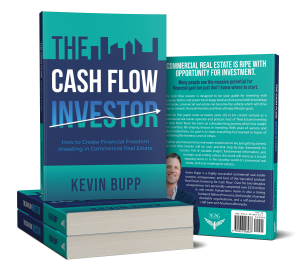
- Looking for the ultimate guide to passive investing? Grab a copy of my latest book, The Cash Flow Investor at KevinBupp.com.
- Tap into a wealth of free information on Commercial Real Estate Investing by listening to past podcast episodes at KevinBupp.com/Podcast.
Disclaimer: This podcast is for educational purposes only and does not constitute financial, tax, or legal advice. Consult with a qualified professional before making any investment decisions.
Chapters:
00:00 Lessons from 50+ Years in Real Estate
05:43 Local, Buy-and-Hold Investing
12:01 Building Strong Culture
16:18 The Property “No One Wanted”
25:59 Bill’s Recent Deal
31:14 How to Improve Occupancy
33:13 Property Red Flags
36:20 What Is “Enough”?
40:11 The Cummings Foundation
43:24 Connect with Bill!
Episode Transcript
Summary
After more than 50 years in commercial real estate, Bill Cummings has built an 11-million-square-foot portfolio across 12 communities north of Boston. He did it with an approach that runs counter to many conventional ideas about growth: stay local, rarely sell, avoid unnecessary debt, know your buildings intimately, and look for value where other buyers see problems.
Bill traces much of that philosophy back to buying and reselling boats with his father as a young entrepreneur. Those early lessons about price, value, negotiation, and acting quickly eventually carried into real estate—including the acquisition of a massive former shoe-machinery complex in Beverly that had sat on the market for roughly a decade before Cummings Properties bought it for just $500,000.
Kevin and Bill also explore the operating systems behind that success: long-tenured employees, giving people real responsibility, paying vendors promptly, serving thousands of smaller tenants, and maintaining occupancy above 90%. The conversation ultimately turns from building wealth to defining “enough,” and why Bill and his wife, Joyce, chose to direct much of their fortune toward the Cummings Foundation and philanthropy.
Key Takeaways
- Staying local and holding properties for decades can create deep operating knowledge and long-term competitive advantages.
- A low purchase price can dramatically change the downside of a difficult real estate deal—but only when the buyer has the people and operating capability to solve the problems attached to it.
- Cummings Properties has built much of its culture around long employee tenure, institutional knowledge, real responsibility, and treating vendors and tenants well.
- Bill often looks beyond an existing building to the additional value that may exist in excess land, redevelopment potential, or “extra buildability.”
- Once Bill and his family reached their definition of “enough,” building the business became less about accumulating more wealth and more about creating value that could be given away.
Key Topics Covered
- Lessons about price and value from Bill’s early entrepreneurial experiences
- Why Cummings Properties stayed local and rarely sells buildings
- Building a company culture around responsibility and institutional knowledge
- Buying the former United Shoe Machinery property for $500,000
- Finding opportunity in distressed and overlooked commercial real estate
- Maintaining high occupancy through tenant diversification and service
- Identifying property red flags and additional buildability
- Deciding when wealth is “enough”
- The Cummings Foundation and the Giving Pledge
Episode Chapters
00:00 Lessons from 50+ Years in Real Estate
05:43 Local, Buy-and-Hold Investing
12:01 Building Strong Culture
16:18 The Property “No One Wanted”
25:59 Bill’s Recent Deal
31:14 How to Improve Occupancy
33:13 Property Red Flags
36:20 What Is “Enough”?
40:11 The Cummings Foundation
43:24 Connect with Bill!
Full Transcript
Lessons from 50+ Years in Real Estate
Kevin Bupp:
Would you buy a property that nearly every sophisticated real estate firm in Boston had already rejected?
Two million square feet, 100 acres, thousands of broken windows, environmental problems, and on the market for more than 10 years.
What if I told you the purchase price was a half a million dollars?
Does that change your answer?
Welcome back to the Real Estate Investing for Cash Flow podcast. I’m Kevin Bupp, and today I’m joined by Bill Cummings.
He is the billionaire founder of Cummings Properties, author of Starting Small and Making It Big, and one of the most fascinating long-term real estate operators I’ve had the opportunity of speaking with.
We’re going to unpack what Bill saw in a property that everyone else abandoned and why buying cheap only works when you actually have the people, the patience, and operating capability to solve the problems attached to it.
And we’ll explore what happens after more than five decades of compounding wealth when the question shifts from, “How much bigger can we scale?” to, “What is this all ultimately for?”
Bill, welcome to the show. I’m really looking forward to having you on here today. Looking forward to this for many, many weeks now. So excited to have you here.
Bill Cummings:
Delighted to be with you, Kevin.
Kevin Bupp:
Bill, you’ve got quite the résumé. You’ve spent more than five decades building Cummings Properties into one of Greater Boston’s largest commercial real estate portfolios, but you’ve done it in a very different way than I believe most investors do it.
You’ve stayed local. You’ve held properties for many, many decades and have really operated with a very conservative balance sheet. You really have built the organization to become one that stands the test of time.
So I think the best way to set a little bit more of a basis here outside of real estate is to go back a number of years and really get an understanding of some of the earlier experiences that you’ve had in business to better explain the investor that you eventually became and the person you are today.
I know that after reading your story and hearing more about you, your father had a very significant influence on you.
What did your father teach you about the difference between what something costs and what something is actually worth? And ultimately, how did that influence the investor that you eventually became?
Bill Cummings:
My dad probably talked more about price and value in terms of what you have to pay to get something. And probably if something is sold for a certain amount of money, that’s how much it was worth. At least it was worth that much to that person on that day.
And I’ve used that as the basis of a whole lot of thinking for many years after that.
At the time, he was letting me help buy boats, whether it was small boats or a boat and a motor and a trailer, or just a boat trailer, or things that had to do with it—something you hook on the back of your car and take out and play with.
We quickly found that, using what most young people today wouldn’t have any idea what we’re talking about if I told you, we bought them from the classified ad section in the Boston Globe.
There would be a couple of pages of advertising ads that would advertise a boat, motor, and trailer.
“Gee, $400. That’s too good a price. Let’s be the first one to call.”
Okay, let’s take a ride into Boston. We’ve got to pick up a paper today. We don’t have anything in the yard. We need some purchases.
And the yard being the backyard of our house. It was a two-family house in a neighborhood in Medford, Massachusetts.
We’d go into City Square in Boston where the papers would get dropped off at the newsstand relatively early, usually at five o’clock, maybe a few minutes after.
You could buy the paper with the ads in it. They wouldn’t have the sports pages there because they would add that in the morning. But we knew we could buy most of the paper, all that we wanted, for 10 cents for the Sunday Globe at that time.
We’d go home and read them immediately.
Sometimes I’d call at seven o’clock at night to somebody.
“Gee, can I come take a look at that boat you’ve got advertised in the Globe?”
“What do you mean? I’ve got a boat advertised tomorrow.”
“Yeah, but that’s the one I want to look at. Can we do it today?”
“Oh, sure. You can go on over.”
Maybe it didn’t seem like the right number. Well, maybe it wasn’t the right number because it was a piece of crap. But most of the time, it was pretty nice and might be very nice.
“Yeah, my boy had this and he went off to the service and left it in the yard, and I’ve got to get it out of here. My landlord says it’s got to leave this weekend.”
“Well, how about $400? Would you take $400 for it?”
“$400? Are you going to pay me now?”
I said, “Yeah.”
And we’d peel off the money and hook the boat onto the trailer where the plate was already on there, if it didn’t have a trailer with it, and take it home. Or I’d leave my trailer parked there and pull his home and come back and get mine later.
So the next day, maybe we had a boat advertised ourselves, but now we had two boats to sell the next day.
And $800 or $900 was easy for that particular boat. It was a nice boat. Most of the time they were.
And we’d sell it. It was as simple as that.
Literally, sometimes we’d buy it out of the Sunday Globe on Saturday and sell it for double the price.
Why didn’t everybody do that? They didn’t think of it.
We just happened to stumble into that.
So that was probably my first real business experience.
Local, Buy-and-Hold Investing
Kevin Bupp:
How do you feel those early experiences buying and selling boats with your father shaped the way that you later—or even today—evaluate real estate?
Bill Cummings:
It certainly taught me not to be bashful and to recognize that if somebody doesn’t like the offer that you make, it’s their job to tell me so.
Maybe, “Let me talk to my dad. See if another $50 makes a difference, so I can get him to come up a little bit.”
He’d be sitting over there and say, “Well, yeah. Okay. All right.”
And I’d go back over and tell the seller we’d have a deal.
It was usually as simple as that. Nothing extraordinary.
Kevin Bupp:
Do you feel that you were naturally entrepreneurial as a child, or did much of that influence come from your father?
Bill Cummings:
No, I was very much naturally entrepreneurial. No question.
Kevin Bupp:
One of the big takeaways that really separates Cummings Properties is what you didn’t do.
Throughout your career, in the many decades that you’ve been in the real estate space, you didn’t expand all over the country.
You very rarely sold successful properties.
And you didn’t really build the business around having to bring in outside capital or raise outside capital.
Instead, you’ve really spent 50-plus years investing primarily within a relatively tight area around Greater Boston and holding the majority of properties for many, many decades.
Why did staying local and holding properties for a long time become such an important competitive advantage for you?
Bill Cummings:
Probably just because it worked. And we found out how well it worked.
We didn’t need to travel to other cities, certainly in the real estate field.
We’ve never gone more than our most distant property from Woburn to Marlborough or Beverly, 22 and 32 miles away, maybe.
And we’ve also almost never sold anything. It’s rare that we sell any building.
We’ve sold some raw land occasionally at very marked increases in profit. But buildings themselves, no.
The buildings are the same buildings today as ones that we’re building this year. They’ve got the same kind of concrete on the floors, same kind of steel beams holding them up, steel deck under the concrete floor.
The steel studs in the wall look just like the ones that were used 50 or 60 years ago.
The first buildings we built go back to 1970. And those buildings, like the one that I’m in here, cost seven and eight dollars a square foot to build.
Then they got up to nine and ten. That was, “Oh my God, ten dollars.”
But today, to build a single-story concrete block building, it’s more likely about $100 a foot or $90 a foot.
It’s certainly 12 times what it used to be. It’s a whole lot more than that.
Kevin Bupp:
Do you feel as though, after operating in the same geographic marketplace for nearly 50 years, you’ve been able to gather some localized knowledge or specialized knowledge that an outside investor simply can’t know or can’t replicate easily?
Bill Cummings:
I’m not sure if it’s having a competitive advantage that other people couldn’t do easily, because the biggest thing we do is work hard, work diligently, and use the experience that we have to make the right decisions—not to waste money by over-detailing something and adding extraneous things that don’t need to be there.
The other big thing that we do is pay our suppliers very promptly, and we’re well known for that.
We absolutely don’t want to work with someone else’s money at all, whether we’re borrowing the money or just extending people out.
They’re much more likely to charge us more in the next building than the value we’d get out of their money if we could use their money inappropriately—if we didn’t pay them properly.
People value that enormously, especially if you’re dealing with a subcontractor that’s been burned and is used to paying legal fees and having to stop work and go sit in the courtroom for a trial that doesn’t happen and collect money through legal means.
Attorneys are very, very expensive.
From their perspective, the fact that they know they’re going to get paid is important.
Typically, we’ll tell the contractor, if they want to get paid every week for the job as it goes on, if they get us their invoice by Wednesday noon, we’ll have the money for them Friday noon.
There are always a few people who want to get that, and it’s important to them to get it right then.
Some of them do it, Kevin, year after year. They’re in here on Friday afternoon. They know each other well and they’re joking back and forth.
It’s a pleasant, fun atmosphere because everybody trusts each other.
We value that so much.
Building Strong Culture
The other thing that’s so valuable around here is that, in our company, we’ve got a lot of seniority.
There are 360 or 370 people altogether, of whom about 60 are managers of one type or another, many of them in the field and many of them in the office environment.
And the institutional knowledge that they have is huge.
Our executive committee is 12 people. That’s the 12 most senior—myself and 11 others who are the most senior people.
This year alone, we’ve reached a little epidemic of people retiring because they’ve gotten enough over 65. They feel there’s no reason—they’ve done well, they can afford to retire.
“Hey, it’s been a lot of fun, but it’s time for us to go.”
But before this year started, we had average seniority on that group of 26 years.
That doesn’t happen.
So many companies believe in the rent-a-president theory. They’re going out and trying to hire new senior managers all the time.
In many places, it works.
But if you’re talking about a set of buildings in real estate—brick-and-mortar buildings—getting to know those buildings is extremely beneficial.
You know what’s a real problem and what’s not very much of a problem oftentimes.
Kevin Bupp:
Speaking to the average of 26 years with the company for your executive team, that really is a testament to the culture that you’ve been able to build over multiple decades.
It’s a beautiful thing, and it’s an incredible amount of institutional knowledge that you have there.
I’d be curious to understand your perspective on how much of the success of Cummings Properties comes from building people who think like owners and understand how to actually solve those problems and identify those challenges at the property level.
Bill Cummings:
A huge percentage of our efficiency is where it shows up—the ability to get things done and to communicate with a minimum of expense.
And we’re also 100% on-site employees. We don’t have outside people working.
In the national economy right now today, the number of companies that still have senior people saying, “This is working wonderfully. Madam Stockholder, there’s no reason to change it. I love it. My family loves it too.”
It doesn’t work, though.
How do you transfer company culture?
There’s so much of that that happens because you’re standing somewhere in a room or walking by and you hear something and stop and add something to the conversation.
Those things are irreplaceable—the contact that people get on the job.
Kevin Bupp:
I’d love to keep in this context of company culture and the amazing culture that you’ve been able to build over these last five-plus decades.
There are a lot of different real estate investment groups out there, many that are doing similar things to what you and I are doing in the various asset classes.
But many don’t make it very long. They might make it 10 years, 15 years, but there are more businesses that fall by the wayside than survive five-plus decades.
I think a big piece of being able to attract that type of talent and retain that type of talent is ultimately also attributed to the long-term success of an organization.
A lot of companies fail at achieving this: getting the employees to really think and act like owners when they aren’t the actual owner.
How have you been able to achieve that?
Bill Cummings:
A huge part of that and creating that feeling is giving people real responsibility.
Then you make the decisions.
If Charlie is in doubt about the way something should be done and I say, “No, don’t do it that way. This other way is better,” sometimes it’s much better to do it Charlie’s way because he knows how it’s going to work out.
He’s a competent person—or she’s a competent woman, or whatever it might be.
If you’re allowing people to have responsibility for their own decisions and letting them know that we’ll let them know if we see something wrong, but by and large, it’s their job.
Please, just do it the right way.
That’s what we want.
Kevin Bupp:
Have you found it difficult over the years to give that complete autonomy to different leadership executives within the organization?
Bill Cummings:
You can’t give all the autonomy away.
You’ve got to retain some of it and have some input, especially when that input is warranted.
Kevin Bupp:
Have you found a particular process over the years that’s allowed you to achieve that balance?
Bill Cummings:
Yes and no.
Sometimes you just go ahead and let it happen. Let them do it and afterwards critique it a little bit and see if they see other ways that might have been done better.
It might have made a better project, a faster project, or a more beautiful project, whatever it might be.
But it’s so easy to get wrapped up in little details and just spend money by not getting a job done and getting off and getting away.
That’s an important part of it—not wasting the time on the job.
The Property “No One Wanted”
Kevin Bupp:
I want to spend some time with you, Bill, on what I feel is one of the most fascinating deals of your career, which is the former United Shoe Machinery property located in Beverly.
I think my data points are correct here, but this is a massive property and I believe it had been marketed for many, many years for roughly $79 or $89 million.
It sat on the market, if I recall, for years—maybe a decade or more—had very low occupancy, deteriorated a lot over the years, and significant environmental uncertainty surrounded that property.
Then, I believe in 1995—correct me if I’m wrong—your firm bought it for roughly half a million dollars.
What I’d love to know is, when you finally walked the Shoe, what did you see that made you believe this was an opportunity rather than just a very cheap building with a lot of expensive problems associated with it?
Bill Cummings:
The big thing—I was scared when I started walking through it.
How big it was, and I was getting lost there.
“I can’t afford this.”
But we really took it.
The issues were the same, though. We didn’t invest anything, so we didn’t have any great losses. We didn’t have any valuable assets behind it.
We knew that if it turned out poorly—and it didn’t—but if it had, we knew that we could walk away from it.
That was a marvelous advantage to have that $500,000 price.
And what your viewers would be most interested in was that $500,000 price was for 100 acres of land in the middle of the city.
This wasn’t out in the woods or along the waterfront or some dingy part of town.
This was right in the middle of the city of Beverly, with salt water and a freshwater pond right there in the middle of it.
And there were two million feet of building.
The whole thing, we were paying about five cents a foot for the building and 20 cents a foot for the land.
It was virtually nothing.
Kevin Bupp:
I’m curious to know, just given the location of that property, was it a historically protected property at that point when you purchased it?
Was part of your thinking, when you looked at the premier location of the land—obviously it had a very decrepit structure on top of it—that in the event you couldn’t make the economics work with the building, was a Plan B to potentially scrap the improvements and be left with a raw piece of land that equates to 100 acres, which probably carried a much higher valuation than what you would have paid and had invested in the project?
Was that a potential Plan B?
Bill Cummings:
We didn’t have a Plan B, really.
The property was a very rugged building. Poured concrete, most of it, and precast on-site and raised up and put in place. It was reinforced concrete.
It was a building built by Leslie Ransom. It was a patented process that he had, and I believe Thomas Edison was the person behind him back in 1903.
Concrete itself was as good then as it was 100 years later.
The problem was that if we didn’t make something of it, the cost to take it down would have been huge.
And that’s what turned everybody else off.
They couldn’t see using the building like it was.
It was, again, 100 acres, just one big block of land in the middle of the city with this big—call it a concrete monstrosity—on it, four stories, all 1,600 feet long.
There were places in the building where the central hallway stretched 1,600 feet long.
Kevin Bupp:
Wow.
Bill Cummings:
One end to the other, we wouldn’t recognize each other at the other end of the hall. Your body would be down there, but you wouldn’t know it.
And that was awkward to virtually everyone.
They all thought about it and just didn’t buy it.
Kevin Bupp:
I think I read somewhere that you initially didn’t even want to go look at the property.
What ultimately changed your mind and got you off your office chair to go take a look at this opportunity?
Bill Cummings:
Well, it wasn’t like I was sitting around eating bonbons all day.
You’re busy doing other things.
And the broker who had the original listing still had the listing 10 years later. Now, how exactly that happened, I don’t know. But he did.
It was owned by Black & Decker Corporation.
Black & Decker had 35, maybe 40, that kind of number, full-time people who worked on it and provided security 24 hours a day.
It was maybe 10% occupied, no more than that, and hadn’t been during all the time they had it.
But it was the type of thing that Black & Decker was spending so much money on every week that they just had to get rid of it.
So the price was dropping from $80 million all the way down.
The broker came in one day and told my colleague, Jamie McEwen, “Give me an offer for five million, and I’ll even take that in. They told me 10 million is as far as it’s ever going to go. Give me an offer for five million and I’ll take it in.”
And he came back and talked to me and told me about all the broken windows.
There were thousands—literally thousands—of broken panes of glass.
This was a daylight factory. Windows were 10 feet high, five feet wide, and every six feet between them all the way down 1,600 feet of building.
So it was just an enormous process.
All the broken windows encouraged thousands, literally, of pigeons to be nesting inside.
And there was an environmental problem because there was a lot of cutting oil from the machine drops.
They manufactured shoe machinery. There was a steel mill there that cast iron pieces for these shoe machines.
They would bring them back to the factory when they were off lease and literally smash them up.
They had a railroad flatbed car and a big steel wrecking ball, 5,000 pounds, and they would drop it around the machines.
The oil disappeared into a sandy area. It worked very nicely, but it left all this cutting oil in the soil.
That was the problem that they had to get rid of.
So it wasn’t an “Oh my God” problem. You’ve got to get rid of it, and you’ve got to get rid of it.
What they finally decided to do was make asphalt out of it and build a new parking lot.
We put the asphalt down a foot thick and spread it out. It was as solid as it could be.
But it was scary to anybody that might come along.
Eventually we decided, “Let’s make an offer.”
And we determined we’d make it at $500,000.
There was another property in Greater Boston sold by Wang Computer Company, the old Wang Laboratories.
They had two beautiful 14-, 15-story gold buildings right up in the middle of this thing. It was a landmark.
Those sold for $500,000.
I took the whole paper—the Sunday paper, comic strip and all—wrapped it up in a FedEx box, and sent it to the president of the board of Black & Decker.
The headline was “Wang Sold: Half Million.”
And that’s what made Black & Decker, I think, say, “Maybe we should go in and take this offer from up here in Beverly.”
A few months before we signed our purchase and sale, we looked at it for probably nine or 10 months.
Then we made the deal just around election time.
It was supposed to close in January, but it closed in April.
So it was a very slow movie.
Kevin Bupp:
I’m assuming that there was a headline in the newspaper as soon as that deal closed for $500,000.
And I’m guessing that you probably had multiple phone calls coming in just amazed that you were able to pick that property up for half a million dollars.
Is that correct?
Bill Cummings:
The comments were far more derisive than what you’re implying.
“How could you possibly think you’re going to make money up there when all the big firms in Boston looked at it ahead of you and none of them wanted it?”
Somebody even showed us the roster of all the firms that had been there and who had seen it. They had logged them in for purposes of the real estate transaction.
Think of the commission the broker was getting on a $500,000 sale.
It ended up we paid the brokerage on it.
Somebody at the brokerage headquarters figured a way that they didn’t have to pay the commission, and they wouldn’t pay it.
So it can be really funny.
Bill’s Recent Deal
We bought two buildings on Route 3 ourselves in Bedford in December, going into January 10th.
Two buildings, 350,000 square feet, located on a road called the Middlesex Turnpike.
There were 54 acres.
The backside of it was running on U.S. 3, a divided highway.
The previous purchaser of the property, 22 years ago, had paid $96 million for it.
And we paid $5 million.
Kevin Bupp:
Wow. And that was recently?
Bill Cummings:
Totally empty. This year.
January. The actual sale took place January 10th of this year.
And not a broken window in the whole place. Zero.
It was owned by some REIT out in Arizona who didn’t seem to care too much.
They kept it for 20 years. They made good money on it.
They were quite happy probably for what they had, but nobody ever paid much attention to it.
People hardly knew they owned it.
They had somebody else out here managing it, and they realized how much money they were spending to heat it.
The taxes on the building were phenomenal. It was based on that kind of a net worth all those years ago.
They never fought it very much.
And it’s what we bought it for.
You’d think we might have learned on the other sale or something.
Kevin Bupp:
Sounds like you have a playbook that works, though, Bill. So it sounds like this is your M.O.
I’d be curious to know the backstory of this most recent transaction.
It was vacant when you acquired it. Was it a corporate headquarters where they just moved their entire division out of the two buildings?
Or was it a longer duration of vacancies that compounded over many, many years?
Bill Cummings:
No. It was one shot.
They vacated all at one time.
They cleaned the building out totally, including things that might have been nicer if they left it.
But to have the building be clear, all the improvements in the building were stripped out ahead of time.
So we bought 350,000 square feet of bare concrete floor. Nothing on it.
There wasn’t a dumpster roll-off of trash in the whole site.
And we’ve got it now at least about maybe 10%.
The leases are about to be signed, some of it by half and half.
And it’ll take us three years probably to fill it up.
The former tenant was one major listed firm, a small national-type security business of some sort.
They just didn’t pay attention to it.
And the people who moved out went and stayed in town or stayed within a mile or two of that location and are doing fine.
The building just sat there.
They had people in it every day to protect it.
They had a public auction. One of the parties showed up as an effective bidder, and they were quite surprised that there was another bidder.
They wouldn’t show it to us ahead of time inside. We couldn’t see inside.
It looked a lot like maybe somebody was trying to save it for a friend to buy it.
And they wouldn’t lease anything less than the whole building all to one lessee.
How to Improve Occupancy
Our M.O. is we’ve got a huge variety of clients and tenants in the company, and we’ll lease any size—whatever they want.
We’ve got an inordinate variety of firms.
Some of our buildings have a lot of physicians and dentists and healthcare people.
Others have a lot of laboratory space.
We pride ourselves on keeping them up, maintaining them well, giving good service, and giving people what they want to lease.
And it’s served us well.
We’ve got 11 million square feet of space altogether in 12 communities, all over north of Boston.
A couple thousand tenants altogether.
And it works.
Kevin Bupp:
Bill, with this most recent acquisition, this is a generalized comment, but with the vacancies that have plagued the office sector, the shift to work-from-home and hybrid work environments, and companies downsizing their leasable square footage and need for space, what do you feel is the playbook for how you guys will be able to lease it back up and get it stabilized in a few short years?
Bill Cummings:
We haven’t been below 90% occupancy since we started keeping numbers.
We’ve always been up there.
Our largest tenant leases space in three buildings here in Cummings Park in Woburn—SDR Corporation, which does government defense work.
They’ve got 300,000 feet of space.
Most of our tenants are under 5,000 feet.
We spend a lot of effort.
A dozen people—a dozen men and women—in our leasing department, and then another dozen who do what we call our operations department.
The leasing department brings in new tenants, new clients.
The operations department deals with clients who are already here—extending them or closing them up or enlarging them or handling mechanical changes and new construction for them.
It’s expensive to do all that, but we do it and try to build personal relationships with them and deal with whatever problems they have.
Kevin Bupp:
Do you feel as though, given your low basis—obviously the build-out costs are probably quite significant and the various other improvements that probably need to be made to the building are quite significant—but your going-in basis is significantly lower than what other similar buildings have traded for in that submarket?
Does that allow you to somewhat undercut the market and have a competitive advantage in that manner, where you can essentially offer a brand-new built-out product for substantially less than what other competitive properties are going for?
Bill Cummings:
Absolutely. Definitely.
Property Red Flags
Kevin Bupp:
Again, five decades of doing this.
I know you didn’t walk away from this one, but I’m sure there are many other deals that you have walked away from.
What would make you walk away immediately from a property regardless of how cheap it is?
What would be the one big red flag where, even if you gave it to me for free, I don’t want it?
Bill Cummings:
We don’t want junk.
We wouldn’t mind buying something if we knew we wanted the land and we’re just going to take the building as it was along with the land and build something new on it.
I’m not talking about that kind of junk. That’d be fine.
Most of the time, if we’re buying an existing property, we’re really looking.
And really a secret of what we do so often is to buy a property that’s got what we call extra buildability—empty land where there’s plenty of room to add more space.
The seller of the building is only concerned about selling that building. They’re not thinking, “What might the buyer do with the extra land that’s off on the north, south, west, or all around it?”
We bought a property for $2 million, another one in Beverly, that was the former home of Parker Brothers—Monopoly, Parker Brothers Games Company.
It’s on four parcels of land.
We bought it for about two and a half million.
It had a $9 million mortgage on it when we got there.
The bank was pushing. They had to get rid of it.
They had seized it and owned it for a couple of years.
Nobody else seemed to want it.
It was looking pretty ragged around the outside.
There was nothing wrong with it.
We bought it.
We subdivided it and sold about four pieces at an average of about $6.5 million a piece.
And we still own the original building.
And we still own two others that we built on it for lease, and both are full.
That’s always a big part too.
Most of the time, in the towns that know us, they’re smart enough to work with us and try to cooperate and help us expedite through the permitting process.
Not everywhere. You’ll get a sticky wicket somewhere.
We just dealt with one recently. I won’t mention the city, but we had to go to the Architectural Barriers Board and plead with them to let us get in here and override these problems that are there.
They weren’t things that we did or intentionally did, but something needs to happen.
You help to facilitate it and show them our record and show what’s happened to the other properties we’ve built.
They’re usually quite comfortable with that.
What Is “Enough”?
That’s playing off the reputation I’ve had.
I’ve had occasion to speak at Harvard Business School, and it’s just fascinating how uniformly the students’ question is, “Why aren’t you scaling?”
Well, we’re doing all we want to do.
We’re doing what we can do with the people we have, and it’s working very well.
We’ve got a foundation that everything we make these days goes to.
I’m 89. Where am I mortality-wise?
I’m feeling great, but how much do I want to deal with?
Kevin Bupp:
I’d be curious to dissect that a little bit.
I know that you’ve been asked that many times, so I’m glad you brought it up.
I think that segues into something I’d love to have a better, granular understanding of your perspective on.
You’ve been asked, “Why don’t you borrow more money, scale, acquire more property, expand geographically?”
Do all those things and become a larger organization.
I think the answer I derived from a couple of interviews I read was your statement, “How much richer do we need to be?”
At what point did building a bigger business and becoming personally richer become two different things to you?
Where it just became, “Hey, I’ve made enough. We’re good. What we’re doing works.”
At what point?
Was that always your mindset or not?
Bill Cummings:
Size is much more important when you’re young and struggling than once you’ve got it organized and things are working well.
What caused me to realize that I wanted to do something differently was because we determined that we’ve got four kids.
My wife and I, as of tomorrow, will be married 60 years.
We’ve got four adult kids.
All of them have worked in the business at one time or another, but they don’t want the business.
They don’t want to run the business.
They don’t want to do any part of that.
They just don’t.
They’re doing what they want to do and doing it well, and they’re secure.
And they all are interested to some extent in the philanthropic side of what we do.
The foundation is very wealthy.
The last 20 years, I haven’t taken anything out of the business at all.
It’s all gone to the foundation.
And then it feels worthwhile to be getting up in the morning and hustling to get here at the right time, because something’s going to happen that I want to happen.
I enjoy it.
And continuing to build it.
We just built a new building for Winchester Hospital.
We started it in February and opened it last month, a 9,000- or 10,000-foot building, with a snowy winter in between.
We do all these things in-house.
We’ve got a design department, and they have the ability to do these things, Kevin.
If we didn’t continue to build somewhat, we’d lose them.
We don’t want to do that.
These are people that have staked their careers on the fact that we’re building.
Always going up a little bit, all the time, as simple as it can be.
They stay here because they have the opportunities to see interesting buildings.
They see us involved in building lots of interesting public-service-type things that we do as a company.
They get involved in actually giving money away.
We’ve got 170 volunteers.
We call them professional volunteers.
Professional because they’re mostly people who have had professional positions.
Most of them are not my age, but they’re in their 60s.
They’ve got the time to go out and do these things.
The Cummings Foundation
They love giving away the foundation’s money.
And they do such a good job.
We couldn’t possibly pay people.
We need a whole group over here at this time of the year reading initial applications and screening them.
Then we need to double down over here and follow up with our existing recipients.
The volunteers come in. Most of them work for a couple or three months.
There’s a group that does site visits.
There’s a plan that gives them—right now it’s at the level of $50 million a year—that those volunteers distribute all the funds from.
We’ve been doing that for 13 years.
Then we have another group. They’re our Cummings Coaches.
And they coach small people on how to go about getting a grant—not just a Cummings grant, but any grant.
It’s such a smooth-running program.
A nice thing to be part of.
Kevin Bupp:
It sounds like it.
Bill, I will say that you’re an incredibly humble man and obviously one who has a ginormous heart.
I think you’ve glossed over maybe the extraordinary thing that you guys have done by building the Cummings Foundation and all the good that you’ve done.
How did you and your wife, Joyce, arrive at the decision to give away the majority of your wealth?
How did you come to that decision?
Bill Cummings:
That decision was relatively easy.
We joined the Giving Pledge.
We knew something about it, obviously, before we did it.
One of the things the Giving Pledge asks its members to do is pledge to give at least half of their net worth—to give away half of it before their death or upon their death.
And that wasn’t hard for us to do.
We were already doing it.
We had already done it, actually, at that point.
The basic thrust of the organization is to get people who are philanthropic to carry it all the way and try to give it away during their lifetimes and enjoy it.
It’s a marvelous experience.
It really is.
I was losing interest because I just didn’t want to make more money to put it in a box somewhere and somebody will give it away someday.
But to do it.
People say, “How long are you going to be able to keep this up?”
Well, the foundation is continuing to have more income coming from the company and from its own earnings on the investments than it gives away every year.
And we’re giving away more and more every year.
We’ve given about $700 million away—actually made the grants at this point.
How do you make life more worthwhile?
Do good with it and make things happen.
I just like doing it.
I like making things come out and then be useful and serviceable and making the world a better place, I guess.
Kevin Bupp:
Making the world a better place.
I was about to say this. I think, to summarize: make the world a better place.
You’ve been doing that now for many, many years.
That’s a beautiful thing, Bill.
I do appreciate you sharing it and all the charitable work that you do through the Cummings Foundation.
It sounds like you’ve built just a phenomenal organization through and through.
I really appreciate you sharing the time and sharing your story with us today.
I think there are quite a few lessons that I’ve taken away over this last hour together.
Again, you’ve been at this way, way longer than I have.
Bill Cummings:
My wife Joyce and I look at the winners list in this $50 million thing each year.
We look at it and say, “Well, how many of these organizations do we really know?”
That’s not the question.
How many have we ever heard of?
You don’t, because they’re operating.
Lots of our volunteers come from the organizations which are recipients.
Many of them are college-professor types or retired school teachers or letter carriers or firefighters or whatever.
But there’s also a bunch that are active themselves in support services, and they help us select other people that they come to know in their own service areas.
They’re a terrific group, and we’re just so glad to be a part of it.
Connect with Bill
Kevin Bupp:
Bill, again, appreciate you coming on.
We’re going to make sure that we get all the information about you, your organization, your foundation, as well as your book, Starting Small and Making It Big, inside the show notes for all those tuning in here that want to learn a little bit more about you and all the great things that you have going on through the foundation, as well as the seventh edition of your book that you have out now.
It’s a phenomenal book.
I definitely suggest everyone that’s listening grab a copy and read it.
Lots of incredible life lessons in there.
But I do appreciate your time.
It’s been an absolute pleasure having you on the show and a pleasure getting to know you a little bit better.
Bill Cummings:
And you as well, Kevin.
Thank you very much.
Kevin Bupp:
And guys, if you enjoyed today’s episode, please do me one last favor before we wrap it up here.
Do subscribe to the show on your favorite podcast platform.
Leave us a rating and review, and do share the episode with someone that you think would benefit from hearing Bill’s story.
I know I did.
So until next time, this is Kevin Bupp wishing you huge success.
Take care now.