
Real estate is cyclical, and Adam The Brit, principal at BritHoldings, has been willing to pivot whenever the market has shifted and presented new opportunities. After moving from the Netherlands to the United States around 2000, he bought up commercial real estate. Following the Great Financial Crisis, he acquired more than 600 single-family and multifamily units for pennies on the dollar.
Around 2020, Adam made his latest move into triple-net, small-bay industrial properties. But despite the asset class being a top performer over the past six or seven years, he may be preparing for yet another pivot. Rents have nearly doubled in that time, but rising expenses and increasingly price-sensitive tenants have put a damper on what was once one of real estate’s biggest darlings.
Adam breaks down how to spot emerging market opportunities, when to sell a “winning” asset and redeploy capital, and the ideal portfolio construction for investors looking to scale. He also shares where he sees commercial real estate heading in the next few years and where he’s personally looking to invest as he shifts his focus from wealth creation to wealth preservation.
Insights from today’s episode:
- Adam’s journey into triple-net, small-bay industrial investing
- The rent pressure turning small-bay industrial into a “commodity-like” asset
- How to underwrite deals in today’s high-interest-rate environment
- The ideal portfolio construction for investors looking to scale quickly
- When to sell a profitable asset and redeploy your capital
—
Recommended Resources:
- If you’re a high-net-worth investor with capital to deploy in the next 12 months and you want to build passive income and wealth with a trusted partner, click here for opportunities to invest in real estate projects alongside Kevin and his team.
- Accredited Investors, you’re invited to Join the Cash Flow Investor Club to learn how you can partner with Kevin Bupp on current and upcoming opportunities to create passive cash flow and build wealth. Join the Club!
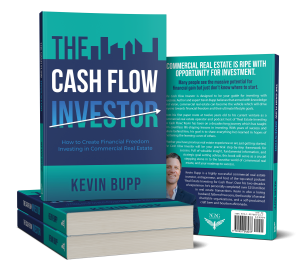
- Looking for the ultimate guide to passive investing? Grab a copy of my latest book, The Cash Flow Investor at KevinBupp.com.
- Tap into a wealth of free information on Commercial Real Estate Investing by listening to past podcast episodes at KevinBupp.com/Podcast.
Disclaimer: This podcast is for educational purposes only and does not constitute financial, tax, or legal advice. Consult with a qualified professional before making any investment decisions.
Chapters:
00:00 Intro
02:12 The Small-Bay Industrial “Shift”
13:35 Adam’s Investment Thesis
21:19 Day-to-Day Operations
29:04 Pivoting from Multifamily
38:32 Real Estate’s Next Big Opportunity
47:35 The Industrial Buyer Pool
49:52 Ideal Portfolio Construction
56:35 Connect with Adam!
Episode Transcript
Episode Summary
Adam The Brit joins Kevin Bupp to explain why small-bay industrial, one of commercial real estate’s strongest performers since COVID, is showing strain, and how he decides when a winning strategy has run its course. Adam entered small-bay industrial during COVID, buying six or seven properties within a couple of months from motivated sellers, often with owner or creative financing, and underwriting to a 20%-plus minimum return.
Since then, rents have roughly doubled in six or seven years, but small-business tenants averaging about 1,500 square feet cannot pass those increases on. With little build-out to leave behind, they treat the space as a commodity and move to save a few hundred dollars a month. Adam explains why newer owners with a higher basis, reassessed property taxes and insurance struggle to compete on all-in occupancy cost under triple-net leases, and why third-party leasing and hands-on management proved harder than expected.
He traces his path from Houston C-class apartments, through a property manager fraud that pushed him toward triple-net real estate, to buying distressed homes in Phoenix after the financial crisis. Adam then shares where he sees opportunity now, from distressed multifamily facing refinancing pressure to manufactured housing joint ventures with experienced operators, and closes with how to decide whether to hold or sell, how to build a portfolio of cash flow and value-add deals, and how life stage shapes investment objectives.
Key Takeaways
– Judge small-bay industrial on tenants’ all-in occupancy cost, not base rent. Triple-net pass-throughs of reassessed property taxes and insurance can leave a newer, higher-basis owner uncompetitive against long-held properties nearby.
– Small tenants with little build-out are price sensitive and easy to move, so rent growth that outpaces their businesses creates pressure and turnover even when the market is not oversupplied.
– Small spaces produce small leasing commissions, so third-party agents have little incentive to lease them. Adam sees boots-on-the-ground operators with in-house leasing, or larger multi-tenant spaces with longer leases, as the more scalable approach.
– Vet managers and partners yourself. Adam’s property manager came through a referral but had a prior conviction for something similar, a lesson that a referral is no substitute for background checks.
– To decide whether to sell, compare the profit available today with the asset’s yearly free cash flow (Adam cites a roughly 10-times rule of thumb he has heard) and weigh your stage in life. A portfolio can pair steady cash-flowing holds with value-add projects that are improved, sold and redeployed.
Key Topics Covered
– Small-bay industrial investing
– Triple-net leases and all-in occupancy cost
– Rent pressure and tenant price sensitivity
– Property taxes, reassessment and insurance in Texas
– Third-party leasing and management intensity
– Automotive tenants and environmental risk (Phase I and Phase II reports)
– Owner financing and creative financing during COVID
– Multifamily distress and refinancing pressure
– Distressed single-family homes after the Great Financial Crisis
– Manufactured housing and mobile home park joint ventures
– Buyer pool for small-bay industrial portfolios
– Portfolio construction for cash flow and value-add
– Wealth preservation and investing by life stage
Episode Chapters
00:00 Intro
Adam previews the rent pressure facing small-bay industrial, and Kevin introduces his unconventional path into real estate.
02:12 The Small-Bay Industrial “Shift”
Adam explains how rents roughly doubled after COVID and why small-business tenants now treat the space as a commodity, moving to save a few hundred dollars a month.
13:35 Adam’s Investment Thesis
Short leases as an inflation hedge, low turnover costs, motivated sellers offering creative financing and a 20%-plus return target, plus the leasing challenge he underestimated.
21:19 Day-to-Day Operations
Why no real estate is truly passive, the incidents Adam has handled, the wear from automotive tenants and how environmental risk is managed.
29:04 Pivoting from Multifamily
Adam’s start in Houston apartments, the property manager fraud that pushed him toward triple-net real estate, and his distressed buying after the financial crisis.
38:32 Real Estate’s Next Big Opportunity
Rising rates, compressed cap rates and the affordability crisis, and why Adam sees opportunity in manufactured housing and distressed multifamily.
47:35 The Industrial Buyer Pool
Who is buying small-bay industrial today and why value-add product sells more easily than stabilized assets in smaller bays.
49:52 Ideal Portfolio Construction
How to decide whether to hold or sell, a two-part portfolio of cash flow and value-add deals, and how investing changes with age and life stage.
56:35 Connect with Adam!
Adam’s book, Your Life GPS, how to reach him, and his interest in joint ventures and mentoring.
Full Transcript
Adam The Brit: I think the biggest fundamental change with the market was for a long time, I think rents were fairly stable. I think pricing was fairly sort of stable. It didn’t really kind of do much. And I think since COVID, there’s been such a big run up in rental rates. And most of the tenants that we have, at least, I think our average footprint is about 1500 square foot. There’s small businesses and I just don’t think that small businesses have the sophistication or the customer base that will allow this sort of significant rise in rents that has occurred. And so what I’m seeing, there’s significant rent pressure because rents have effectively doubled in six or seven years in most cases.
The tenants just aren’t able to pass on those rental increases to their tenants. And much like, you know, small or C-class apartment buildings, it’s almost people will move down the road for a two-month move-in special or, you know, to save a hundred bucks.
Kevin Bupp: Rents have effectively doubled in six or seven years, but the small businesses occupying these spaces can’t necessarily pass those increases through to their tenants. Unlike retail, Adam now sees much of the small bay industrial as a more commodity-like product where tenants may move down the road to save just a few hundred dollars. Today’s darling may have some blemishes, so how do you evaluate what you own and when it’s time to move on? Welcome to the Real Estate Investing for Cash Flow podcast. I’m Kevin Bupp. My guest today is Adam the Brit, and his path into real estate is anything but conventional. But what interests me the most about Adam isn’t simply the number of different things that he’s done.
It’s why he’s been willing to change course when economics change and why, as his own goals have evolved, he’s increasingly thinking about where the affordability, the distress, and the next opportunity may emerge. Yeah. As you listen into the show today, I would challenge you to know what you own, understand what actually drives your returns, and then recognize when a strategy that worked yesterday might not be the right place for your next dollar. Adam, my friend, you’ve had a pretty unusual road into real estate. I know that you were a rock band manager for a number of years. You were in the semiconductor space. You called three different continents home and eventually built a portfolio spanning several different asset classes, including multifamily retail.
And then today, fast forward, you built a very meaningful small bay industrial portfolio and you’re thinking about selling a lot of it. And so I’m excited to have you on, my friend. Appreciate you joining here to show. And there’s a lot to unpack here. You know, you got quite the story. And so excited to dive into it.
Adam The Brit: Pleasure to be here. Thank you so much for having me on.
Kevin Bupp: I guess we’d love to maybe kick this off, Adam, if we could. You know, you got into, you know, I kind of think small-bay industrial is similar to that of manufactured housing. We’ve been in manufactured housing for 15 years. Ten years ago, not many people knew what it was, right? It was an asset class. There were owners. There were investors. You know, the returns were, you know, great. double digits and not too many people, especially institutions and smaller or larger investors really knew the secret, right? Like the secret wasn’t let out yet. And I feel the same way about manufactured housing. Now the cat’s out of the bag, all the private equity and big institutional capital is in our space.
And I think the similar is happening in your space. And so I would love to get your context now that you’re thinking about selling some of it or maybe all of it. I guess, what are you seeing in the Small Bay Industrial space? What are the conversations like? What’s the chatter like to where you feel as though what was once maybe a great opportunity isn’t so much any longer?
Adam The Brit: I think Small Bay Industrial, for me, I really got into the space after, I guess, during COVID. I still have a large portfolio of multi-tenant retail. And luckily, it did very well during COVID. asset class basket. And, you know, if it’s a good basket, that’s great. And during the COVID sort of period, it was good for me. You know, some people didn’t have such a positive experience with retail, but for where my stuff was located, it worked out pretty well. But I kind of realized the next time that might not be the case, you know, the next COVID or the next crash or whatever. And so I was like, you know, I need something else that’s more diversified.
I also smelt the inflationary pressures building with the money that was being handed out at the time. And so I decided to, you know, kind of look into Small Bay Industrial. And I’d been studying the space a little for a while, but never really kind of took the plunge. And so during COVID, I started kind of putting feelers out, looking at what was on the market. we kind of went in pretty big. We bought like, I think, six or seven different parks in the space of a couple of months. Just at the end of COVID, there was definitely a lot of, I think people were fairly interested to talk to us at the time because there wasn’t a lot of activity during COVID.
And, you know, I think that the… I think the biggest fundamental change with the market was for, for a long time, I think rents were fairly stable. I think pricing was fairly sort of stable. It didn’t really kind of do much. And I think since COVID, there’s been such a big run up in rental rates and most of the tenants that, uh, we have at least, I think our average footprint is about 1500 square foot. So there’s small businesses and, uh, I just don’t think that small businesses have the sophistication or the customer base that will allow this sort of significant rise in rents that has occurred.
And so what I’m seeing today is that… There’s significant rent pressure because rents have effectively doubled in six or seven years in most cases. And the tenants just aren’t able to pass on those rental increases to their tenants. And much like, you know, small or C-class apartment buildings, it’s – Almost people will move down the road for a two-month move in special or to save $100. And unlike retail, which is location-specific, the tenants need to be there as customer-facing. I’m kind of seeing that Small Bay Industrial, in most instances, is more of a commodity product where the tenants are less concerned about whether they are in that specific location and more concerned about how much it’s costing them.
And they will jump ship and go down the road to save a few hundred dollars a month. So that’s kind of, I guess, in a nutshell, what I’m seeing is that the tenants are becoming more and more price sensitive. I’ve realized that it’s more of a commodity product than retail. And the tenants are And they’re not as vested. There’s not typically any build-out or any… They can easily move from one location to another. It’s not like there’s a lot of fixtures and fittings and build-out that they’ve got to kind of reconstruct. So the cost to move is not great. And so there’s not really that many barriers to…
to them to move to save money. And so that’s kind of what I’m seeing, you know, across a number of markets. I think if you maybe are approaching a bigger footprint with bigger tenants, maybe that’s and they’re more sophisticated, maybe they’re more vested in the spaces. But certainly for these smaller tenants, I’m seeing a lot more, a lot more movement and a lot more price pressure.
Kevin Bupp: No, that’s helpful context. So it sounds like maybe you’ve seen your own portfolio, right? You’ve seen tenants push back and really be price sensitive and be willing to make the move to save a few hundred bucks a month. But has also has supply and demand factors, have that played into it at all? Is there a lot of this new product that’s being built to where now there’s an oversupply in some of the markets you’re in? Is that a consideration at this point?
Adam The Brit: So I don’t think so because, you know, the cost to build obviously is significant. We recently completed 125,000 square foot small bay ground up development. And when I say recently, maybe… completed construction, let’s say two years ago. And this is in Texas and it’s a metal building construction. And I think we were all in for about a hundred dollars a foot into that building. But then obviously you’ve got your lease up time and leasing commissions and a bunch of soft cost on top of that. And so… I wouldn’t say the issue is oversupply. It’s not like the apartment space. I would say it’s more that…
it’s more that I think it’s more that just, it’s just the tenants. If you’re building smaller footprint products, the tenants that are occupying those spaces, there’s only that many tenants that, you know, want that type of space. And it’s just typically, you know, they’re even new businesses or small businesses, obviously, because they’re smaller spaces and there’s just that they just can only pay that much. Um, you, you know, in a bit, maybe in a smaller market, you’ve maybe got more where there’s less choice. Maybe you’ve got more pricing power as an operator, but in the bigger metros, most of my products is in Houston, uh, and Vegas where there’s a lot of, you know, a lot of, a lot of inventory and most of the market, um, you know, you’re really at the mercy of what somebody else is selling it for.
And, um, I think you’ve got two types of owners in this space. You’ve got the owners that have owned these properties for 20 years, let’s say, or longer. And their basis is obviously very, very low. And then you’ve got the newer owners. And it’s very hard if you come into the space today as a new owner and you’re in those buildings for $100, $120, $30, $40 a foot. to compete with someone that’s in it at 30 bucks a foot, you know, you’re, it’s a losing battle. You’ve also got other issues in, you know, certainly in Texas where the appraisal districts catch the sales and the property taxes are a significant piece of the pie.
Um, you know, we typically try and do all of our product triple net, but obviously the, Most tenants are going to look, even though, you know, the rent might be, you know, a dollar a foot plus triple net. Most of the tenants are going to look at their overall, you know, occupancy cost. And so, you know, if somebody’s owned that building for 20 years, it hasn’t transacted. Their appraised values are likely to be significantly lower, which means and then, you know, probably their insurance cost is going to be lower. Yeah. you know, maybe they self-insure. And so, you know, they’re just able to offer the products at a lot lower price without compromising, you know, their profitability, as it were.
And, you know, if they’re not looking to, you know, at the overall, you know, the overall value, i.e. selling in the immediate future, and they’re just looking at occupancy, then they can easily afford to do that. So, you know, I mean, that’s true of any asset class, right, to a certain extent. But I think in the small bay industrial space, you know, it certainly plays a big role.
Kevin Bupp: You’re making an important point there regarding the all-in costs, right? Even if your base rents are competitive to that of someone down the road, but yet you’ve got a much higher – you’ve got a triple net structure and you’ve got a much higher tax rate. property tax basis you intend to pass back to the tenants as well as insurance costs, right? Like really what matters to them, the tenants really don’t care what’s my base rent compared to the other options down the road. It’s like, what is my all-in cost, right? And so it’s not just black and white. You can’t just simply assume that you could pass 100% of those costs back to the tenants and still have it be affordable, still have it be a compelling offer for them to where they’re not willing to move to a cheaper location.
Again, to your point, someone that’s owned it for 20 years, they got a much lower basis, your property appraisal basis is much lower than that of, of maybe the property that you’re, you’re, you’re, you’re, you have available to them. So that’s a, I think that’s an important factor because I think that maybe those that don’t have as much context looking into the triple net space, and this is applicable to all the other types of assets that have, you’ll share that similar type structure. It’s like, is that just a function of, well, we’re passing it back, right? It doesn’t matter to us. We’re passing it back.
We’re always, we’re focused on the base rents and that’s just not the, That’s not the entire story. So I’d love to know as far as like returns and would love to talk about that a little bit, I guess more specifically, kind of your original investment thesis when you started looking into the space and you said it was during COVID. Obviously, there was some compelling aspects of this asset class that really attracted you and got your attention. I’m sure one of them would be maybe the returns in this particular niche. And so maybe speak to what the original investment thesis was, what the returns look like, and And really, outside of maybe the factors you’ve already mentioned, where is it broken?
Is there still opportunity today? If so, where? And if not, we’ll talk about you getting out of the space as well, maybe potentially here in the short term. But just the original investment thesis, if you could maybe share some context there, if you would.
Adam The Brit: Yeah, so I mean, I think the thing that kind of attracted me to the space industry initially was the fact that, you know, the leases are typically, you know, one year, maybe two, maybe three years max. And so, you know, if you’re looking at a hedge against, you know, for inflation proofing, it’s a great hedge, right? Because you can increase the rents every year in theory and keep up or match or beat inflation. So I think that was the initial sort of attraction. The second attraction was that there’s, very little, if none, no TI expense, tenant improvement expense when it turns. And so the spaces are relatively cheap to turn.
And… I still think there’s not as much supply of small bay industrial as other asset classes. And so I still think there is a supply constraint. So I think those were the sort of the things that attracted me to the space. It was also something I felt was going to be scalable. I think I underestimated the amount of boots on the ground management that was required and the difficulty in finding competent third party leasing because we do everything third party. And, you know, I think the way it works is to have you know, to be an operator that is boots on the ground, that has in-house leasing, maybe, you know, with an equity kind of piece involved for those leasing people.
So there’s more motivation. It’s, you know, it’s very hard to get somebody excited to go out and sign a lease, you know, go and show a space that’s, you know, an $18,000 a year, you know, rents, And they’ve, you know, they’re going to get a couple of points on that for it. There’s just no real incentive. They’ve got to drive across town, maybe show it 10 times. It doesn’t, you know, it doesn’t have that the appeal that something else would have. So for me, I think that was something that I hadn’t maybe thought about enough when I got into the space. Yeah. The advantage that I had when I really went into it was the fact that there was really very little activity during COVID.
And the sellers that we had were very motivated to sell because they’d had these properties by and large on the market for, you know, for over a year. And the… So there was an opportunity for owner financing or for creative financing terms. And so that really helped with our returns because we got favorable financing on most of these deals. Obviously, back four or five years ago… bank debt was also a lot cheaper than it is today and so i was underwriting these you know these assets with a you know 20 plus percent return minimum uh in most cases going into them with a because we were in a lot of them very, very light.
We even got one bank gave us an 85% loan on one of the properties. I mean, it was pretty interesting at the time. Obviously, coming now rounds and, you know, some of the loans are needing to be refied. And… That’s now becoming more challenging where, you know, the debt is more expensive and the rents have gone up. But, you know, the LTVs are not there to get the kind of loans you could get before. So I think you probably have to be a lot more focused. conscious of your underwriting and be very on the numbers because the margin for error is not there like it was maybe five or six years ago when I got into the space.
But I still think that for boots on the ground, roll your sleeves up, kind of operator, I do think that there’s still opportunity there, but you’ve got to be living it day in, day out. I think for somebody that’s looking to scale it with third party, it’s not the asset class or it’s you need to go bigger. So you need multi-tenant industrial, maybe five or 10,000 square foot and bigger spaces where you have longer lease terms. It’s maybe slightly more institutional and less hands-on, as it were. I think that’s really the key.
Kevin Bupp: Yeah, you make a good point there. I hadn’t given any consideration to the average size of these spaces and what that means for a leasing agent. It’s not that big of a carrot. What is typical if they sign a one-year lease, they get one month of the lease as their commission?
Adam The Brit: So we pay 6%.
Kevin Bupp: Okay, 6% of the entire value of that lease, whatever the term might be.
Adam The Brit: But the average term is typically one year. I’d say probably 18 months is probably the average term. So it’s not very much. It’s not a big carrot.
Kevin Bupp: Yeah, it’s not. You could probably make more money renting residential houses, being a lease agent for residential homes.
Adam The Brit: Yeah, but having said that, I mean, the thought behind it was – you know, everything’s bigger in Texas, right? And most of this products in Texas, go big or go home. And so I put half a million square foot on the ground pretty quickly. So I wasn’t saying to someone, I’ve got one space I need you to lease. I’m like, here you go. This is a whole portfolio. And you know, the sum total of everything with the renewals is, you know, significant money, right? I mean, it’s maybe not as significant as the same portfolio in retail from a leasing standpoint. But if you’re in that space, it’s still meaningful.
So that was kind of how I had hoped to create some type of velocity or, you know, traction let’s put it that way but still it’s still challenging because if you’re hiring third party they’re obviously not working exclusively for you and you know human nature is they go where you know the easy money is right so the harder money gets uh gets gets last place.
Kevin Bupp: Yeah, well. What does the day-to-day look like? Again, I guess in my mind, the picture I paint is there’s probably not much going on on a day-to-day, you know, assuming especially if they’re triple net leases, the, you know, the tenants are responsible for their own, you know, their own unit. But what else from the management intensity perspective, what does a day-to-day month by month look like operating these properties?
Adam The Brit: Yeah. So you want the good, the bad, or the ugly?
Kevin Bupp: Well, all the above, right? I mean, we’re trying to be transparent here. I mean, because again, I think there’s a misconception with every type of real estate. I don’t care what asset class it is. There’s very few things that are truly passive unless it really is a triple net credit tenant, CVS, Walgreens, something along. There are some things that I would say I would argue that they are passive, but There’s not many, right? And so, you know, we got into manufactured housing many, many years back. And I remember everyone, even when I talked to folks that know nothing about manufactured housing or mobile home parks, they’re like, oh, I heard your cash cows, right?
Passive income, like BS, right? Like, yeah, they’re great. But they are a lot of work, right? Like it’s never ending. It’s a major operation if you want to operate them well and actually make money from it. But it’s a lot of hands-on and it’s just a lot of moving parts involved. It’s not easy by any means. And I don’t think very, very many asset classes are easy. And so anyway, just curious to know what some of the nuances are in your space and what the true day-to-day looks like.
Adam The Brit: So, you know, I would say that… I always say I don’t want to ruin this story, but we’ll skip to the end of the book. There is no such thing as passive income in real estate, period. I mean, even to your point, you have a Walgreens or a CVS. They go bankrupt. They get bought out by private equity. They’re passive until they’re not, right? I mean, if they don’t renew their lease after 25 years, then guess what? You’re looking for a new tenant. So maybe for a period of time they’re passive, but you’re always – going to be involved at some level with real estate is just a question of how much.
And typically down the, you know, if you, I always look at apartments, you know, A-class apartments, brand new apartments are probably less management intensive than D-class apartments, workforce housing. And… you know, but you theoretically should be rewarded in your return or your cap rate for the more active involvement, right? I mean, that’s true of a, you buy a triple net lease Starbucks at a four cap or you buy a triple net lease, you know, something else at a seven or eight cap, which is, you know, less credit worthy and more likely to not be there, you know, You know, it’s like anything in life you get rewarded for the risk we should do.
I think with multi-tenant industrial, I didn’t go in it with the thought that it was going to be passive. I’ve been doing this for too long in too many different asset classes to, you know, have that have had that. So I knew it was going to be fairly management intensive. I. I kind of figured it would be somewhat like C-class apartment investing, but slightly better because of the triple net lease element of it. Some of the things that we’ve had over the years, I’ve had… cars go through buildings. Um, I’ve had, uh, illegal dog fighting, uh, and raids by the police. I’ve had, uh, a couple of shootings.
I’ve had, uh, infestations of mice. What else have I had? Oh, man, I’ve had parking problems. I say one of the major tenant, sort of one of the major users of these type of spaces are automotive. And one thing I had definitely… underestimated and kind of realized is how many cars these, well, I mean, it’s kind of a bit stupid when you think about it. Obviously, automotive tenants have a lot of cars, but they’re just the amount of parking these people take. And they are definitely very heavy vehicles users. They definitely use the building heavily, as it were. So there’s a lot of wear and tear.
And so we’re definitely trying to limit, in most of the spaces we have, the amount of automotive tenants because they are just really, really, yeah, heavy users. They’re also quite messy and dirty. And there’s obviously an environmental concern with that type of tenant as well, which,
Kevin Bupp: I was going to ask about that, the environmental piece of it. Like, that’s immediately what came to mind when you start talking about a lot of automotive tenants. I’ll say they’ve got motor oil and other kinds of fluids that could ultimately contaminate the soil if they were spilled or not disposed of correctly. But I’m sure there’s probably a few other industries I’m not even thinking of that would pose a potential environmental hazard or threat to your business. And so I’m assuming that’s top of mind when you guys are considering a tenant. I’m sure that’s one of the items right at the forefront that you look into, right?
Adam The Brit: I mean, it is. Obviously, if someone’s automotive, they need to have the right collection for their excess oils and that kind of stuff and fluids. And it’s also a lot down to the management to be walking the properties on a regular basis, checking all the stuff. on spaces, making sure there’s nothing obvious left out or drums without lids. You can typically tell when you walk a building whether the tenants give a damn or don’t. We recently looked at a couple of smaller properties in LA. One of them, it was just… From the OM, it looked fine. But when we walked it, I’m like, man, this is just an environmental minefield.
And I just wasn’t even going to go down that road. I’m like, you know, it just doesn’t make sense to… I know there’s going to be problems. You can just tell. But when you go into a shop and the tools all have their own places and there’s pride of ownership and pride of work, then typically… There’s not so many concerns, but it’s always a concern, I think, in the space. And it’s always top of mind, but that’s a risk of the business. And it’s a risk always, I think, in business. any type of real estate, commercial real estate, less so obviously in other types of real estate, but certainly also in retail, you have dry cleaners for example, and those kind of tenants that have chemicals and you also may have, an automotive component in retail as well, that you always got to be careful and you never know what was there previously as well, which may come back and haunt you.
So obviously having clean phase ones and phase twos and keeping a very close eye on what’s going on around this is very important.
Kevin Bupp: Yeah. I know that you, again, you’ve mentioned retail on a number of occasions, but also multifamily was a big part of your, your, your investment focus for a number of years now. What happened to multifamily that I guess made you realize that the investment wasn’t doing or behaving or producing the returns that you expected?
Adam The Brit: So when I first moved to the States back in 2000s, I had moved from the Netherlands and I had a couple of industrial buildings there. And when I moved to the States, I I had an operating business and I was looking for, you know, going back to the passive income story, the passive income. And I read Robert Kiyosaki’s Rich Dad Poor Dad book. And, you know, it really had kind of opened my eyes, I guess, to the opportunity and coming to the U.S., it’s a lot easier to invest in commercial property here than it is in Europe. There’s just more of it. And it’s, you know, in, in, in Europe, it’s definitely more of an institutional market.
And here there’s something for everybody, right? For the mom and pop investor right through, obviously to the institutional buyer. And I guess like many people, I was more drawn to multifamily. And so I started buying smaller multifamily properties in Houston, started off with a 16 plex was my first building. And I guess fairly quickly within a couple of years, grew it to about 100 and I think 130, 40 doors, maybe. in about eight different properties. So they were all fairly small, but they were all contained within probably a five mile radius of one another, uh, in, in, in a good part of Houston, but they were definitely C class properties, but in B, A minus neighborhoods.
Okay. Um, um, And I guess I realized fairly quickly it was quite a lot of work, but I wasn’t really so focused on the cash flow. I was more looking at it at the time as let me throw money at this because I had a lot of excess cash from my operating business and money. let me use the tenants to pay down the mortgages. That was kind of really the extent of what I was really looking for. And once it got, I guess, once we got a couple of buildings, I had a broker that referred a property manager to me and spoke very highly of the property manager.
So we hired this property manager and it was going okay. There was a lot of turnover. It was definitely sort of revolving doors, but it was kind of going okay. And we went on a six-week trip to Australia and New Zealand. And about three weeks into the trip, we were not able to get a hold of this property manager. Yeah. And at the same time, I was noticing that checks weren’t necessarily getting deposited in the bank. And I was getting somewhat worried. And so we cut the trip back and came back early and ultimately tracked down this property manager in a state’s mental institution where she’d had a breakdown.
And it turns out that she’d been running her own Ponzi scheme with our rent checks. basically borrowing from this month and using next month’s rent to pay this month. But it got so big and it caught up with her that it became too much of a problem. And she had a breakdown from it. And it turns out, After the fact, of course, that she had a prior conviction for something similar and she was on probation. And so she ended up spending 18 months in the state penitentiary. And I realized then that even though… She’d come through a referral. I’d never really dug in and did serious background checks on her.
So that was a lesson I learned then, you know, with whoever you jump into bed with in a business term, definitely don’t just rely on a referral and presume that it’s all good. Definitely do your own due diligence on the people because, you know, your success really, you know, lives and dies with everything. you know, doing good due diligence on the people you work with. And so that really gave me such a bad taste, as it were. And I realized that it was such a lot of moving parts that I decided that I really only wanted to do triple net at least real estate from then onwards, due to the fact that It’s just when you look at the P&L of a 100-unit apartment building, it’s pages long.
The P&L of a 100,000-square-foot shopping center is one page, right? It’s just a lot more predictable income. The tenant profile is very different, and it’s just a lot easier to manage and scale as well. Now, okay. I do think that there is a use case for apartments. And during the financial crisis, there was a great opportunity to buy and flip apartment buildings, which I did, and single-family homes. And I think right now we’re staring down the barrel of huge opportunity in that space as well because there’s so many syndications and people that bought with these very low interest rates. that are definitely unable to refi their properties.
So I think there’s, there’s, there’s serious distress in that, in that business right now. And I think there’s a lot of opportunity and there, there probably will be a lot more going into next year. Um, And so I do think there’s opportunity there. But is it something I want to own? Absolutely not. Is it something that I think you can buy and sort of hold and sell and make money on? Sure, when the time is right. And I think we’re coming back into that time now. But for me and my personal asset allocation for business, Income, it’s more of a transactional product to me, not an income and hold product.
Kevin Bupp: Yeah, no, that makes sense. And I appreciate the background there. So, I mean, it does sound like when you started buying, you know, a multifamily back, I think you’d mentioned early 2000s. What a perfect time, right? Very, very difficult to probably, even if you’re a poor operator, to maybe get it wrong. And I know that wasn’t, we were nowhere near a full recovery at that point in time. We were still coming out for, gosh, probably over a decade, you know, maybe seven, eight years before we got to what was considered full recovery from the company. you know, the great financial crisis or, you know, No, actually, my context is wrong here.
So you said you came and started buying before that.
Adam The Brit: Yeah, yeah.
Kevin Bupp: So before that, so you had a good run-up then. You must have had a great run-up, good timing. And then did you end up, were you out of that space completely prior to 08, or did you dive back in, or were you just completely into retail at that point or another asset cost?
Adam The Brit: So, you know, I was building spec houses, high-end spec houses, in a very high-end neighborhood uh very very contained within a a mile and a half two mile radius and it was all going swimmingly until the hurricane hit houston and it went from hero to zero in like three months and i was really a little panicked because I had a bunch of spec homes on the grounds. The banks were calling for loans to be repaid and there were no buyers. And I looked at the world and I’m like, this doesn’t look good. And I could see everything. big problems. And so I did what any normal person would do when they’ve got a bunch of houses they can’t sell.
I went to Phoenix and I bought 50 houses for an average of $27,000 a door. And did a rent-to-own model and created basically $3 million of paper in a 90-day period very, very quickly. And the homes that we bought, they were all foreclosed. And the average mortgage amount of those foreclosed homes at the time was over $200,000. So they were literally pennies on the dollar. It was crazy. There was nobody buying. So yeah, during that time, I bought 600 houses and 2000 condos and apartments. And then I basically from 2010 to 2014 is when I did that. But it’s all about opportunity and timing, but I never bought them with an idea to keep them.
They were always, let’s buy them and then sort of figure out how to create a revenue stream from them and then sell them again.
Kevin Bupp: Yeah, I love that. No, that’s great. I didn’t know that part of your story about getting into distressed residential during that period, just capitalizing on a great opportunity, a massively distressed market at that period. So I guess, what do you see today? What do you see today? You’re a very opportunistic guy. You understand there’s an economic cycle to everything. And even on a micro level, as asset by asset class, right? There’s a lot of… a lot of influence from the capital markets. The treasuries have been on an uphill hike here now for the last couple of months, you know, compared to where rates were at, you know, a few short years ago, it’s, it’s a night and day difference, right?
It’s just, I think there’s a lot of impact that has across all asset classes, but yeah, I would love through your lens, where do you see, you know, what gets you excited today to get out of bed saying, man, I see this as the next best thing. This is what I’m pouring my energy and efforts, my thoughts into. And this is where I see, you know, being able to build scale or create opportunity over the next couple of years. What is it? Is it a particular asset class? Is it a business model? Curious to know.
Adam The Brit: So to premise the comments I’m about to make, my crystal ball got overpolished and broke a little while ago. So I’m kind of, you know, I think what I’ve seen in the last couple of years is really an unsustainable, was an unsustainable commercial real estate market where the cost of debt was going up and up and up. And the cap rates were actually compressing in most cases. And so the spreads were just narrowing and narrowing and narrowing. And, you know, historically, spreads have been a lot bigger than they have been in the last few years. And so it was only a matter of time until something had to break.
Right. And so as much as this trend, Increase in rates will, I’m sure, hurt my property values. It’s kind of exciting because it’s going to force a change and in doing so create opportunity. And so… I feel that we are probably in a higher rate environment for the foreseeable future. But when you look historically back at rates, the rates where we are now, and even if it goes 50, 100 basis points higher, it’s not really – that much different to how over the last 30, 40 years rates have been, we’re still pretty normal. The only real difference is that cap rates got so compressed and people and sellers have got so used to these compressed cap rates that there’s really been this disconnect in seller expectation and buyers cost of capital.
And I guess there’s People are talking about the money on the sidelines, and there’s just a lot of capital, I guess, that got created. A lot of wealth’s been created over the last five, ten years that’s sitting looking for a home. And so I think people have been paying silly money for real estate since COVID, basically. Yeah. So I’m excited about what’s coming. I’m also very scared. And I think learning to compartmentalize your fear in one box and see the opportunity is a skill set that I kind of have. But I think as I age, it’s getting harder. I think I’m more concerned with wealth preservation than I am with growth at my age.
But I think the opportunity… Well, I guess, let me rephrase that. I think where I’m focusing my efforts right now is looking at not so much the real estate, but the economy in the world and what I’m hearing and reading. And I think that… The buzzword right now is affordability. There’s an affordability crisis in this country. It’s not only in this country, it’s in everywhere, in Europe, everywhere. And so I’m looking at, okay, well, when you look at housing and affordability, where is the opportunity? And obviously you’re in the space, but I think manufactured housing, although it’s overpriced by and large, I think if you’re looking at long-term investing and where the opportunity lies and the barriers to entry, and I think mobile home parks are a great play.
I think there’s, not that they are, uh, you know, triple net leased, but it’s the closest thing, I guess, to triple net leased residential that you can get. If the, if the homes are, you know, owner owned and not park owned homes, you’re, you’re leasing dirt and you’re obviously providing other services and stuff, but you’re not so worried about the roof and the toilets and the, that kind of stuff, like you would be in an apartment building. Um, It’s a captive audience to a certain extent because they own their own homes. They’re not easy to move or some cases impossible to move. And so I, they’re very difficult to, to recreate in many parts of the country that, you know, there’s no permits or it’s very hard to get permits.
There’s a lot of nimbyism as well. And, It really, I think, is the last rung on the ladder for people where they can still find something that’s affordable. And so I’m really kind of drawn to that space. I do think it’s fairly heavy from an operations standpoint. And so I’m not looking personally to be… the operator per se so i’m looking currently and doing jvs with a number of experienced operators where i can bring the capital they can bring the operating experience and um we kind of proceed in that way as opposed to me doing everything um but that also is you know once again probably due to the fact that I’m older and I’m just not really wanting to be running around that much.
And I am also, you know, looking at scalability. I want to scale and it’s a lot easier to scale with people that have the platforms and the operations piece of it already kind of ready to go. So for me, I think that’s where I see myself going. I do think, as I’ve alluded to before, that there is going to be huge opportunity in the multifamily space. There’s a lot of distress, definitely in the C-class market, in some of the markets that have been heavily built, you know, Austin, Houston, Phoenix, maybe to a lesser extent, Vegas. Believe it or not, I think there’s huge opportunity. You’ve got to kind of believe that the…
the governmental noise will subside. But in places like LA, prices have dropped so significantly. And if you can get past the rent control problems, which may or may not change at some stage, I think there’s huge opportunity in Southern California in that space right now. And there’s big, ultimately, there will be big overseas demand for that product at some stage. So multifamily, I think, if you want to get your hands dirty is a great space to be looking at as well. I think… You know, industrial and retail right now are definitely the darlings of the commercial real estate market. And there’s a lot of money chasing that right now.
So maybe, you know, a harder asset class to find any distress in or any real value add. I guess I’m a value add buyer. I like to, you know, I don’t like to buy fully baked products really. And it’s just really hard to find, you know, value add products. well-priced retail at the moment. But I still really do like the retail products. And, you know, in an ideal world, I would have a lot of it, or I’d be buying a lot more of it. But there’s a time and a place for everything. And real estate is so cyclical that, you know, today it’s… this, but in a year or two years or five years, it will be that, right?
So you just have to be patient and everything comes around.
Kevin Bupp: Yeah. Well, bring this full circle, then maybe getting back to the original conversation with industrial and more specifically your portfolio. I know we… I made comments that you’re considering potentially exiting out of some or maybe even all of it or the majority of it. And I guess what does the buyer pool look like today, given where we’re at in the market cycle, given where the capital markets are? Is there still a major appetite for a stabilized portfolio as yours? And if so, who is that typical end buyer? Is it a private equity institutional group? Are you of that scale? Or is it a smaller investor such as ourselves?
Adam The Brit: So I think in the industrial space, I think you’ve got a multitude of buyers right now. I mean, it’s definitely a popular asset class. So yeah, there are definitely a lot of buyers. I just had a call before this podcast with a guy because we’re looking to list a couple of buildings. And yeah, there’s strong investor demands. I would say there’s more demand for buyers. value-add properties than for fully baked industrial. Certainly in the smaller bay space, I think value-add is easier to sell than fully baked. I think when you go up in asset class size from a… I’m not talking about in overall size.
I’m talking about more in the base sizes or the space sizes when it gets to 10, 15, 20,000 square foot. I think a more stabilized product is probably then more attractive than the value add. But we’re looking at… taking a couple of hundred thousand square foot to market right now. And that, I think, attracts smaller institutional buyers, syndication buyers, and maybe larger private family office type buyers. There’s definitely a big buyer pool. It’s definitely, I would say, probably the hottest or the second hottest asset class right now that is attracting investor attention for sure.
Kevin Bupp: Yeah. No, fantastic. This has been a fun conversation, Adam. One last question here, I think, and we’ll round this out, but obviously you’ve spanned a number of different businesses, industries, and a multitude of real estate strategies, as we’ve discussed here today. You still see real estate as a great vehicle for long-term wealth and wealth preservation. And so I guess if someone tuning in here today, listening to our conversation, they own an investment that maybe it’s worthwhile, very well for them for a period of time, which they ask themselves to make sure that, I guess maybe their original conviction of why they bought that property hasn’t maybe turned into more of an emotional attachment.
I think that ultimately could happen quite a bit for folks that have held onto real estate for a very long period of time. Again, maybe something’s changed, they haven’t identified it, and they’ve just got more of an emotional attachment than anything else. introspective question or conversation they should be having with themselves. If so, what is it?
Adam The Brit: Well, I think you’ve got to ask yourself, like in anything, you’ve got to ask yourself what you’re doing, what you’re doing for, right? Where is it taking you? What’s the end kind of result you’re looking for? I think if you’ve owned a property for a while and it’s serving you well, there’s the old devil you know versus the devil you don’t, right? I kind of believe that all sellers are liars to a certain extent. You’re always going to uncover stuff that you didn’t necessarily fully realize or was maybe conveniently forgot to be told. And so there’s always the unknown. But once you’ve taken something as far as it can go, I guess you’ve got to ask yourself, is this something I see as a long-term hold?
And if it isn’t, what can I sell it for today? And I think using the profit you’re going to make and looking at the total profit versus the yearly cash flow, free cash flow. And if that multiple is enough, I’ve heard 10 times the yearly cash flow metric banded around in the past. I think if you can make a chunk of money in one go, then it might be worth looking to take it to market. buying something new, but it also depends on your stage in life, right? You know, I think keeping assets, paying down the debt, you know, not being so beholden to a bank, if you can afford to do that is not necessarily a bad thing.
If you’re younger and starting out, obviously selling properties, rolling it into something else, improving it, selling it, that’s how you build up equity and build up a net worth. But at the end of the day, Every time you do that, you’re only as good as your last deal, right? So it’s nice to have a mix of, you know, I believe that a good portfolio is comprised of two parts. That’s your cash-flowing, steady-eddy, predictable, monthly kind of paycheck-type real estate that pays you every month. And you have consistency there so you can kind of sleep at night. Stuff that you buy with a view to improving it and selling it and making a chunk of money that you can then redeploy into something else.
And over time, you do enough of those and then you park some of that profit into a longer term hold and kind of keep going. And that’s how you scale a portfolio over time internally without necessarily using too much money. investor money or syndicating stuff. You can also do it obviously through syndicating and maybe make it faster and quicker. But I think the way to build true wealth is owning assets and owning them for the long term. That’s my mind. But obviously, if you’re, you know, I’m almost, I’m 59. If you’re 29, you have a very much longer runway and a lot more energy probably and a different mindset and probably a different balance sheet.
So it really, everything’s appropriate for different phases in somebody’s investing career and also their age.
Kevin Bupp: Yeah. Yeah. No, you’re funny. You make 59 sound like it’s like 89 on your deathbed. How you, how you reference your age. You’re still, you’re still a young pup, my friend.
Adam The Brit: I’ve been, I guess I’ve, uh, you know, I feel, I feel young, but I just, it’s, it’s really, I think you’ve got to realize that this is a marathon, not a sprint right in real estate. And I’m, hoping that I live to be an old active guy, but I’m realistic enough to realize that I probably don’t have a, I probably don’t want to be doing, you know, active real estate when I’m 90 or 95, you know, even if I’m still alive then. Right. So the runway is shorter and I look at my, I split my investment objectives in short, you know, six months, a year, three, five, 10, and then longer.
And so when you start looking at 10 year increments, which really is kind of what I’m looking at most at the moment, it’s like, okay, what’s going to serve me in 10 years or in 20 years time. And there’s a huge difference between 59 and 79. You know, I don’t care who you Um, and so I’m just cognizant of the fact I’m a realist. I’m cognizant of the fact that, you know, I’m not 39 any longer and it, it does make a difference. And if you, you have to be aware of where you are and what the limitations may be in the future and prepare yourself for that and make sure you’re buying the right kind of properties that are going to serve you going into your future, you know, irrespective of your age.
Right. So it’s, it’s not that I feel like I’m on death’s door, but you know, I’m just, I’m a realist.
Kevin Bupp: No, all good. All good. Well, I’m 47. I feel like I’m 27, but my wife says I still look like I’m 47. So I feel you. All good. You look good to me, man. It’s so good. Yeah. This has been a fun conversation and I appreciate you coming on here. And just, I mean, I really appreciate the transparency. You know, I mean, you shared the good, the bad, the ugly, a little bit of everything with the experience you’ve had in all the many different asset classes and, you know, how you handle times when the investment thesis ultimately changed and what the next stage of that journey looked like.
So I think just a lot for investors that are tuning here, a lot from the thing about a lot of takeaways here. So, again, really appreciate your time spent here today. And I guess for those that want to learn a little bit more about you, Adam, what you’re up to, any new investment opportunities, where’s the best place for them to find you?
Adam The Brit: So, well, a couple of things. First, I want to do a quick shameless plug. I just published a book recently, which is also on Audible now as well, called Your Life GPS, Grind, Pivot, Succeed, The Entrepreneur’s Roadmap to an Ideal Life. And it basically goes into a lot a lot deeper my journey, my entrepreneurial journey across three continents from managing rock bands to being almost homeless in Paris to building a real estate portfolio of like almost a million and a half square feet with no institutional backing. And, um, I’m going there’s lots of lessons in that the failures, the successes, um, it’s a great way to kind of understand my journey and what’s worked for me and what hasn’t, um, people can reach me either, uh, through, um, Adam The Brit on LinkedIn, um, or, uh, through my book, yourlifegps.com, or my website, adamthebrit.com.
So any of those ways. I’m very interested in talking to anyone that might have any kind of deal that I might be interested in. I’m always interested in JVing with people. I also mentor people. I’m quite happy to give people help if they need it, if they have specific questions that I feel I can help with. Yeah. And, you know, at this stage of my journey, all the proceeds of the book are going to build.org, which is a nonprofit that provides entrepreneurial education to high school children from underserved communities. So for me, it’s more about giving back today. It’s not so much about, you know, trying to sell people stuff.
So, yeah, please have your listeners reach out. I’d be more than happy to talk to them.
Kevin Bupp: Yeah, no, that’s fantastic. Thank you, Adam. And guys, we’ll include all the links and all the resources that I just mentioned in the show notes. And so with that, guys, if you enjoyed the conversation, please do subscribe if you haven’t done so already. Leave us a rating and review. And, you know, I think there was a lot of good takeaways here today, chatting with Adam. And so please do share the episode with someone who might find it useful. So until next time, this is Kevin Bupp. Thanks for listening.