
Some commercial real estate investments don’t look like obvious winners on the surface. Complexity, uncertainty, and unanswered questions scare many investors away, but they can also lead to some of the best opportunities. That was certainly the case with the deal I’m about to show you: a great asset, in a great location, with more than a few hurdles along the way.
Today’s Sunrise Capital Investors case study involves a $33.2 million parking garage in Clearwater Beach, Florida. This was one of the most complex projects we’ve ever taken on, but through conservative underwriting and a figure-it-out mentality, we turned a complicated acquisition into one of the best-performing assets in our entire portfolio.
The deal required us to purchase the property in phases, coordinate with two different sellers, and navigate a nerve-wracking bidding process. Yet on the other side of these challenges was a unique asset that now generates millions in annual revenue. I’m breaking down all of the numbers, how we negotiated a triple-net lease with a corporate-level guarantee, and the value-add initiatives that increased the property’s value by over $15 million in year one.
Insights from today’s episode:
- Case study: the $33 million Clearwater Beach parking garage deal
- Three takeaways from this complicated commercial real estate deal
- How to find off-market opportunities without cold calling or sending direct mail
- The immeasurable value of networking and nurturing industry relationships
- How to get a head start on value-add opportunities before you close
- The complexities of purchasing one asset from two owners
—
Read the North Beach Parking Plaza Case Study
Recommended Resources:
- If you’re a high-net-worth investor with capital to deploy in the next 12 months and you want to build passive income and wealth with a trusted partner, click here for opportunities to invest in real estate projects alongside Kevin and his team.
- Accredited Investors, you’re invited to Join the Cash Flow Investor Club to learn how you can partner with Kevin Bupp on current and upcoming opportunities to create passive cash flow and build wealth. Join the Club!
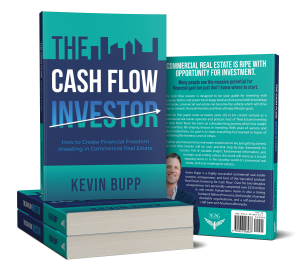
- Looking for the ultimate guide to passive investing? Grab a copy of my latest book, The Cash Flow Investor at KevinBupp.com.
- Tap into a wealth of free information on Commercial Real Estate Investing by listening to past podcast episodes at KevinBupp.com/Podcast.
Disclaimer: This podcast is for educational purposes only and does not constitute financial, tax, or legal advice. Consult with a qualified professional before making any investment decisions.
Chapters:
00:00 Intro
02:47 Finding the Property
05:52 Why We Liked It
11:32 The Bidding Process
15:27 Triple Net Lease Negotiations
19:44 Value-Add Opportunities
22:04 Numbers on the Deal
25:48 Property Performance
28:43 3 Biggest Takeaways
Episode Transcript
Episode Summary
This episode presents a detailed case study of Sunrise Capital Investors’ acquisition of the Pelican Walk parking garage in Clearwater Beach, Florida. The 702-space garage and ground-floor retail were split between a private developer and the City of Clearwater, forcing Sunrise to assemble the property through two separate acquisitions completed nearly a year apart. Kevin Bupp explains why the team moved forward without certainty that the city would sell: the first $20.7 million acquisition was underwritten to work on its own, while full ownership offered greater control and additional upside.
The episode also shows how relationship-based deal sourcing created an off-market opportunity and how constrained parking supply, strong tourism, and limited new competition supported the investment thesis. When a competing bidder emerged late in the city’s public bid process, Sunrise challenged the process through litigation and ultimately completed the assemblage.
At the same time, Sunrise negotiated a 10-year triple-net lease with contractual rent increases and a corporate-level guarantee, converting much of the operational upside into predictable NOI before closing. Kevin breaks down the approximately $33.2 million acquisition, roughly $2.6 million of initial NOI, a 7.9% acquisition cap rate, and a $48 million appraisal within about a year. The broader lesson is that investors do not need perfect certainty, but they do need a downside case that works, protections around uncontrollable risks, and a clear path to value creation.
Key Takeaways
- Underwrite uncertain acquisitions so the downside case works without relying on the best-case outcome. Sunrise proceeded with the first portion because its economics still made sense even if the city never sold the remaining floors.
- Strong industry relationships can create off-market opportunities long after the initial connection. Consistently communicate what you buy, establish credibility, and stay in contact until timing aligns.
- Start creating value before closing whenever possible. Sunrise negotiated the parking lease, rent escalators, operating responsibilities, and corporate guarantee before deploying acquisition capital.
- Structure deals around each party’s core competency and the risk-adjusted return you actually want. The triple-net lease allowed Sunrise to receive contractual NOI growth while transferring much of the operating exposure to an experienced parking operator.
- Complexity is not automatically the same as risk. Evaluate what happens if the plan works, takes longer than expected, or never works, and make sure the investment can survive the outcome you cannot control.
Key Topics Covered
- Commercial real estate deal structuring
- Structured parking investments
- Off-market deal sourcing and relationship building
- Fractured ownership and property assemblage
- Downside underwriting and risk-adjusted returns
- Public bidding and acquisition litigation
- Triple-net leases and corporate guarantees
- Parking supply constraints and tourism demand
- Dynamic parking pricing and operational value-add
- Retail lease mark-to-market opportunities
- Non-recourse commercial real estate financing
- Cash-out refinancing and liquidity decisions
- Commercial property value creation
Episode Chapters
00:00 Intro
Kevin introduces the two-stage Clearwater Beach parking garage acquisition, including fractured ownership, a late competing bidder, litigation, and a simultaneously negotiated triple-net lease. He frames the case study around making investment decisions before the eventual outcome is known.
02:47 Finding the Property
The property was not marketed or formally listed. Kevin explains how a relationship established roughly a year and a half earlier with a parking operator ultimately produced the warm introduction that led to the off-market opportunity.
05:52 Why We Liked It
Kevin outlines the investment thesis around Clearwater Beach tourism, declining public parking supply, a moratorium on new standalone garages, and the relatively new condition of the property. He also explains why Sunrise was willing to buy the first portion without certainty that it could acquire the rest.
11:32 The Bidding Process
Because the City of Clearwater owned the upper five floors, its portion had to go through a public bidding process. A competing parking manager entered late with a slightly higher bid and more current operating information, leading Sunrise to challenge the process through litigation.
15:27 Triple Net Lease Negotiations
While pursuing the real estate, Sunrise negotiated a 10-year triple-net lease with the parking operator. Kevin explains the rent escalators, corporate-level guarantee, expense responsibilities, and why the team preferred contractual NOI growth over retaining all of the operating upside itself.
19:44 Value-Add Opportunities
Kevin breaks down operational inefficiencies including below-market parking rates, limited dynamic pricing, outdated technology, inefficient ingress and egress, staffing, signage, and the absence of online reservations. He also explains the mark-to-market opportunity in the ground-floor retail leases.
22:04 Numbers on the Deal
The two acquisitions totaled approximately $33.2 million and initially generated roughly $2.6 million of combined NOI, or about a 7.9% acquisition cap rate. Kevin also covers the non-recourse financing structure and the $48 million appraisal obtained within roughly a year.
25:48 Property Performance
Kevin reviews how the lease escalators, operator obligations, insurance protections, and modest capital needs have performed in practice, including through hurricane-related disruptions. He also explains why Sunrise chose to preserve its existing financing instead of immediately completing a cash-out refinance.
28:43 3 Biggest Takeaways
Kevin closes with three principles: make sure the downside case works, begin value creation before closing when possible, and do not confuse complexity with risk. He also introduces a three-scenario decision filter focused on what happens if the plan works, takes longer than expected, or never works.
Full Transcript
[Transcript begins]
Kevin Bupp: Today I’m breaking down one of the most complex and unique real estate transactions that we’ve ever completed at Sunrise Capital Investors. It was two separate acquisitions completed nearly a year apart from one another. It involved a parking garage that had been divided into four separate condominium units. The original developer owned the retail space and the first two levels of parking, while the City of Clearwater owned the remaining five levels of parking.
But we wanted the entire garage. When we committed to buying the developer’s portion of the garage, we had no contractual certainty that the city would ever sell us their portion. And then, after months of discussions with the mayor, the city manager, and the city council, a competing bidder appeared at essentially the last minute.
That bidder happened to be the parking company that already was managing the city’s portion of the garage. They had access to operating information that we did not have, and they submitted a bid just slightly higher than ours. And ultimately, we made the decision to sue the City of Clearwater.
At the same time, while all this was happening, we were negotiating a 10-year triple-net lease with another national parking operator backed by a corporate-level guarantee. We ultimately assembled the property for approximately $33 million. Within about a year, it appraised for $48 million.
So how did we find this opportunity? And why were we willing to purchase only a part of the garage before knowing whether we could assemble the rest? Why did we choose a triple-net lease instead of a more traditional parking management agreement? And how did a deal involving fractured ownership, city politics, a public bid process, litigation, and three simultaneous negotiations become one of the most successful investments inside our portfolio?
All right, guys, welcome back to the Real Estate Investing for Cashflow podcast. As many of you know, I recently started doing a new series where I take you behind the scenes of actual investments that we’ve made here at Sunrise Capital Investors.
And when I say behind the scenes, I don’t just mean sharing the purchase price, the revenue, and what the asset might be worth today. You know, those numbers are important, but what interests me more are the decisions you have to make before you know how the story ends.
Because when you look at a successful investment five years later, everything can look obvious. You look at the acquisition price, you look at the current value, you look at the cash flow, and it’s easy to say, of course, that was a great deal. But it rarely feels that obvious while you’re actually living through it.
You know, when you’re in the middle of a transaction, you’re making decisions based on incomplete information while real money, your reputation, and your investors’ capital are all on the line. And Clearwater is a great example of that.
The asset is the Pelican Walk parking garage located in Clearwater Beach, Florida. It’s a 702-space parking garage with ground-floor retail located approximately one block from the beach. We purchased the first portion of the garage in 2021, and we completed the second acquisition in 2022. The total purchase price was approximately $33.2 million.
And while the numbers have been fantastic, the path to assembling the entire property was anything but straightforward.
Let’s begin with how this deal came across our desk, because this wasn’t a marketed transaction. It wasn’t on market. It wasn’t being listed by a broker. There was no polished offering memorandum. There was no broker involved running an organized deal. The property wasn’t formally for sale when the initial conversations even started.
The opportunity came from a relationship. About a year and a half before the property surfaced, we attended a parking and street conference. At that conference, we met the owner of a parking operating company that had a significant presence in the Clearwater Beach market.
You know, at that time, he was looking to grow his operating platform, and we were looking to expand our structured parking investment portfolio. So we did what we try to do with nearly everyone that we meet in the business.
We explained who we are. We explained what we’re buying and the types of properties that we’re seeking to acquire. And we explained why we love parking so much. And we simply said, if you come across an opportunity that fits what we’re looking for, please bring it to us.
As you can imagine, there was no immediate payoff from that initial conversation. We simply established a relationship, we stayed in contact, and we made sure that he understood that we were serious buyers. And about a year and a half later, that relationship produced the Clearwater Beach opportunity.
He became aware that the private developer who owned a portion of the garage might have an interest in selling. So he made an introduction, and that was the beginning of the transaction.
People sometimes think deal sourcing is about finding the perfect cold-calling script or subscribing to some secret database. And again, those things can be useful and surely have provided opportunities in the past, but I’d say that many of the best off-market opportunities come from consistently telling the right people what you do, building credibility with them, and then staying in front of them long enough for the timing to line up.
And in this case, that relationship put us in that room.
Here’s where the story gets really unusual. This was not a traditional parking garage where one entity owned the entire structure. The property had a condo structure in place. And so the ground-floor retail was one condominium unit. The seven parking levels were made up of four different condominium units.
The original developer owned the ground-floor retail condominium and the first two levels of parking. The City of Clearwater owned the remaining five parking levels.
This ownership structure originated when the garage was originally developed. The developer and the city worked together to build a parking facility that would ultimately benefit the residents and the tourists there at Clearwater Beach, but they retained separate ownership interests.
What made this opportunity unusual was the prospect of buying these different pieces separately and ultimately assembling the entire property under one ownership group.
Our initial negotiation was with the private developer. It’s important to note that he wasn’t in any type of distress. There was no foreclosure. There was no lender forcing a sale or a debt maturity issue or anything like that.
He had owned the property for roughly six years. He had built substantial equity in the project and had another large development project that required liquidity. And so, as these things tend to go, he wanted to take some chips off the table and move that capital into another value-add retail project.
And so he ultimately completed a 1031 exchange with those proceeds. Again, it was not a situation where we were buying from a desperate seller. Our capital and our timing simply aligned with his need for liquidity.
As soon as we understood the opportunity, the quality of the real estate was quite apparent. Clearwater Beach is effectively in our backyard, you know, in the Tampa Bay area. That’s where we’re based out of.
And the garage was located approximately one block from the number one beach in the country, Clearwater Beach. You know, it’s surrounded by hotels, resorts, restaurants, shops, nightlife. There are marinas. You’ve got Pier 60, which is a major tourist attraction, lots of different local events throughout the year, and an enormous amount of tourism-driven activity.
But the location was only one part of the story. The supply dynamics were equally attractive to us. There was already a moratorium in place that prohibited new standalone parking garages from being built on Clearwater Beach.
So that does not mean that a new hotel or a condominium can’t include parking for its own residents or guests, but another developer couldn’t simply acquire a parcel of land and build another standalone public parking garage to compete with us.
At the same time, existing parking supply was shrinking. A lot of the different surface lots located throughout Clearwater Beach were being redeveloped into hotels, condominiums, different types of resorts, and other mixed-use projects.
And when those properties are developed, the developers generally build only enough parking to serve their own project. So, as you can imagine, every time a surface lot is redeveloped, a portion of the parking supply disappears.
Now, think about that dynamic for a moment. Demand is being supported by, again, tourism. There’s population growth. You’ve got the hotels in the area. You’ve got restaurants and beaches, entertainment, and continued investment in that market.
Meanwhile, parking supply is constrained and actually declining as surface lots disappear and they get developed into different types of projects. That is exactly the type of supply, demand, and balance that we look for.
And another exciting part of this transaction was that the garage itself was relatively new. It was actually built around 2015. And when we began looking at it, it was only about six years old.
It wasn’t your typical aging concrete structure with, you know, sometimes decades of deferred concrete work. From the beginning, we viewed it as irreplaceable real estate.
We were being offered the opportunity to earn an attractive current yield while owning an asset that would be incredibly difficult, if not impossible, to replicate.
Now, let’s get into the risk of it all. Again, we wanted the entire garage. We didn’t just want a small piece of it. We wanted the entire garage. We did not want to own just the first two parking levels while, again, the City of Clearwater controlled the remaining five.
We prefer control, 100% control. And when you only own part of that structure, even relatively simple decisions, as you can imagine, can become much more complicated when you’ve got a partner in a deal.
You know, who controls the capital improvements? Who approves those changes? What happens if there are future redevelopment opportunities that exist? And what happens if only one party wants to sell and the other one doesn’t?
What happens if 10 or 15 years down the road, maybe the highest and best use is no longer parking and it’s a better opportunity to redevelop it? We want full decision-making authority. We want complete autonomy of how we run the garage.
But when we committed to buy the developer’s portion, we did not have a binding agreement with the city just yet. We did have productive conversations with the city. We had indications of their potential interest to sell, but there was no absolute certainty.
And if you had asked me at the beginning of this transaction what probability I assigned to successfully buying the city’s portion, I probably would have said somewhere around 70%.
But 70% is not 100%, right? So why were we willing to proceed with the deal? Well, because we actually underwrote the first acquisition to stand on its own. It didn’t depend on us acquiring the portion from the city.
We paid approximately $20.7 million for the developer’s portion of the garage, which included the retail and the first two parking levels. The economics actually made sense even if we never acquired the remaining five floors.
In fact, the first two parking levels generated approximately 70% of the normal daily transient parking demand from beachgoers. Drivers naturally take the first available space. They prefer the lower levels. Those are typically the first couple levels of the garage.
The upper floors become increasingly important on peak weekends, holidays, spring break, and other types of major events. But the first two floors captured the majority of the regular traffic.
And so if the city never sold, we still believed that we owned a great investment. But owning the entire structure would turn a good investment into a significantly better one.
The downside case still worked. The upside case gave us full control and substantially more value.
The parking operator who introduced us to the developer also had prior relationships with the City of Clearwater. He made the warm introduction for us. We then began a series of conversations with the mayor, the city manager, and the city council.
And, you know, our position was fairly straightforward. The city has substantial equity tied up in this parking asset. They also had another large project that they were working on that needed capital. And we were aware of that.
And by selling its portion of the garage, the city could unlock that equity and redirect it into other priorities. The garage could move into unified private ownership. You know, operations would ultimately become more efficient. And the city would be able to monetize an asset that they helped create.
You know, from our perspective, it appeared to be a win-win for everyone involved. You know, the city even identified what they felt was a general price point that would justify the transaction. The price was approximately $12.5 million.
And based on the financial performance of the upper five floors, we did not believe that there would be significant outside competition.
A buyer of only those upper five floors would not control the retail or the first two, which are the most productive parking levels. They would only be buying in the same fractured ownership structure that we were trying to eliminate.
And so our assumption was that we would likely be the only logical bidder. That assumption turned out to be completely wrong.
Because the property was publicly owned, the city couldn’t just simply sell it based on a handshake. It was required by mandate to run a public bid process. And we knew that. I mean, that was part of the initial conversations. And we agreed, obviously, to participate.
And based on the unusual ownership structure, we entered the process believing there would be a very high probability that we would be successful.
For most of the process, that appeared to be exactly what was happening. There was no obvious competing buyer. Then that all changed.
And within approximately 24 hours of the bid process coming to an end, another bidder appeared. And this just wasn’t any bidder. It was the parking management company that was already operating the garage on behalf of the existing ownership.
This is the same company that had direct access to the day-to-day operating information. And then suddenly, at the last minute, in the 11th hour, they submitted a bid that was only a few hundred thousand dollars higher than ours.
Now, here was the problem. You know, the most recent financials that we had received were approximately six months old. The existing parking manager, by contrast, had access to current daily operating information because it was actually running the garage.
They were handling the day-to-day. They knew exactly how the property was performing. They knew its current revenue. They knew the traffic counts. They knew the different trends that were happening.
And then it submitted a bid just slightly above ours in the final hours.
We felt this was a clear conflict of interest. At a minimum, we did not believe everyone had been operating with the same information.
So after all the discussions, all the work, and all the time that we had invested in this transaction, we were suddenly at risk of losing the property.
This was not a decision that we took lightly. Right? Suing a municipality, it’s serious, as you can imagine. It’s expensive. It’s time-consuming. It surely can damage relationships, and there’s no guarantee that you’re going to win.
And we had to decide as a team, as a company, whether to accept the outcome and move on or fight for what we believed was a fair process. And we chose to fight.
Our position was not simply, you know, we don’t like the fact that someone bid more than us. That would not have been enough.
Our main concern was that the competing bidder appeared to have access to materially more current financial information than we had received through the formal bid process.
And that bidder used its position as the existing manager of the garage to enter at the last minute with a bid only slightly above ours. And we believed that truly created the conflict.
Now, believe me, there were many times during this process when the easier path for us would have just been to walk away. And sometimes walking away is the right decision to make. And we have walked away from plenty of deals.
But there are many other times, this one being one of those times, when you’ve got to make the decision whether the value of the opportunity itself justifies the additional cost, time, stress, and uncertainty required to protect your position.
In this case, we believed that it did. The litigation process lasted roughly four or five months, possibly a little longer than that, and we spent a few hundred thousand dollars on legal fees.
There was no certainty that we would ultimately prevail, and again, our original estimate of a 70% chance of completing the assemblage dropped considerably.
There were many, many moments when we genuinely did not know whether we would ever own the upper five floors. And again, as you can imagine, on an emotional level, that was very frustrating.
We had challenges with that lack of certainty or just the frustration associated with this process. We had spent significant time building relationships and working through what we believed was a logical transaction for all the parties involved.
Then this unexpected complication appeared in the final moments.
But as we always do, the team and I and the rest of the partners in the company stayed committed to the process, and ultimately we were successful.
We were awarded the right to acquire the city’s portion. We did have to pay slightly more than we initially anticipated, but we were able to purchase the upper five parking levels for approximately $12.5 million.
The two-part assemblage was complete.
Now, we actually controlled the retail and all seven levels of the garage, but gaining control of the real estate was only one piece of the business plan.
While all this was happening, we were simultaneously negotiating the part of the deal that would drive much of the economic value.
While the negotiations with the developer and the city were taking place, we were also in negotiations with the parking operator who originally brought us the opportunity.
This operator already had a significant presence in the Clearwater Beach market. They knew it like the back of their hand. They understood the daily and the seasonal parking patterns. And they believed that this garage was substantially underperforming its potential.
And because the operator had brought us this opportunity, we gave them the first right to submit a proposal to operate the property.
But we were not interested in simply signing a standard management agreement. Under a traditional management agreement, we would essentially own the parking business.
You would have a day-to-day manager in place, but at the end of the day, there is no guarantee of top-line revenue or NOI at the parking facility. It would be somewhat contingent on their ability to perform.
Sunrise and our investors would remain exposed to fluctuations in tourism, labor, maintenance, equipment, and again, the day-to-day performance of the facility.
Instead, we negotiated a 10-year triple-net lease. The initial annual base rent was just shy of $2.1 million. In year two, the rent increase was 3%. In year three, it increased by 4%. Then from year four through the end of the 10-year term, it increased by 5% annually.
That created a powerful stream of contractual NOI growth.
And then we also negotiated a corporate-level guarantee from the operator’s national parent company. And I want to point out that having a corporate-level guarantee is not all that common on a parking lease of this scale.
The lease was fully executed before we closed on the property. It was structured in two different stages. The first stage covered the developer’s two parking levels. And if we successfully acquired the city’s five floors, the second stage expanded the lease to cover the entire garage.
So before we spent the acquisition capital, we already knew the economics of the parking lease. That was our primary value creation lever.
Some listeners might be asking the obvious question here. If the parking operation had so much upside, why do we not retain all that upside for ourselves?
Why not just sign a more standardized management agreement, go in and increase the rates, implement dynamic pricing, upgrade the technology, and keep the additional operating profit for ourselves?
And that’s a very fair question. And the answer really comes down to our understanding and definition of risk-adjusted returns and really understanding where each party creates the most value.
The parking operator’s core competency was running parking facilities. Again, they understood pricing, they understood traffic and operations. They really intimately understood the Clearwater Beach consumer.
Our core competency was identifying, structuring, capitalizing, and then owning the real estate.
The triple-net lease allowed each party to focus on what they did best. Under the lease, the operator was responsible for essentially all the parking-level operating expenses, including things like labor, utilities, maintenance, insurance, equipment, taxes, repairs, and also technology.
From Sunrise’s perspective, we received a fixed contractual rent with annual increases. And so that allowed us to essentially shift a substantial amount of the operating risk over to the tenant.
You know, if a hurricane reduced tourism for a period, the rent was still due. If labor costs increased, that was the operator’s responsibility. If transient parking softened for one reason or another, that was also the operator’s risk.
If technology needed to be upgraded, again, that was the operator’s obligation.
The operator also carried business interruption and loss-of-income insurance, and so that corporate guarantee gave us another layer of added protection.
And you probably ask yourself, you know, did the operator, with that base lease in place, still retain an opportunity to generate additional profit?
Of course they did. They would not have signed the lease otherwise. But we didn’t really view that as upside that we just foolishly gave away.
We really viewed it as a structure where both parties could win. Again, we secured a strong real estate return with contractual growth while limiting operating exposure, while the operator used its intimate market knowledge and operational capabilities to generate profit above these lease payments.
And after years of owning this garage, I would still absolutely choose a triple-net lease again.
What gave the operator the confidence that it could support more than $2 million of annual rent?
The existing operation was dramatically below market. When we began actually underwriting this garage, the standard hourly parking rate was approximately $3.
Comparable garages and parking lots in the immediate marketplace there in Clearwater Beach were charging at least $6 an hour. And as you can imagine, again, that difference is not all that subtle.
And the existing garage had virtually no meaningful dynamic pricing in place. Parking demand on Clearwater Beach is not the same every hour of every day.
You know, a normal weekday morning is different from a Saturday during spring break. A quiet evening is very different from a holiday weekend.
Yet the historical pricing model did not adequately account for those demand spikes.
You know, on certain weekends, different holidays, and high-demand periods, parking can generate flat fees of $40, $50, and potentially even more than that for a single stay.
But pricing was not the only inefficiency here. The technology, or the license plate recognition system that was in place, was outdated and it was missing vehicles.
So people were basically parking for free. You know, the gate equipment and software were also outdated. Ingress and egress was very inefficient in how it was currently set up.
Also, the staffing was inadequate during peak periods when it was needed the most. Signage was very weak. Some folks didn’t even know the parking garage existed.
Online reservations didn’t exist at that point in time.
And all those issues, as you can imagine, represent an opportunity for an experienced operator, someone that’s already got the operational expertise of the marketplace and the infrastructure in place.
And because the lease was negotiated before closing, we didn’t have to buy the garage and then hope that those improvements would eventually justify the acquisition.
We converted much of that operational upside into a contractual rent stream before we ever even closed.
And parking was not the only income stream. Again, the ground-floor retail was another meaningful part of the investment.
At acquisition, the retail generated approximately $530,000 of annual NOI across six different tenants.
The weighted average remaining lease term was approximately six years, really just giving us strong income durability with limited near-term rollover.
There was also meaningful mark-to-market opportunity. Historically, some of those retail spaces had been leased in the range of $31 to $32 per square foot.
As the leases have rolled now over the couple of years that we’ve owned it, we’ve been able to execute new leases closer to $40 per square foot, and in some cases, above $40 a foot.
Let’s bring all the economics together here.
We paid approximately $20.7 million for the developer’s portion. We paid roughly $12.5 million for the city’s portion. So all in, the total purchase price was roughly $33.2 million.
The initial parking lease produced just shy of $2.1 million of annual base rent. The retail produced approximately $530,000 of annual NOI.
Combined, that gave us roughly $2.6 million of NOI at acquisition. On a purchase price of $33 million, that equated to an acquisition cap rate of roughly 7.9%.
So essentially an 8% cap rate on a newer-built, core-quality asset one block from the number one beach in the country, Clearwater Beach.
We have limited capital expenditure needs, a 10-year parking lease in place, a corporate guarantee, and also contractual rent increases year after year.
And remember, this was not a stabilized 8% return with no growth. The parking lease had embedded increases. The retail had annual increases and future mark-to-market potential.
The public parking supply was already shrinking, as I had mentioned. New standalone parking was prohibited. There was a moratorium, so we don’t have to worry about immediate competition.
And now we control the entirety of the asset.
The debt structure also worked in our favor. We financed the acquisition through a local bank that was already very familiar with the property.
The bank had actually financed the asset for the original developer. It understood the condominium structure and understood the ownership history between the private developer and the city.
And that familiarity made the two-stage acquisition much easier to finance.
The bank understood the complexities of the deal, and they initially approved financing for the developer’s portion.
The loan documents then included provisions allowing the bank to simply advance additional proceeds if and when we successfully acquired the city’s portion.
Once we closed the second acquisition, the loan covered the entire garage and retail component.
The total loan amount was just over $20 million. The original leverage was approximately 60%, although I don’t want to represent that as an exact number.
The loan was fixed at approximately 5.64%, amortized over roughly 25 years, and it was a non-recourse loan.
Today, we still have roughly six years remaining on that financing.
We actually considered a cash-out refinance within the first year of ownership. We actually went through the process and we obtained a formal appraisal, and the property appraised at $48 million.
$48 million.
Now think about those numbers for a second. We assembled the entire asset for roughly $33 million. And then within roughly a year, the property appraised for $48 million.
That represents approximately $15 million of value creation.
And that value wasn’t created by, you know, waiting 10 years for the general market to appreciate. It really came from the structure of the transaction.
You know, we assembled the entirety of the deal. We put the triple-net lease in place. Again, the income had already been locked in, and gaining full control of an irreplaceable asset in an incredible market was paramount to the value-add proposition.
After receiving the $48 million appraisal, we had the option to explore a cash-out refinance.
But just because you can extract equity does not mean that you always should.
You know, we already had attractive non-recourse, fixed-rate debt in place. Our total loan was just over $20 million against a property valued at now nearly $48 million.
And as you can imagine, that created an extremely conservative loan-to-value ratio.
And interest rates later increased. So we chose to preserve the financing rather than chase short-term liquidity.
As the years move on, we’ll more than likely revisit refinancing or another liquidity event as we approach the existing loan maturity.
But today, there’s no urgency whatsoever.
Again, we sleep well at night. We’ve got a low loan-to-value, the property’s performing, and the debt’s very attractive now given where interest rates are at today.
The contractual rent increases will continue. And again, this property will continue gaining value year after year.
The asset has performed almost exactly according to our original underwriting. The lease escalators have occurred as we wrote into the lease.
The 3% increase happened. The 4% increase happened. And the 5% annual increases have continued.
The operator has honored its lease obligations.
We have also had a couple real-world stress tests here. Just a few short years ago, we experienced two significant hurricane events that negatively affected tourism and parking activity in Clearwater Beach.
Those events, as you can imagine, impacted the operator’s business, but they did not prevent us from collecting our contractual rent.
The operator’s insurance program, including their loss-of-income protection, really helped support its obligations.
The property itself was also relatively new at acquisition. Again, it was built around 2015.
So we didn’t inherit a 40-year-old coastal garage with decades of deferred concrete repairs. The ongoing capital needs have been relatively modest here.
And under the triple-net lease structure, the tenant is responsible for the parking-related maintenance obligations, but we maintain oversight.
And that’s important to note here because one challenge that I commonly see with triple-net lease structures is that the tenant may define adequate maintenance differently than the long-term owner.
An operator naturally cares more about keeping the garage functioning. We care about preserving the asset for many, many decades to come.
So the lease gives us the right to inspect, require work, and intervene when necessary.
And that is exactly what I mean when I describe parking as a cash-flowing land investment. Right.
We are being paid an attractive current yield to own irreplaceable real estate.
And because we control the entire structure, you know, if someday parking is no longer the highest and best use for that property, we also control that decision too.
I am proud of the economics. I’m proud that we bought the property at roughly $33 million and then appraised for $48 million within a year.
I’m proud of the income that we’ve been able to create. I’m proud of the lease structure and the debt that we’ve been able to put in place.
And I’m proud of the investor outcome in this one.
But I’m equally proud of what the transaction says about our team.
We did not quit when ownership was complicated. We did not quit when the city required a public bid process.
We also didn’t quit when there was a competing bidder that appeared, again, in the 11th hour of the transaction.
And we didn’t quit when litigation became necessary.
We brought in the right legal counsel. We spent the amount of money required to build an argument.
And we continued managing the developer acquisition while pursuing the city portion.
And we continued negotiating the lease, and we continued to work with the lender.
And ultimately, at the end of all this, we found a way to assemble the entire property.
And that figure-it-out mentality is deeply embedded in our culture at Sunrise.
It doesn’t mean that we’re reckless by any means. In fact, we don’t support recklessness.
It does not mean refusing to walk away when a deal turns bad.
It simply means that when we believe in the real estate, when the downside is protected, and when there is a legitimate path forward, we do not allow complexity alone to scare us away.
Because in my heart of hearts, I believe that complexity often creates the opportunity.
Let me leave you with three takeaways from this deal.
First and foremost, you don’t need complete certainty to move forward, but you do need a downside case that works.
We bought the developer’s portion knowing that there was a real possibility that the city might never sell.
But the first two floors and the retail supported the investment on their own. We did not need the uncertain outcome to rescue the deal.
And that distinction is what made the risk calculated rather than reckless.
Second, value creation can begin before you ever close.
Our primary value creation lever was not something we discovered six months after acquisition.
Again, we negotiated the triple-net lease before we closed the deal. We knew what the rent was going to be.
We knew what the escalators were going to be. We knew the responsibilities and who was going to be managing those.
We knew the guarantee and the company behind the guarantee.
We already had designed a major part of that income stream before deploying our investors’ capital.
And then third, complexity is not automatically risk.
Sometimes complexity is exactly what keeps competition away and creates the opportunity.
The key is understanding which parts of that complexity you can control and making sure you can survive the parts that you can’t.
This is how we try to think about every single investment that we make.
What happens if the plan works? What happens if it takes longer than expected? And what happens if it never works, right? If it doesn’t go as planned.
If the deal still makes sense under that third scenario, you’re dealing with a very different kind of risk.
So that is the story of the Clearwater Beach garage.
Again, it was complicated. It was frustrating, cost a lot of money, maybe some sleepless nights.
And there were multiple moments when the full assemblage could have failed.
But we didn’t need everything to go right for that original investment to work.
That gave us the ability to keep pushing the bigger opportunity.
And ultimately, that’s what this deal demonstrates. Really, the complexity was a major reason the opportunity even existed in the first place.
And as investors, our job is not to eliminate uncertainty.
It’s really to understand the downside, build protections where we can, and be willing to execute when the risk-adjusted opportunity makes sense.
I hope you enjoyed this case study.
And, you know, again, we’re going to continue doing more of these episodes, covering both our manufactured housing communities as well as structured parking investments.
We’re going to share all the wins. We’re going to share also the challenges that go along with them.
And we’ll share what worked, what didn’t work, and what we learned along the way.
And as always, if you’ve enjoyed today’s podcast, please do take a moment to leave us a rating and review.
And share this episode with another investor who might find value in hearing the real story behind a complicated transaction.
Until next time, this is Kevin Bupp wishing you huge success. Take care now.
[Transcript ends]