The real estate investors who are thriving in today’s market are the ones who ignored the pressure to buy questionable deals during the boom years. While many operators fell for floating-rate debt, banked on unrealistic rent growth, and underwrote for best-case scenarios, a more “patient” group focused on the fundamentals.
Hannah Hammond, founder and CEO of the capital advisory firm and commercial mortgage brokerage HB Capital, has a unique vantage point on this dynamic. Through thousands of relationships with operators and lenders nationwide, she sits at the intersection of capital markets and commercial real estate investing. Not to mention, Hannah has scaled her own multimillion-dollar residential real estate portfolio.
But the principles that guide her investment decisions today were shaped by more than market cycles. Raised in a family that struggled financially, Hannah believed money was the key to peace, happiness, and opportunity. This was only partially true. What she discovered after quitting corporate America for entrepreneurship, starting multiple businesses, and achieving financial freedom was that real “wealth” had much more to do with a life rooted in flow, not force.
In today’s conversation, she shares about the painful experiences that shaped her, lessons from failed partnerships, and why the “disciplined” investors from a few years ago are the ones capitalizing on opportunities emerging from market distress.
Insights from today’s episode:
- Hannah’s personal journey from financial hardship to financial freedom
- Why Hannah quit her comfortable engineering career to go all-in on real estate
- Lessons learned from failed partnerships and risky private lending experiences
- How Hannah’s engineering background has influenced her underwriting and risk tolerance
- The three fatal mistakes that cause operators to go underwater on assets
- Why true wealth stems from being fully aligned with your values and purpose—not money
- How to craft a daily routine that allows you to live through flow, not force
—
Connect with Hannah on Instagram
Recommended Resources:
- If you’re a high-net-worth investor with capital to deploy in the next 12 months and you want to build passive income and wealth with a trusted partner, click here for opportunities to invest in real estate projects alongside Kevin and his team.
- Accredited Investors, you’re invited to Join the Cash Flow Investor Club to learn how you can partner with Kevin Bupp on current and upcoming opportunities to create passive cash flow and build wealth. Join the Club!
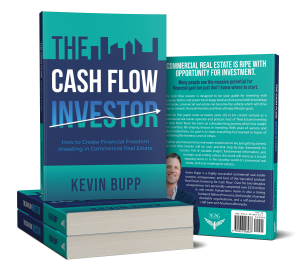
- Looking for the ultimate guide to passive investing? Grab a copy of my latest book, The Cash Flow Investor at KevinBupp.com.
- Tap into a wealth of free information on Commercial Real Estate Investing by listening to past podcast episodes at KevinBupp.com/Podcast.
Disclaimer: This podcast is for educational purposes only and does not constitute financial, tax, or legal advice. Consult with a qualified professional before making any investment decisions.
Chapters:
00:00 From Scarcity to Abundance
04:09 Quitting Corporate at 21
06:15 Where Operators Are Winning
12:17 Inside the Phoenix Market
18:56 Taking “Calculated” Risks
21:59 Learning from Loss & Failure
25:44 Launching HB Capital
30:08 Attracting Top Talent
34:58 What Is Real “Wealth”?
41:18 Hannah’s Daily Routine
45:43 The Next 5 Years
49:36 Connect with Hannah!
u003cstrongu003eEpisode Transcriptu003c/strongu003e
Episode Summary
Hannah Hammond, founder and CEO of HB Capital, explains how commercial real estate investors and operators can navigate a market defined by higher interest rates, tighter underwriting, uneven supply, and distressed assets. Drawing on her experience in engineering, real estate investing, private lending, and capital advisory, she describes a bifurcated market where some operators are underwater after relying on floating-rate debt, aggressive rent growth, low vacancy, and compressed cap rates, while patient investors with stronger balance sheets are acquiring quality assets at discounts.
The discussion examines shifts in commercial real estate financing, including increased debt-fund activity, more conservative DSCR requirements, higher liquidity expectations, and greater scrutiny of sponsor resilience. Hannah also shares observations from Phoenix, where multifamily, residential, and short-term rental performance can vary dramatically within the same metro area as new supply and Airbnb oversaturation reshape local economics.
Beyond market conditions, Hannah explains how an engineering mindset informs stress testing, downside analysis, and calculated risk. She discusses losses from business partnerships and high-risk private lending, and how those experiences reinforced the importance of borrower quality, asset quality, documentation, and risk controls. The episode also explores hiring, social-media-driven recruiting, AI adoption, and Hannah’s “flow, not force” philosophy. Investors and business owners can use the conversation to evaluate financing assumptions, strengthen downside protection, assess market-specific supply risk, build higher-trust teams, and define growth without sacrificing personal alignment.
Key Takeaways
- Stress-test every real estate deal against higher rates, lower rents, increased vacancy, and slower absorption instead of relying on optimistic base-case assumptions.
- Treat fixed-rate debt, liquidity, and balance-sheet strength as strategic forms of downside protection; paying more for resilience can preserve optionality when markets turn.
- Evaluate markets at the submarket and asset level because performance can diverge sharply within the same metro area, particularly when new supply or short-term rental inventory is concentrated.
- Do not assume collateral alone makes private lending safe; borrower quality, asset quality, documentation, underwriting, and recovery scenarios all matter.
- Build growth around clear values and repeatable operating standards, whether selecting investments, hiring talent, structuring a daily routine, or deciding how aggressively to scale.
Key Topics Covered
- Commercial real estate capital markets
- Debt and equity capital advisory
- Commercial mortgage brokerage
- Fixed-rate versus floating-rate debt
- Distressed real estate opportunities
- DSCR and lender underwriting standards
- Sponsor liquidity and balance-sheet requirements
- Debt funds, banks, and life insurance company lending
- Phoenix multifamily and residential market conditions
- Airbnb and short-term rental oversupply
- Real estate underwriting and stress testing
- Downside protection and calculated risk
- Private lending risk management
- Business partnerships and financial losses
- Recruiting high-performing teams
- Social media and referral-based hiring
- Flow state, core values, and personal alignment
- Morning integrity setup
- AI adoption in business
- Long-term growth and 10X thinking
Episode Chapters
00:00 From Scarcity to Abundance
Hannah traces how growing up with financial hardship shaped her early drive to earn money, invest in assets, and pursue entrepreneurship, while later forcing her to reconsider the relationship between money and fulfillment.
04:09 Quitting Corporate at 21
Hannah explains why she left an engineering career at 21, how real estate and entrepreneurship offered greater control, and how HB Capital serves operators through debt and equity capital advisory.
06:15 Where Operators Are Winning
The conversation examines a bifurcated commercial real estate market where floating-rate debt and aggressive assumptions have hurt some operators while patient investors are acquiring discounted assets.
12:17 Inside the Phoenix Market
Hannah describes sharp differences across Phoenix submarkets, including multifamily concessions, residential softness, Airbnb oversupply, and why high-quality assets can still outperform nearby properties.
18:56 Taking “Calculated” Risks
Hannah explains how her engineering background influences underwriting, stress testing, downside analysis, and her willingness to reject deals when the numbers do not support the risk.
21:59 Learning from Loss & Failure
Hannah shares lessons from difficult business partnerships and high-risk private lending, including why weak borrower screening and insufficient risk controls can undermine apparently attractive returns.
25:44 Launching HB Capital
Hannah discusses launching HB Capital in 2024, pivoting from a planned debt fund to an advisory firm, shifting her national marketing strategy, and confronting the challenge of building the right team.
30:08 Attracting Top Talent
Hannah and Kevin explore recruiting high-performing employees, using social media and referrals to find experienced talent, and why values, trust, patience, and culture matter in hiring.
34:58 What Is Real “Wealth”?
Hannah shares her evolving definition of wealth, personal struggles behind outward success, the distinction between flow and force, and the role of forgiveness, core values, and alignment.
41:18 Hannah’s Daily Routine
Hannah outlines her morning integrity setup, including hydration, a sunrise walk, exercise, meditation, delayed phone use, and the boundaries that help her begin work in a stronger state.
45:43 The Next 5 Years
Hannah describes HB Capital’s ambition to become a highly trusted capital advisory firm, grow originations, expand with an aligned team, use AI aggressively, and pursue large goals without sacrificing peace.
49:36 Connect with Hannah!
Hannah shares where listeners can learn more about HB Capital and follow her work across social media, video, and podcast platforms.
Full Transcript
[Transcript begins]
Hannah Hammond: My rents over the past couple of years have dropped significantly. My furnished rentals do not do well anymore at all, and they used to crush. You know, there’s just a way oversupply of Airbnbs. Those are all getting listed on the market. A lot of assets are just sitting on the market. Some things just fly off like hotcakes, and some are sitting and you can’t even get rid of them. And you have to keep dropping the price.
Kevin Bupp: Today, I’m joined by Hannah Hammond, founder and CEO of HB Capital. We will unpack what she’s seeing in today’s capital markets, what operators need to understand when financing is no longer cheap and easy, and how her engineering mindset helps her think through downside, structure, and execution.
Hannah, welcome to the show. It’s an absolute pleasure to have you with us. Excited for our conversation.
Hannah Hammond: Thank you. Me too. Happy to be here.
Kevin Bupp: You’re the founder of HB Capital. You’ve advised on debt and equity on a national level, and you’ve got an interesting background, which I’d love to unpack here today. You started in engineering in the construction world before moving into capital markets and real estate.
So I think before we get into the markets and what you’re up to today at HB Capital, I really want to understand the pivotal moment. You took a different path than you had originally planned with engineering. I always like the foundational story of where someone starts and then ultimately how they end up where they’re at today. I would love to get some more context there, if you wouldn’t mind sharing.
Hannah Hammond: Yeah, absolutely. Growing up, I came from a family that really struggled financially all the time. We just had a lot of scarcity and fear in our household because of the lack of money.
My dad worked at a pawn shop. He still actually works at the same pawn shop and made just above minimum wage. My mom was a night-shift grocery bagger, and I was home alone a lot or with my older brothers.
I learned from a very young age, fortunately, because I was able to meet a friend of mine who was very wealthy. They were business owners and real estate investors. So I had my own kind of Rich Dad Poor Dad situation—rich family, poor family, as my family likes to joke around nowadays.
But I saw early on that the difference between them and us was money. I made the mistake of believing that money would bring me happiness. I learned later in life that it’s not the whole answer to happiness, but it is a very important piece of the pie.
I just really wanted to find a way to make a lot of money because I thought that’s how I was going to be happy and free and have peace inside. The one thing I could control was my performance in school, so I always worked really, really hard, studied really hard, was the teacher’s pet sitting in the front of the class, and always got straight A’s from kindergarten through engineering school.
I graduated summa cum laude in less than four years—three and a half years—from engineering. But I wanted to learn how to build wealth. From my wealthy friend, I realized entrepreneurship and investing in assets was the way to do it beyond just having a W-2 job.
I kind of had the fear of, well, I should go to college and get a high-paying degree and invest in my 401(k) like everybody teaches you. But then I also read Rich Dad Poor Dad at 13 years old, and he said, screw that plan. Buy assets. Let your assets pay for your liabilities. Own your own business. Mind your own business. Have control of your income. Learn sales, public speaking, and capital raising.
I went down both paths because I was afraid of, what if I’m not successful? What if I can’t build a business? What if I can’t invest in assets? I wanted to make sure I could go to college and get a full ride because I, of course, didn’t have a college fund.
So I did both paths so I could learn for myself exactly which one worked better. I got my real estate license at 18 years old, started selling commercial real estate, and started buying my own real estate that summer at 18 and building my portfolio while going through college.
I worked in corporate America as an engineer and quickly learned I was making a lot more money doing real estate and owning my own company versus being in corporate America. I just had a much larger passion for that because I saw how drastically it impacted my life in a very quick way.
Kevin Bupp: What was the timing like? When did you finally pull the cord, pull the ripcord, and say, no more corporate America, I’m going all in on this entrepreneurial venture?
Hannah Hammond: At 21.
Kevin Bupp: Okay. So it didn’t last that long.
Hannah Hammond: Yeah. By the time most people were graduating, because I graduated early, I was quitting and going all in on myself. So I was there about a year and a half. Amazing company. I have nothing but amazing things to say about the leadership there, and I learned so much.
It was a wonderful experience, but ultimately you just don’t have a lot of control as a W-2 employee. I think some of us are just born entrepreneurs.
Kevin Bupp: Yeah, no, agreed. Agree with that. I’d love to understand HB Capital. That’s your venture today. Give us some context as to who you guys are, what you do, and where your focus is in the marketplace.
Hannah Hammond: Yeah. We’re a debt and equity capital advisory firm, i.e., a commercial mortgage brokerage, and we do equity advisory as well.
Our goal is to be the best available capital partner for real estate investors and developers across the country. We want to really be that one-stop shop. Whether you need a bridge loan to take down a distressed asset, a local bank loan, a construction loan, a refinance, CMBS, or agency—whatever you need, depending on your specific needs for that deal, regardless of the asset class and regardless of the location—we have the team, resources, and structure to go source the best debt for the deal.
Operators can really focus on what they do best. What they do best is sourcing deals, managing their projects, lease-ups, dispositions. Their time is not best spent trying to build relationships with thousands of different lending sources and navigate that whole process. That’s really what we focus on.
Pretty much anything from a million and a half to $150 million-plus, we can do a wide range and work with about 10,000 different lending sources. I have a super-experienced team. I own the company, but I’m the youngest one at the company, I think. We’ve just got a great team of guys that have been in capital markets and commercial finance for many, many, many years.
Kevin Bupp: Fantastic. Let’s talk about capital markets. Things have been a little wonky for the past—really, I’m going to start in 2020. COVID. We’ve been through a weird six years, and I’ll just leave it at that. I’ll simplify that statement. It’s been a weird and wonky six years.
Capital markets have been all over the place. You’ve obviously seen a lot. You’ve worked with a lot of different operators over that period of time. What’s happening and what’s relevant in the capital markets here today?
More specifically, of the operators that are out there doing deals, what do you see that most are maybe missing? Are there any that are absolutely missing the mark given the time, where things are in the capital market space, and where rates have been?
Everyone’s got a crystal ball saying two years ago that they’re going to start going back down, and that just really hasn’t been the case. What are you seeing on the operational side? Where are some operators missing the mark?
Hannah Hammond: I think it’s a very bifurcated market right now. We have a lot of operators that are unfortunately really struggling and are underwater on their assets. We see more of this in certain locations or certain asset classes.
Then we see other operators that are doing really well and were very patient and negotiated fixed-term, fixed rates, paid a little bit more to have fixed rates. Especially back when interest rates were at 2%, 3%, the operators who just agreed to the variable-rate mortgage and were assuming that rents were going to keep going up at high rates and vacancy was going to remain very low, those unfortunately are the operators that are in a lot of trouble today because that just isn’t the case and wasn’t the case.
Rates went up, vacancy increased, rents had been dropping, all the supply was delivered at once—a massive amount of supply—and that supply is still trying to be absorbed. That’s where we’re seeing a lot of the pain in the market.
But those operators that were very disciplined and very patient and paid a little bit more for those fixed rates, or sat on the sidelines and didn’t buy assets during that time when they were overinflated, rates were super low, pricing was outrageous, and cap rates were super compressed, those are the operators that are now coming back in the market.
They’re able to get Class A assets at massive discounts. There’s just nothing wrong with the asset, but the last operator overpaid for it and unfortunately is losing that asset now.
On the flip side, those operators that were patient, like the Ken McElroys of the world—I don’t think he bought a deal for two years—and now he’s, I think, recently bought $500 million worth of really, really nice assets that he wasn’t able to get before at really great discounts.
That’s kind of what we’re seeing. It’s the patient capital and the capital that really was more future-looking and not so optimistic.
Kevin Bupp: Exactly. I think that’s a great lesson. When you’re in the heat of the moment, there’s this feeding frenzy happening for a number of years. It’s very difficult to step outside of that and say, I’m going to hold back and wait.
A lot of other folks are making money. A rising tide was lifting all the boats. Even bad operators were getting killer returns, making a lot of money. It’s really hard to be disciplined and patient when that’s happening.
But at the end of the day, I always sort of remind myself—I’ve been at this since I was 19. I’m 46 now, 47, I always forget my age, 46, 47—it’s a long-term game.
If you’re in the business long enough, you’re going to get those grand slams every now and then. But really, it’s the singles and doubles that hit the mark and allow you to build a long-term durable business.
I think that’s a great point that you make there. A lot of folks were just very short-sighted trying to ride the wave and didn’t necessarily understand when that wave was going to stop.
I went through ’08, and folks didn’t understand when the wave was going to stop back then. Everyone knew it was going to happen. It wasn’t going to go on forever, but a lot of folks got caught red-handed in a game of hot potato. There were plenty of folks that lost everything back then.
I think we’re kind of going through a similar situation today.
I’d be curious on the debt side. Are there any other trends that you’ve seen change? Have you seen recourse come more back into the fray? Higher liquidity requirements being requested from borrowers? Any other unique trends that have played out over the last two years that might not have existed a couple of years prior?
Hannah Hammond: Debt funds have a higher percentage of lending. I think debt funds are around 35% of the total commercial real estate originations right now, which is very high. It’s even higher than it was back in 2008.
Life companies are not lending as much. The originations from life insurance companies are down year over year and over the past couple of years. Banks are a little bit higher than debt funds. There are still a lot of originations through banks and more of those relationship-driven lenders.
But as far as underwriting goes, yeah, they want to see better DSCR ratios. They want to be more conservative on that, where back in the day, especially in the debt-fund space, they were underwriting to very, very thin DSCRs. Now they want to see higher DSCR ratios.
Kevin Bupp: Sometimes 1.0. I remember seeing the 1.0.
Hannah Hammond: Yep. That’s what I was just going to say. There were tons of 1.0s, and unfortunately those cannot be refinanced in today’s market.
There’s just higher leverage and then higher global liquidity. They want to see a nice balance sheet, interest reserves, and not just enough for interest reserves, but liquidity so that if, in a stress test, vacancy goes up or rents go down or anything like that, there is more liquidity for that sponsor to stay right side up on that deal.
They just want to see cushier balance sheets today.
Kevin Bupp: I believe you’re based in Phoenix, correct?
Hannah Hammond: Correct.
Kevin Bupp: What’s happening specifically in the Phoenix market? We love Phoenix. We’ve got a number of assets in Phoenix, but I’ve been curious from your perspective through your lens. It’s in your backyard.
Obviously, Phoenix tends to be one of those cities—it’s a phenomenal city, growing city, lots of still-future growth opportunity, lots of great things happening there. I feel like Phoenix is always in the headlines, along with multiple markets in Florida—Tampa, Orlando, Miami, amongst others—that kind of go through more of a roller-coaster phase.
Phoenix, I know a lot of new supply was coming to the market all at the same time, and it takes a lot of time to absorb it. There’s a little bit of a hangover effect that ultimately occurs there.
Where are you guys at today? I’m more speaking to multifamily when I say excess supply. Where’s the rest of the market? Even office—I’d be curious to know what’s happening in the office market there. Single-family home space. I know there’s a lot of BTR there as well. What are the dynamics today in Phoenix?
Hannah Hammond: Phoenix in itself has bifurcated as well. I was talking to Ken McElroy a few months ago, and he was saying that there was brand-new Class A product in downtown Phoenix that was offering four months of rent concessions. The numbers just don’t work.
But then you have Scottsdale, North Scottsdale, and your assets are doing just fine. Their rents are high, vacancies low, and everything is looking good.
So even in Phoenix, within a 30-minute drive, there’s a bifurcation in the markets depending on where that supply was over-delivered and where the demand is.
We’re seeing the same thing in residential too. I own a portfolio of residential properties as well here in the Phoenix area, in different cities all within probably 30 minutes of each other.
My rents over the past couple of years have dropped significantly. My furnished rentals do not do well anymore at all, and they used to crush. There’s just a way oversupply of Airbnbs. Those are all getting listed on the market.
A lot of assets are just sitting on the market in residential too, as well as commercial. However, the very good assets, like that Class A, main-and-main type asset or that new construction, even in luxury, like $10 million, $20 million homes, will sell like hotcakes if it’s new inventory.
But then you can have a $400,000 home. My friend, she’s a flipper, she’s got a $400,000 home that’s been sitting on the market for a year. She cannot sell it, and it’s priced great.
We’re seeing that. Some things just fly off like hotcakes, and some are sitting and you can’t even get rid of them. You have to keep dropping the price.
Kevin Bupp: That’s shocking. $400,000, I think that’s like entry-level in Phoenix, right? That’s more of an entry-level base. I’m shocked to hear that even entry-level stuff might not be moving.
But you bring up an interesting point, and I haven’t talked about it in quite some time. I remember a couple of years ago, as we were coming out of the tail end of COVID, I had a number of folks on the show that were really in the short-term rental space.
I travel quite a bit, and there was a period where I would typically choose, many times over, an Airbnb than a hotel. I have since completely flipped to the other side for a couple of reasons.
Number one, I think quality control got a little out of hand with the number of Airbnbs that were going into the market. The quality wasn’t there.
On top of that, as I was looking for places to rent on Airbnb, the amount of inventory was significant. I wondered when the point in time might come in certain areas where there was an oversupply of Airbnb.
Then you also take into account—correct me if I’m wrong—I thought Phoenix had instituted some type of regulatory changes that were also going to have an impact on the short-term rental market, where you had to get a license and they were going to limit the numbers of them available.
I know Vegas did something similar. I don’t know how they enforced it, but I figured that there would be a hammer coming down for a number of reasons in the STR space.
Do you think that is part of some of the challenges that Phoenix is having, or is it just purely this oversupply and not as many people maybe traveling right now?
Hannah Hammond: I think it’s purely oversupply. They did put some regulations that you need a license or whatever in certain areas, but for the most part, it’s pretty easy to have an Airbnb. There are just so many of them.
I live in Paradise Valley, which doesn’t allow Airbnbs, but I live on the street that does. There’s one street basically that does, and half my street is Airbnbs. So it’s not that hard, right? Because I’m in a very nice location.
Kevin Bupp: Have you seen a lot of those come to market then? I know there were plenty of folks out there just looking to get into the space so they could make a killing, probably putting it all on the line to buy that short-term rental.
But the economics had to continue playing out. They needed that income. They needed what the years’ prior performance looked like to continue in order to support their thesis.
A lot of times in the last couple of years, that’s really fallen apart. Do you see that some of the supply coming on the market—and again, I’ll just speak to Phoenix specifically—is a lot of the single-family home supply failed Airbnb rentals or something similar?
Hannah Hammond: Yeah, I think so. I have friends that have large Airbnb management companies, and of course different markets are different. But I think nationally, just like we’re seeing on a national scale in general for commercial and residential, Airbnb—
I asked, are your Airbnbs that you’re managing—because I think he’s got a couple hundred in his portfolio that he manages across the country—are they profitable still?
He’s like, “Not really, no. You’re not really buying them for profit now. It’s purely tax.”
He goes, “Mostly all the portfolio now is people buy a second home and they want to live in it a couple months a year, and they want to try to somewhat break even on it. But it’s not a cash-flow thing anymore.”
I’m like, well, that doesn’t sound as exciting.
Kevin Bupp: No, that’s not exciting at all.
Hannah Hammond: Right. But there are some benefits that W-2 employees can get from them because they can depreciate and manage the short term. So there’s still some of that demand that causes people to buy them.
But if you look in Phoenix at residential homes for sale, I would say there are almost more furnished homes for sale, like Airbnbs, than there are unfurnished.
If you look at properties that are for rent, most of them are furnished rentals versus unfurnished. Actually, the house I live in—I’ve lived here almost three years now—it was an Airbnb, but the market became so soft. I was like, I’ll just do a long-term lease. It’s beautiful, fully furnished.
A lot of people are doing those longer-term leases with those furnished properties now. But yeah, the Airbnb market is very soft.
Kevin Bupp: Got it. Now that makes sense.
Backing up a little bit, I want to talk about your very short stint as an engineer, but ultimately you went to school for that, so you had some formal training.
How does that show? How does your engineer brain show up in your world today and how you evaluate risk and structure capital and deals? Do you see that there’s a lot of benefit that you’ve carried over?
Hannah Hammond: Yeah, I do. I have a very unique brain. It’s very much left brain and right brain all at the same time, so it’s a lot of conflict in my head sometimes.
But it serves me really well because I have a good appetite for risk, but not the same appetite as a lot of sponsors that I see.
Actually, how I got into capital markets was because I had saved up quite a bit of money—seven figures of money—because I wanted to do a large multifamily deal. That was always my dream.
I had been buying a bunch of residential assets and flipping and Airbnbs and all of that, but I wanted to take down a larger commercial asset and do a big value-add and do it on my own, my first big commercial project.
This was back in 2020, when prices were insane, rates dropped really low, and my engineering brain could not get any of the underwriting of any asset that I was looking at to make sense.
I was just like, this does not make sense. It sounds exciting, and people are buying things, prices are going up like crazy and whatever, but this seems like a disaster waiting to happen. I just cannot get myself to purchase any of these assets.
That saved me from making a bad decision. Just having that analytics and the engineering brain says, what is the risk? What is the stress test? What if everything goes wrong? What is the worst-case scenario?
I still remember the first asset I bought in 2014. I was terrified at the closing table. I’m an 18-year-old girl from a family with no money. That was the only 30 grand that I had to my name.
I’m like, well, the market’s been going up since 2011, 2012. What if it crashes again? If it’s a seven-year cycle, I’m almost near the end of the cycle, and all these things.
So I was really afraid. But with all of my analysis of the deal, I still realized the risk is worth it. Worst-case scenario, I’m still going to be okay.
That’s just kind of how I think, and it helps me. Sure, I don’t take massive swings, and I’m not going to grow as big as a lot of people that I know are going to grow, but at least I can sleep well at night.
I know that there’s nothing that can happen that’s going to take it all away from me, because the most important thing for me isn’t how big I can get it. I don’t want to go back to nothing. I just want slow and steady to win the race that way.
Kevin Bupp: Yeah. Quality sleep is an underestimated thing for a lot of entrepreneurs.
Hannah Hammond: I really enjoy it.
Kevin Bupp: Yeah. Not worrying about, I’m going to lose everything tomorrow. I agree with you there.
I know there was a period—and again, I don’t have as much context, but I would love to share that part of the story. Obviously, we all go through our failures, and ultimately that’s where growth happens. Growth happens in those challenging moments.
I don’t recall if it was related to real estate or not, but I know there was a period of time where you had a significant loss. I think it was a million-dollar-plus loss within your business. Maybe it was in the early stages.
Could you share some more context there? More importantly, was that the point in time where your policy on risk really changed to be much more conservative today?
Hannah Hammond: Yeah. I’ve had a lot of losses and a lot of failures.
Most of them were when I started my three construction companies. I had a business partner in those companies, and those were the first businesses that I had actually really started beyond my real estate sales business.
That was just really tough. We invested a lot of money in trucks and shops and employees and all of these things. Ultimately, I had a bad business partnership, and we didn’t have anything really documented. I ended up having to walk away from quite a bit—time, energy, emotionally, financially, and all that.
Then another big loss for me was when I started private lending. In that time where I was like, I can’t get the numbers to make sense, I just can’t justify this, nor could I compete with all the cash buyers at that time to even attempt to get a good deal and not overpay retail pricing on the market, I started private lending.
This was the exposure that I started to get in capital markets, and I was the lender. I was lending my own capital.
Again, the left brain, right brain. I definitely didn’t mitigate my risk as much as I should have and learned to through this experience.
I was doing—I don’t even know if I should say this out loud—but I was doing very, very high-interest short-term loans. I would lend $100,000 of my money and then charge $10,000 a month.
Kevin Bupp: Very high interest.
Hannah Hammond: Yes. That’s why I was saying, I don’t know if I should say this out loud.
Kevin Bupp: I mean, that’s a good business model if it’s sustainable.
Hannah Hammond: Ten out of ten do not recommend.
I was doing that, and sometimes the loans were 50 grand. Sometimes they were 150. Sometimes they were even small. I think the smallest loan I did was $25,000.
I was basically lending to anybody with a heartbeat and an APN number on fix-and-flip investments, mostly in the Midwest.
It was a very specific product. It was supposed to be, I’m going to give you money to buy these properties at auction at way below market value. They’re in horrible condition, and there’s no approval process. No credit check, background check, bank statement check—literally nothing.
I can get you the money in 24 hours. I just needed a title report.
It works when the market is going well, and it was really fun. Then as soon as rates went up, prices started going down, and all of that, I think I still have hundreds of thousands of dollars out that I’m not going to collect on.
Unfortunately, I had way too high of a risk tolerance. My greed got in there a little bit, and I just made those mistakes.
That’s ultimately how I got into lending and how I learned, okay, this is why it’s so important. In order to scale it beyond my own pocket, I had to actually lend to quality borrowers on quality assets. That’s what ultimately led into launching HB Capital.
Kevin Bupp: I appreciate the background context there.
Let’s talk about HB Capital then. You launched HB Capital in what year?
Hannah Hammond: 2024.
Kevin Bupp: 2024. Okay, so you’re a couple of years into it.
I’ve started a number of businesses over time. You start with the generalized business plan, and then you start trying to backfill and kind of build the plane as you fly. That’s the best way to put it.
Hannah Hammond: I love that phrase.
Kevin Bupp: I think it’s so very true. In fact, I still think we’re building the plane as we fly it today. I don’t know if that ever ends.
But there are a lot of things that typically will break. You referenced that you’ve got a stellar team there, lots of really smart individuals that have decades and decades of experience in the capital markets.
But even then, even when you’re bringing the smart people in, systems and processes break on a regular basis. Talk to me about that first year of building HB Capital. More specifically, what broke first as you were rolling things out and getting it going?
Hannah Hammond: The first thing—it was originally going to be a debt fund. I started a 506(c) debt fund, and I decided to shift gears and just do an advisory firm and shelf the fund.
So if you know anyone that wants to buy a 506(c) debt fund, I paid a lot of money for my PPM, and it is registered and ready to go, and I am not using it. There’s that.
I shifted that. I think that was the first thing that broke, just clarity of the business model itself. I don’t think it broke, but it put me back because it took a lot of time and cost me a lot of money and attorney fees.
Ultimately, I ended up transitioning and shifting that. Because I just take action and move very quickly, I ended up going down that path, and then it evolved over time. I shifted gears to the advisory firm.
That was the first thing.
The second thing was shifting my marketing because I own a commercial real estate brokerage in Arizona, but I wanted to scale a national company and be able to serve people on a national level, especially since I planned on building a national personal brand, which I have now.
The Hannah Hammond Show—I have a lot of really incredible people on my podcast, and I put out a lot of educational content and get 25 million views a month organically.
I wanted to be able to serve clients nationally because I was going to be having national exposure, so HB Capital really fit into that.
But with that was shifting the marketing from, okay, not just real estate brokerage anymore. Now we’re in capital markets. Hi, I’m Hannah. Nice to meet you. If you need financing, contact HB Capital.
That little shift actually was very easy. As soon as I started posting about it, it was a perfect vertical because I was already private lending. I already had a real estate brokerage. I already owned a real estate portfolio. I had already been in it my whole life.
That was pretty easy to start getting deal flow. But from there—and this is still the biggest bottleneck and biggest hurdle for me—is building an amazing team and bringing aboard really experienced, high-quality, high-values people.
That is the hardest piece. Beyond the experience: high values, very trustworthy, and very hardworking team members who can actually execute on the relationships that I bring in, as well as the relationships that they have and bring in too.
We work very closely as a team because let’s say I build a relationship with you, Kevin, and then you’re like, “Hey, we want to work with HB Capital.” Well, I have to trust my team with you to be able to execute on that relationship and on those deals and on the financing that you need, in your best interest.
That’s really the biggest thing. I do so many interviews, but I don’t send a lot of offer letters because my standards are so high and I want the highest-quality people aboard.
It’s just hard to find really, really high-quality people. When you want the one-percenters, there’s only 1% of people that fit that. Then the timing has to line up and the compensation has to line up.
A lot of the really great guys are tied into contracts with CBRE. They’re on million- or two-million-dollar contracts or something like that, and they can’t even leave.
It’s difficult to scale a really, really high-quality team. Some of our team members are in different states and different time zones across the country, and then we have a core group of team members in Arizona.
Maintaining that culture, not making anyone feel left out, and maintaining that relationship when some of your team members you don’t get to see beyond Zoom meetings in person very often—those are all the things that I navigate now.
In any business that I’ve had, the things that are always challenging are mostly the people thing.
Kevin Bupp: Yeah, you’re preaching to the choir here with all those statements.
I agree. Trying to find the top 1%, the A-players, the ones that are truly going to help you scale and grow your company in a meaningful way, it’s very difficult to find them.
We have the same challenges. We’ve worked really hard to build our leadership team and executive team, just really finding the best of the best.
It’s not just finding them. It’s also attracting them to our team and ensuring that they’re a good fit for us and our culture and our core values. There are lots of boxes to check to really find the right fit for the right seat.
Of the top players that you do have on your team, what have you found? Is it just a numbers game—literally putting out the feelers to the market and talking to a bunch of folks to find that 1%? Or have you found other strategies that have allowed you to attract those who are currently on your team into your world and ecosystem?
Hannah Hammond: Social media has been the biggest edge for me. Just that brand that I’ve built. People already know, like, and trust me from online, sometimes without even knowing me in real life.
Being able to just make a post—that’s how I found Jeffrey, my executive managing director, and he brought aboard his whole team.
I was able to launch the company with seven people, with 100 years of experience under the belt—from our 25-year-experienced processor, 27-year-experienced executive managing director, 12-year-experienced analyst, 25-year-experienced originator.
Right when we launched, we had a beast of a team right out of the gates. I was bringing in that deal flow, and I found him through a post on social media.
I was like, “Hey, who do you know? This is my new company. This is what I’m starting. This is what I’m looking for. If you know anyone, please let me know.”
Then a mutual friend was like, “Oh my God, this is the best guy. He’s a beast. He’s done billions and billions in originations. You guys would hit it off and should meet.”
That’s been the way. Every recruiter I’ve hired, I’ve wasted so much money on recruiters. I still keep trying to find new ones that work, but they just don’t for this.
It’s a very relationship-based role, and it’s not a typical W-2 type position.
It’s been mostly organic. Now I ask everyone I meet, who do you know? When I meet commercial real estate brokers or commercial lenders or anybody, I’m like, who do you know that may be a fit for what we’re building and would be excited about the mission that we’re building?
They’re like, let me give that some thought. Then, actually, let me connect you with this person.
It’s a slower road. You’re not going to recruit 100 people in a month, but that allows you to really get quality people that are aligned. It’s through the referral network.
They’re already more bought in because they feel like they have that relationship with you or the person who does have a relationship with you.
My impatient side is like, I want to find a way to do this at volume. But in reality, what’s been the most fun, most effective, and had the most success is just through the referral network, posting out on my social platforms and through my networks that I know in person as well.
Just one fit at a time, bringing people aboard and being very slow to hire and not rushing it.
Kevin Bupp: I think it goes back to the old adage of hire slow, fire fast.
I think folks that are out there just bringing anyone on where their resume might fit the bill of what you’re looking to hire for are the ones that have a massive amount of turnover on an ongoing basis.
That becomes very expensive, and it’s very difficult to scale a company when you’re bringing people in and pushing them back out. Just the cost of training and onboarding—it’s a recipe for disaster.
I completely agree with the philosophy of hire slow, find the right talent. It takes a lot of time to do it.
As you continue to grow your reputation and your brand, you’ll get more folks that will come into the fray organically, who will understand you, your vision, your core values, and your mission and be aligned with that.
Those are the people that you want. In fact, I have found that that’s much more important. Obviously, skill set depends on what you’re hiring for, but generally speaking, a lot of things can be trained.
I surely wouldn’t go hire a CFO that has never been a CFO before just because they have the right culture fit. But a lot of times, if you’ve got someone with the right heart, right core values, right mission, they understand your North Star and they’re aiming in the right direction, a lot of the more menial things can be trained even if they hadn’t done them in a prior position.
Definitely hire slow. It’s important.
I think what you’ll do is look back in 10 years—and 10 years go so fast anyway, so it’s all relative about hiring slow or hiring fast—you hire slow, get the right team, and look back in 10 years like, damn, look what we built.
This is an amazing feat that we’ve pulled together here. It would take a lot longer to get here than what it did, but we got here in a shorter amount of time and done some beautiful things.
I’d love to switch gears here one last time before we work to wrap this up, Hannah.
I’ve heard a number of your talks, a number of your interviews, and you even made a comment earlier in the show today. Again, I’m not going to be able to reiterate it verbatim, but I think you made a comment around money’s not the most important thing. Money won’t make you happy, but it definitely helps.
I agree with that. In a lot of your talks, you talk about abundance and inner freedom.
I’d love to get a sense from you: What does wealth look like? How do you define wealth today? What is that definition in your own mind?
Hannah Hammond: I worked with a man named Rich Christensen, who was introduced to me from one of my mentors who’s a billionaire.
He helped my mentor transform his entire life. He was a billionaire, but he was 350 pounds, smoked multiple packs of cigarettes a day, failed marriage, alcoholic, food addict—all these issues.
Rich Christensen said money is not wealth. In fact, many of the richest people I know are the sickest. Wealth actually comes from the Latin root phrase, “we are well.”
That is why so much of my core message and theme for my life—I was suicidal at 20 years old. I was smoking weed every single night. I had chronic nightmares. I had no quality relationships in my life. I didn’t talk to pretty much anyone in my family, and I had horrible eating disorders.
I was a shit show.
Even though on the outside I looked successful, I was doing well, making money, building wealth, buying assets, and doing all these things, inside I truly did not want to wake up anymore.
I had to go through this massive transition and personal journey of personal development and forgiveness and learn why I felt so imprisoned in my own body and in my own mind and in my own life.
As a child having no money, I used to say, well, when I become a millionaire, I’m going to feel different and I’m going to feel happy.
I just accepted that I was going to suffer until I got to some arbitrary number that I set out for myself.
When I got to that arbitrary number very quickly and still was in the same internal pain—sure, I felt better that I could pay rent, had food on the table, and could take care of myself—but beyond that, all of the pain and suffering was still there every single day.
Then it became less hopeful because you’re like, well, if money’s not going to do it, what is going to do it? How am I going to get out of this? How am I actually going to have peace in my life, feel good, feel like I’m enough, feel happy, and feel joy?
I didn’t really know how to do that.
Rich Christensen teaches the importance of living in flow state. That’s what I’ve committed to now, living in this state of flow, which I call the green zone.
That’s where you’re in your zone of genius. Time’s flying. You’re really present. Right now, I’m in flow state. I love having amazing conversations with people that are doing big things in the world and especially along things where we share similarities.
That’s flow state. You’re operating in your zone of genius. You feel good. You feel connected. You feel aligned. You feel present.
Versus most people live in a state of force, which is stress, anxiety, overwhelm, boredom, and they’re basically operating from scarcity instead of abundance.
When you operate from scarcity, your energy is coming from a place of I’m not enough, or it’s not enough, or I’m not worthy, or I’m afraid.
Most people operate from that place, especially overachievers. That’s what’s driving them to be so neurotic about being so successful and making so much money.
But they never actually learn that peace and fulfillment inside.
Until we’re able to shift to an intention of abundance—now I create because I love to create, because I love to serve, because I am grateful for this life that I’ve been given and the skills that I have and the relationships that I have. I want to make a positive impact in my life, my family’s life, and the lives of others.
That energy shift changes everything.
But in order to actually live in flow state, because it’s easier said than done—it’s easy to say, you should just feel good. I would hate when I had anxiety and people would be like, you should just calm down—I had to heal the inner stuff.
I had to forgive myself. I had to forgive my dad. I had to forgive my mom. I had to forgive my brother. I had to forgive all these people that I was holding onto all this resentment toward.
I had to do a lot of that healing and personal development work, which I could write a whole book on.
But Rich Christensen taught me—and I’m doing the weave here, I’m getting all the way back around—that in order to live in flow state consistently every day, day in and day out through the stress and through the storms, because they don’t pressure you the same way anymore when you’re in flow state, you have to know your core values and you have to live by them no matter what.
You cannot waver on them.
So many people don’t even know what they stand for. They don’t even know what they stand against. Maybe you have a company and you throw your values up, but most people don’t actually have a personal ethos.
What do I personally stand for? What are my personal values? What are my non-negotiables that I will not settle for in my own actions or in the actions of others?
When you relentlessly commit to that and actually live by that, then you can actually live in alignment and live in this state of flow.
Life and business and everything just starts to get so much easier. The capital starts to flow to you. The right investors come to you. The right deals appear magically in your life. The right business partners, the right team members, they start to flow.
You’re like, wow, it was just kind of a coincidence. It was kind of a coincidence that Robert Kiyosaki, my childhood hero, just happened to appear in my life and live six minutes down the road.
It wasn’t a coincidence at all. It was because I got aligned. I lived in flow state. Because I was so clear on who I was and what I stood for, and I was showing up with the energy of abundance every single day, universe, God, life brought him right to me.
Then he helped me expand and flourish exponentially beyond my wildest imagination.
Kevin Bupp: That’s beautiful. I appreciate you sharing that, and I appreciate you being vulnerable.
I think a lot of folks fail to go deeper into the inner state, especially being able to share it and be self-aware, identify the challenge you had, go through the forgiveness stages, and really understand what you stand for today.
I think it’s a beautiful thing.
Along with that, that’s not easy. You’ve got to work at it every single day. Correct me if I’m wrong. Every single day is a new day and you’ve got to start over again.
What does that daily routine look like for you? How do you stay in that flow state? How do you start every single day, seven days a week, 365 days a year? How does Hannah get inside that flow state every single morning?
Hannah Hammond: My number one core value is flow, not force.
I read my values every single day, twice a day, so I can audit myself to make sure that I’m actually living in integrity with them, because I know if I’m not, I will start to attract chaos into my world.
I’m adamant and committed and relentless and ruthless about that.
Some things that I learned from my coach who taught me flow state—he was the first coach I hired when I was 25 years old, when I became a millionaire and was still miserable. I invested quite a bit of money to work with him.
He taught me that the first thing you need to do is a morning integrity setup.
I used to wake up and check my phone—fires everywhere, stressed out, jump at the computer, start putting out fires. That was my life for a long time.
He’s like, don’t do that. Let’s wake up, do your morning integrity setup. Create a plan that puts you in peak state.
That’s going to look different for everyone. Yours might be five minutes. It might be four hours. It just depends on who you are and what gets you there.
What that is is different for everyone.
What I found puts me in peak state, where I feel really good consistently, is I wake up, I hydrate, I go for a sunrise walk. I love walking in silence and listening to the birds and watching the sun come up. It just makes me feel so good.
Then I go to the gym. I get my workout in. I listen to my high-beats-per-minute house music that I absolutely love, and that gets me pumped up. I’m like, winning already.
Then I come back. By the time I’m home, I do my meditation. I sit in silence. I calm my body. I relax. I ask any questions I need help clarifying or that I’m seeking answers on.
By that time, which is usually around 9:30, 10 o’clock, that’s when I’m in peak state. That’s when I start my day. That’s when I check my phone. That’s when I pull up my emails. That’s when I start my meetings and all the things.
I’m setting myself up for success before I get into anything, because the outcome can only be as great as the energetic state in which you initiate the action.
Kevin Bupp: I’d be curious to know how you set boundaries around your team to follow this state that you follow each and every morning.
Like, hey guys, you cannot read—literally, I am not going to answer my phone. I’m not going to check it before 9:30 or 10.
In theory, it sounds easy, but you pretty much have to train your entire team. This is how I roll every day, every morning. This is how I start, and I’m not going to allow you to interfere with that or disrupt that.
Have you found challenges there?
Hannah Hammond: You just set the standard. No.
It’s not like I never check my phone. I do check my phone, but I’m not right out of bed looking at my phone and starting work.
It’s just simple. You set a standard.
I will not hire anybody that is not living in flow. I just won’t do it.
If I interview you, I don’t care how great you are, how many loans you close, or what revenue you’re going to add to the company. If you’re a shitty-energy person, I don’t give a shit. I am not going to bring you in my world because that’s the number one most important thing to me.
If you get on one of our team meetings, everybody’s stoked. It’s high energy every single time.
Everybody’s like that because I hire for it. We just know that. Everybody’s healthy. Everybody’s going to the gym. They’ll send pictures of each other in groups at the gym and eating good food.
That’s just how we operate.
Kevin Bupp: That’s great. In the event an accident occurs and one of those individuals who has the negative energy fools you on the front end and makes their way in, I have found that if you’ve got a strong team, a strong company with aligned values, that virus ends up working itself out anyway.
It literally gets flushed out automatically.
If you’ve got 99% of your team that’s strong and that 1% that’s acting as a virus, they find their way out. That’s been my experience.
Okay, awesome, Hannah. I really appreciate this.
I want to circle this all back around and then we’ll look to wrap this up.
I want to talk about HB Capital. You founded it in 2024. Let’s talk about five years from now.
I’m sure you’re obviously a very disciplined individual. You set goals probably weekly, monthly, quarterly, annually, maybe even three, five, 10 years out.
I’d love to get your perspective. Five years from now, what does success look like for HB Capital?
Hannah Hammond: I don’t want to be the biggest firm. I know we’re not going to be the biggest. We’re competing with CBRE and JLL and all these big companies.
But I want to be the most trusted.
That is really the goal: that we are the most trusted firm, we have the most trusted advisors, and people know we find a way to get it done. We work hard to get it done, and we do it with integrity every single time and from a place of abundance and never scarcity.
That is the most important thing to me.
As far as originations go, our goals on our sheet that I share with the team every time we meet is $5 billion a year in originations, both debt and equity.
Primarily, we do mostly debt, but we can do JV and co-GP structured equity advisory as well on larger deals.
That’s really the goal there. Just keep growing the team with an amazing, abundant team and finding ways for everyone to be rowing the boat in the same direction and actually enjoy and have fun doing what we love.
That’s the thing. How big can we grow? How great can we be while maintaining joy, abundance, peace, passion, and all of those things?
That’s a little bit of a different leadership style from me versus some of these other firms. That’s just what it’s all about because I won’t sacrifice my peace for the sake of growth or hitting a goal.
But I also dream very big because I love the book. My friend Ben Hardy wrote the book 10X Is Easier Than 2X.
I always push the team to think in terms of 10X. For them individually, if you were to 10X your production next year, what would that have to look like? What would you have to do differently? What activities are you doing today that would have to fall below the floor in order for us to achieve that goal?
When everybody starts thinking bigger, it opens up the door to possibility.
How do we leverage tech? How do we leverage AI? We are heavy, heavy, heavy on AI because, of course, I’m an engineer. We’re boutique, so we can implement things in a quicker, easier manner. Everybody contributes on that together.
Then how do we keep serving our clients better?
For example, bringing our clients on the podcast and getting them millions of views of exposure and sharing their story and helping them raise capital, where we’re not even getting paid on that.
We just want to be a good capital support for them, a capital partner for them in every way.
Just thinking outside the box and continuing to grow personally and professionally in everything that we do.
Kevin Bupp: Interesting. 10X Is Easier Than 2X. I love it. Fantastic book.
But honestly, with the advent and advancement of AI, it’s probably going to be more like 100X Is Easier Than 2X. I think it’s going to have to be rewritten here in a very short period of time.
It’s funny, but it’s true, and we’re leaning into it as well. It’s an amazing thing.
I do believe that the companies that do not lean into AI and do not embrace it will look back and be very regretful five years from now, probably three years from now.
Hannah Hammond: They’ll be gone. Maybe even two years.
Kevin Bupp: Yeah, they’ll be gone. Or maybe not be gone, maybe not fully obsolete, but it’s kind of like the companies in the early days of the internet.
The companies that said, now we’ve got plenty of customers. We don’t need to have a presence on Google or Yahoo—not Google back then, Yahoo or AOL or whatever it might have been.
They became irrelevant over time. They basically dissipated into the interwebs and were never found again. Once their customer base died off, they never had new customers coming in.
I feel like AI is very similar to that.
Hannah Hammond: Yeah.
Kevin Bupp: In any event, Hannah, I really appreciate you coming to the show. It’s been an absolute pleasure chatting with you.
For those that have an interest in learning more about you and HB Capital, where is the best place to find you?
Hannah Hammond: HBcapitalre.com is our website.
Then personally, if you just want to look me up anywhere—Instagram, YouTube, Spotify—it’s Hannah B. Hammond.
On my Instagram, I have a Linktree that has all the links to all the things, the podcast and the company and all that.
Kevin Bupp: Good deal. Guys, we’ll get that in the show notes as well.
If you did enjoy today’s episode, please do take a moment, subscribe. I encourage you to also leave a rating and review and just share this with someone in your network who needs to hear this and is going to get value from it.
As always, as I like to say, just continue learning, continue growing, and most importantly, continue investing with intention.
Guys, we’ll see you on the next episode. Take care.
[Transcript ends]