
What separates a piece of commercial real estate that doesn’t survive from one that endures for decades—and through multiple market cycles? It’s a question Ed Pitoniak, founder and CEO of VICI Properties, has spent the last several years working to answer.
Today, Ed leads one of the nation’s largest owners of experiential commercial real estate. But he took an unconventional path to get there, starting at a ski publication before moving into hospitality and, eventually, real estate.
Along the way, he forged the skills and perspective needed to navigate some of the industry’s toughest challenges, from the rising costs of capital to tenant concentration risk. Ed shares how he underwrites real estate deals to account for today’s high-interest-rate environment and the two-part strategy he’s using to slowly but surely diversify VICI’s tenant base.
He also breaks down how his team evaluates not only the properties they acquire but also the triple-net lease tenants occupying them after closing. Plus, Ed shares the thesis behind a real estate category he believes will be one of the more durable asset classes over the next several decades.
Insights from today’s episode:
- The real “durability test” for any piece of commercial real estate
- How Ed weighs risk and reward when underwriting new opportunities
- The biggest challenges when working with triple-net lease tenants
- The two-part strategy for mitigating tenant concentration risk
- How to vet operator and asset quality before buying a property
- Criteria for determining if a real estate category has real staying power
—
Recommended Resources:
- If you’re a high-net-worth investor with capital to deploy in the next 12 months and you want to build passive income and wealth with a trusted partner, click here for opportunities to invest in real estate projects alongside Kevin and his team.
- Accredited Investors, you’re invited to Join the Cash Flow Investor Club to learn how you can partner with Kevin Bupp on current and upcoming opportunities to create passive cash flow and build wealth. Join the Club!
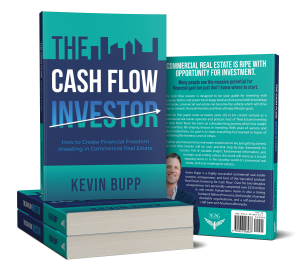
- Looking for the ultimate guide to passive investing? Grab a copy of my latest book, The Cash Flow Investor at KevinBupp.com.
- Tap into a wealth of free information on Commercial Real Estate Investing by listening to past podcast episodes at KevinBupp.com/Podcast.
Disclaimer: This podcast is for educational purposes only and does not constitute financial, tax, or legal advice. Consult with a qualified professional before making any investment decisions.
Chapters:
00:00 Intro
01:05 Transitioning to Real Estate
06:08 The Birth of VICI Properties
15:04 Property and Operator Quality
20:43 Triple Net Lease Tenants
25:45 Weighing Risk & Reward
30:46 Mitigating Concentration Risk
33:09 The Future of Experiential Real Estate
36:33 The Ultimate Durability Test
41:29 Connect with Ed!
Episode Trasncript
Episode Summary
Ed Pitoniak, founding CEO of VICI Properties, explains how his unconventional path from Ski Magazine and ski-resort operations into hospitality and real estate shaped the way he evaluates experiential commercial real estate. The core thesis is that durable real estate depends on more than the building itself: investors must understand the category, market, asset, operator, lease structure, and capital supporting the tenant.
Pitoniak outlines VICI’s five-part filter for evaluating experiential categories: lower-than-average cyclicality, favorable secular trends, healthy supply-demand balance, proven durability over decades, and an operator profit model that rewards continual innovation. From there, the team evaluates the market and property before underwriting whether the operator can generate sustainable profits and keep customers returning.
The conversation also examines triple-net lease risk. Long leases can provide durable income, but landlords have limited day-to-day control when an operator loses market share or underinvests. Pitoniak explains why access to capital, reinvestment in people and properties, and customer loyalty are critical parts of tenant underwriting.
Kevin and Ed also discuss higher-yield opportunities, VICI’s cost of capital, tenant concentration risk, and long-term hold economics. The episode closes with a practical durability test: real estate is stronger when end users are willing, able, and excited to revisit repeatedly. That lens helps investors distinguish lasting experiential demand from categories that may be oversupplied or temporary trends.
Key Takeaways
- Evaluate the category before the individual property. VICI looks for lower cyclicality, favorable secular trends, healthy supply-demand balance, proven durability, and economics that reward operator innovation.
- Underwrite the operator separately from the real estate. Customer loyalty, competitive strength, access to capital, and a willingness to reinvest in people, marketing, experiences, and properties all affect the durability of the rent stream.
- Treat a high yield as information, not automatically as a bargain. Identify why the yield is high and determine whether the underlying risks, such as building quality or location, are actually within your control to correct.
- Long-duration triple-net leases create a different risk profile than short-term tenancy. Landlords may have limited operational control, so monitoring market share, profitability, and tenant reinvestment becomes essential.
- Use repeat visitation as a durability test for experiential real estate. Assets are stronger when customers are willing, able, and excited to return, while easily replicated or trend-driven categories require extra caution.
Key Topics Covered
- Experiential commercial real estate
- Triple-net lease investing and tenant risk
- Property, market, and operator underwriting
- VICI’s five-part category evaluation framework
- High-yield real estate and risk-reward analysis
- Cost of capital and acquisition discipline
- Tenant concentration risk and portfolio diversification
- Long-term commercial real estate holds
- Repeat visitation as a real estate durability test
Episode Chapters
00:00 Intro
Kevin introduces the durability question at the center of the episode: what makes commercial real estate worth owning for decades, and how should investors think about the property, operator, yield, and lease together?
01:05 Transitioning to Real Estate
Ed traces his unconventional path from Ski Magazine to ski-resort operations, hotel REITs, private equity, and eventually VICI. He explains how experience-driven businesses taught him the importance of excitement, customer demand, and economic productivity.
06:08 The Birth of VICI Properties
Ed explains how VICI emerged from the Caesars bankruptcy and why he viewed casino real estate as unusually productive commercial property. The discussion covers institutional storytelling, diversified revenue drivers, and the resilience of gaming assets through economic cycles.
15:04 Property and Operator Quality
Ed walks through VICI’s five criteria for evaluating experiential categories, then moves from category to market, asset, deal terms, and operator quality. Customer loyalty and the operator’s ability to sustain profits are central to rent durability.
20:43 Triple Net Lease Tenants
The conversation turns to how VICI identifies and qualifies operators before acquiring real estate. Ed discusses operator cycles, limited landlord control under long leases, asset management, and the need to understand a tenant’s capacity and willingness to reinvest.
25:45 Weighing Risk & Reward
Ed explains why higher yields usually signal identifiable risks and why investors must determine whether those risks are controllable. He also describes VICI’s cost of capital as a go/no-go factor and explains why the company generally favors long-term holds.
30:46 Mitigating Concentration Risk
Ed discusses VICI’s tenant concentration, including its exposure to Caesars and MGM. The strategy combines growing the overall portfolio with selective portfolio optimization to reduce exposure to the largest tenants over time.
33:09 The Future of Experiential Real Estate
Ed shares his conviction in the experiential economy, citing innovation across gaming, wellness, golf, indoor water parks, and Las Vegas. He also discusses the possibility that AI could increase available time and demand for shared experiences.
36:33 The Ultimate Durability Test
Ed offers a simple durability test: will the end user willingly and repeatedly return to the real estate? A discussion of pickleball versus racquetball illustrates how VICI thinks about supply, staying power, and the risks of investing in a fast-growing trend too early.
41:29 Connect with Ed!
Ed directs listeners to VICI Properties’ investor materials and latest investor deck for an overview of the company’s portfolio, value proposition, track record, and vision before Kevin closes the episode.
Full Transcript
[Transcript begins]
Ed Pitoniak: That great old phrase: you get what you paid for. When you buy a high yield, it’s a high yield for a reason. And you better know the reasons, and you better have an understanding of whether or not the reasons the yield is high are reasons you can correct. You might be able to make it a better building, but if it’s an inherently poor location, you know…
Kevin Bupp: Aye, aye, aye. What makes a piece of real estate durable enough to own for decades? My guest today, Ed Pitoniak, believes one of the most important questions is surprisingly simple: are you willing, able, and ideally excited to keep coming back? I’m interested in hearing how Ed separates a great property from a great operator, why a higher yield is often trying to tell you something, and what nearly a decade of underwriting long-term partners has taught him about the risks that don’t always show up in the lease.
Ed, welcome to the show. I’ve really been looking forward to having you on the show with us here today.
Ed Pitoniak: Kevin, I’m excited about it too. I kind of wish I was where you are, but still going to enjoy this conversation.
Kevin Bupp: Yeah, no, I’m very much looking forward to it. And yeah, so, you know, it’s interesting. I’ve spent quite a bit of time learning about your background, Ed, and you’ve had a very, what I call, fascinating path into real estate.
Today, you’re the founding CEO of VICI Properties. You oversee one of the most, what I would call probably one of the most unique portfolios in the public real estate markets. And I’d say that a couple of the big takeaways and the things that really interest me, and I’m looking forward to unpacking it here today, is just the way you think about risk and durability, especially when the value of the real estate is so closely tied to the strength of the operator.
And we’ll talk about that here today as well and get the capital behind the operator and the structure of the lease agreements and things of that nature. So again, there’s a lot I want to unpack, but you’ve probably had one of the more unusual paths that I’ve seen into real estate, again, from publishing and running Ski Magazine, which I’m quite jealous of. That sounds like an amazing dream job. And you worked your way into hospitality and then ultimately becoming, again, the founding CEO of VICI. How did that progression happen?
Ed Pitoniak: Oh, man, I don’t actually know. I don’t have a good explanation for how it happened, Kevin. I think it’s the definition of serendipity. But I think it’s also a case of finding things you want to do.
But most importantly, finding things you want to do with people you really want to do them with, and just seizing the opportunity to learn from those people, gain energy from those people, and expand the boundaries of your world and what’s possible within your life, right?
And my years at Ski Magazine were utterly critical to me being able to do what I did in the future, even though what I did in the future had very little to do with the day-to-day mechanics of producing a ski publication.
But I think one of the greatest gifts I experienced at Ski Magazine was meeting so many people who, day by day, and in some cases for decades, had been creating ski experiences and learning how they thought, learning how they brought people together, learning how they led, how they made their visions real every day. It was incredibly important, especially in a category like skiing.
It is the definition of consumer discretionary, of understanding, as they did intuitively, that if you’re going to create demand for what it is you’re creating every day, you have to create excitement. And if you’re going to create excitement, you pretty much have to be excited yourself. Really. I mean, it’s pretty much axiomatic.
You want to create excitement? You better be excited. You better be excited about what it is you have the opportunity to do every day where you have it to do. And that was just a great lesson for me in recognizing people who brought excitement to what they did every single day.
And that can be a powerful, powerful mechanism for creating value no matter the field of endeavor. But it’s especially powerful, again, in consumer discretionary sectors where you’re having to excite the customer every day to choose to spend time with you, and thus, by spending time with you, choose to spend money with you.
Kevin Bupp: I love it. I have to ask the question. Was working at Ski Magazine as amazing as what I would envision it would be? Was it just an incredibly fun job?
Ed Pitoniak: It was an incredibly fun job.
Kevin Bupp: I bet.
Ed Pitoniak: I mean, I could cause you unnecessary pain by describing how fun it could be.
You know, I had the opportunity early on to be much involved with programs like ski testing, our instruction program, obviously a lot of ski resort travel as well. But, you know, I’ll just give you one example of how fun it could be, which was that every year around March 1st or so, we’d work with every ski company to identify the skis they would be bringing to market for the following season.
And then we’d tell them, okay, you have to ship all those skis—well, originally Squaw Valley, and then we moved the ski test to Beaver Creek. And I would invite about a dozen or so really great skiers who I knew were really good ski testers. But just as importantly, they were really fun to be with.
So, if it makes you feel even worse, Kevin, I’ll tell you that spending a week in Beaver Creek with next year’s skis, with really good skiers who know how to have fun, is about as much professional fun, I think, as you can have and get paid for.
Kevin Bupp: No, brilliant. I love it. I love everything about it. So, well, kudos. That sounds like just an amazing part of your career and the journey that you’ve had.
And it sounds like you’ve been able to bring that same enthusiasm over to VICI. So excited to dive into that with you.
You know, I’d love to maybe talk about the backstory of VICI. I know that, I believe from what I’ve read, VICI was actually born out of the Caesars bankruptcy. And so we’d love to talk about that a little bit. Maybe take us back to that period, just how VICI came together.
And I guess more importantly, what did you believe about this real estate, the Caesars properties? What did you believe about this real estate that maybe others—obviously there are plenty of other buyers out in the marketplace—but maybe others didn’t see the opportunity that you saw?
Ed Pitoniak: To give the context for how I viewed the real estate that eventually comprised the VICI portfolio, I’m going to take you through a 30-second run-through of, okay, how did you get from Ski Magazine to VICI?
Well, Ski Magazine led to going to work for a ski resort company called Intrawest. It’s now known as Alterra. And I got to spend eight years in ski resort operations, which were an incredibly valuable learning experience.
That led to getting hired as a hotel REIT CEO in Vancouver in 2004. We had a very successful four years before we sold that with very fortuitous timing. Then I got involved in other real estate private equity work. Then I ran another hotel REIT based in Canada.
And so by the time I arrived at VICI, I had really had an education in the fundamentals of how to understand income-producing real estate.
And as I got to know the assets that would form the original portfolio of VICI, I began to realize this might be the most compelling commercial real estate I’ve ever seen in the world, given the economic productivity of the real estate, which itself is based upon the experiential breadth and depth of what happens in these boxes every day.
And I realized that no one had yet really told the story of casino real estate as real estate. Right? And I just, you know, having worked in storytelling for so long in my career, obviously starting back in the magazine business, I thought this is just going to be an incredibly exciting story to tell to institutional capital.
Because institutional capital is always looking for stories they haven’t heard yet, but they have very limited bandwidth in which to take in new stories. So if you’re going to tell them the story, it better have a hook, and you better be able to sink the hook as fast as you can.
And so, using an iconic asset like Caesars Palace, we were able to tell a story of commercial real estate that had a dynamism to it that they see in very, very few other commercial real estate categories. And that’s, again, what I got excited about from day one. It’s what we built the team around, and it’s what we certainly built our early success around, is getting out there and telling a story that no one had ever heard before.
Kevin Bupp: Yeah. What were some of the biggest hurdles with really getting the institutional market to understand and get excited about it?
Ed Pitoniak: I think one of the key hurdles, Kevin, was helping them understand that the utility of the real estate to the operator was not simply limited to the gaming floor at casinos, especially in Las Vegas, but also in the regional markets as well. Casinos have a breadth and depth of revenue productivity that goes beyond the gaming floor.
And again, you see that especially in the big Las Vegas assets. We’re able to help them understand that the tenant is not relying on one and only one cash register. The tenant is operating what we call cash-register-rich environments that de-risk their own revenue model.
And because the richness of all the cash registers spread across this building de-risk their revenue model, our rent model is de-risked.
Kevin Bupp: Yes. I mean, you’ve got a litany of different demand drivers underneath that one umbrella. I mean, you’ve got, obviously, the gaming piece of it. You’ve got the hotel, the restaurants, conventions, trade shows, entertainment, and probably a litany of other things that I’m not even thinking of here.
Was it difficult to get a firm handle on those underlying economics, all those various demand drivers?
Ed Pitoniak: It wasn’t difficult because we obviously had access to the tenant information. But I’d say where the challenge was, Kevin, was making the message succinct and making it real, and also overcoming—because we were getting going in 2017 when, believe it or not, the scars of the Great Financial Crisis were still being felt.
And so one of the key questions that we had to deal with was, well, how resilient is this real estate when you have a big economic downturn?
And we were able to actually point to data that showed that regional gaming, in fact, had declined really quite insignificantly during the Great Financial Crisis. Vegas had suffered a bigger hit, but it was for idiosyncratic reasons, mainly new supply growth at exactly the wrong time, as opposed to purely cyclical vulnerability.
So, again, we had to address a number of issues in and around the character of the real estate through various cycles. But what we made sure to spend time on was really giving the visibility into all of the demand and revenue drivers that go into these assets.
And, you know, helping them understand that an asset like Caesars Palace, our original icon asset, or an asset like the Venetian today, is an asset where on any given day, there are literally tens of thousands of people experiencing the building in all kinds of different ways.
I happened to be there back in June to see Kenny Chesney at Sphere. And on that day, I think Adobe was in-house with a giant conference. Again, Venetian being the biggest private-sector conference, convention, and trade show facility in America.
And there was obviously a whole bunch of leisure coming in for the weekend. And you had, obviously, Kenny Chesney at Sphere. Every other theater in Venetian was lit up that night. You had probably one of the best concentrated restaurant scenes in America just going off that night. You had 7,100 rooms full.
I mean, it was just this coming together of experiences that you really can’t duplicate hardly anywhere else. The only place that comes close is Orlando because of the major theme parks.
But as I once said on our earnings call, if Orlando is a family theme park destination, Vegas is an adult theme park destination. And nobody in Orlando has ever managed to convince a family to spend $10,000 on a bottle of apple juice.
But in order to have certain kinds of experiences in Vegas, you’ve got to be willing and able to spend $10,000 on a bottle of vodka or a bottle of gin or a bottle of mezcal or whatever your big choice may be.
Kevin Bupp: And I don’t know the entirety of the story with Caesars and what led to the bankruptcy, but what, I guess, did you believe that you could do better than—and I’m sure that question was probably posed by I don’t know how many institutional capital sources that you took this out to market and had conversations with—but ultimately I’m sure that question came up, right?
Like, what is VICI? What are you going to do differently that ultimately this prior operator did wrong? How are you going to do it better? Is it maybe the real estate itself and the operating business? Maybe that’s the problem.
Or obviously you’ve proven that it was Caesars, but you had to be able to pitch that sale and get them to believe in your vision.
Ed Pitoniak: To be clear, we don’t operate anything. We’re a triple-net lease landlord, so we don’t get involved in any aspect of the building operations or maintenance.
But what we were able to demonstrate to our initial investor pool, investor prospects, was that Caesars never really had an operating problem.
Caesars, throughout its period of ownership by Apollo and TPG, actually operated very well. The bankruptcy of the entity that did file for bankruptcy within Caesars was a function of the timing of the leveraged buyout around 2007 and putting a bunch of debt on an LBO at what proved to be, over time, very unfortunate timing.
But what we had confidence in was the fact that these buildings never stopped being economically productive unto themselves. And we had data that could demonstrate that.
And we were able to gain the confidence of investors that these are boxes that have an economic productivity that is sustainable. And as long as they’re occupied by a good operator, they will be a good credit risk as a landlord.
Kevin Bupp: How do you separate, you know, when you’re looking at a new opportunity, the quality of the real estate being one piece of it, and then ultimately the quality of the actual operator that’s going to be occupying it, right? Because that’s another big component of it. How do you look at those two individual items?
Ed Pitoniak: Yeah, it’s absolutely fundamental to our investment practice, as it would be to any good real estate investment shop.
And maybe I’ll just start it at a slightly higher level, Kevin, because as you’ve seen over time, we have diversified outside of gaming. So our very first investment filter is to ask: is this an experiential category that we want to and should invest in?
And in particular, is this an experiential category that meets our five key criteria for categorical evaluation?
That starts with: does this category—gaming being one category, wellness being another, indoor water park resorts being another—have lower-than-average cyclicality versus consumer discretionary at large?
What are the secular trends around this category? Is it enjoying secular tailwinds, or is it suffering secular headwinds?
Number three, is there healthy supply-demand balance? Are there characteristics of the real estate that are tending to mitigate against the development of excess supply?
Number four, is there proven durability over decades? Is this a category that has proven itself over time?
Number five, is there an economic dynamism to the operator’s P&L that rewards and encourages innovation and a lot of energy invested in continually driving experiential advancements that in turn will drive improvements in the P&L?
So that’s how we start at the category level.
Once we’re convinced a category is worthy of investment, then we ask, okay, is a given opportunity in a good market? Is it in a market that has positive demographic and economic trends?
Number two, is it a good asset in that market? Does the asset have a location? Does it have physical characteristics? And is it in a condition that a good operator can compete effectively in, right?
You’ve probably heard that old Warren Buffett adage that the best manager in the world can’t turn around an inherently bad business model. Well, even the best operators can struggle at succeeding in an inferior box in an inferior location.
So, is it a good market? Is the box in a good location with good characteristics? Okay. That’s really the fundamentals of the real estate evaluation as real estate.
Then we start to look at, okay, what are the terms of the deal? Can they be economically accretive?
But most importantly, will this real estate be occupied by an operator who can be successful and who will generate profit that will sustain our rent payments for years, if not decades, to come?
And so when we evaluate operators, we have a number of different criteria by which we evaluate an operator. But probably, if you distill it all to its essence, it is to ask: what is that operator’s relationship with its end customers?
Are its end customers customers who want to continue doing business with this operator? Is there loyalty? Is there the willingness to spend more time, to spend more money, to continually visit again and again for years to come?
And at the end of the day, it’s that quality and character of the operator that does or doesn’t give us the most confidence around sustainability of the rent stream.
Kevin Bupp: I’m curious to know the difficulty of when you’re looking at some of these experiential real estate opportunities. You know, when you’re seeking out the best ideal-fit operator that’s going to be successful, when you get into the underwriting mode of underwriting the operators, are there more no’s from your team to operators that will say, “Hey, we would love to step in here and take this ball and run with it,” but they don’t fit your criteria?
They simply aren’t—you don’t feel confident in their ability to perform. I mean, does the cream rise to the top to where it’s pretty clear who you would like to get in there and who would be a great fit? Is that something you know going into a deal, or is that an exploratory process that you have to go through?
Ed Pitoniak: Well, it’s definitely an exploratory process, and it is multidimensional.
If you have a good asset in a good market, one of the questions you have to ask is, well, are the very best operators already located in that market? In which case, we’re probably not going to be able to get them to occupy this box as well, right?
So it’s a case of looking down all of the potential operators and asking, well, are they already there? If they are, probably off the table.
And then among those who are not already in the market, to your point, which are credible based on a first glance, which do we have questions about, and which do we not have any questions about because we feel they’re not credible from the get-go?
And it becomes a very iterative process of getting to know operators, figuring out, okay, are they worth taking a chance on? If they’re worth taking a chance on, do we just start with one opportunity in one place, see how it goes, and then perhaps scale the relationship from there?
Kevin Bupp: So is the operator typically identified before you close on a property, or is it something to where you close on the property and then you look to make a shift thereafter? You might have been preliminarily doing your searches, but how do the mechanics of that play out?
Ed Pitoniak: Yeah, in our category, we need to know who the operator is going to be before we commit to buying the real estate.
Given the check sizes and given the cost of carrying the building, we would prefer to never have a building sit empty while we go find a tenant, a building that we have bought vacant and then go find a tenant.
So we would always look to pre-identify, pre-qualify, and then work together with a given operator to ultimately close on an opportunity.
Kevin Bupp: You know, I love real-world stories. I think it really helps us to paint a better picture in our mind of how this ultimately plays out in your world.
And I know you’ve had a lot of successes, but surely there are always challenges that come along. When you do enough deals, you’re going to have deals that don’t go as anticipated.
Have you had any experiences with operators that just simply haven’t performed? And if so, what’s the plan B for you?
Ed Pitoniak: We have had experiences where we’ve learned that an operator—and the other thing to keep in mind, Kevin, and it’s a challenging dimension of our business when we’re talking about leases that have the duration that they do—is that operators, like any organization, can go through cycles.
Cycles where they operate really well, cycles where they may go off their game. And certainly we’ve had experiences where we’ve seen operators lose market share, and through that loss of market share, lose both share of revenue and share of profit.
And one of the realities of our category is that we, again, given the triple-net lease structure, do not have day-to-day influence over how the operator operates.
And so what we have to do in our asset management function is really monitor: how is the operator doing? And if we see negative trends, what can we do about that?
The reality is, again, we don’t have a limitless array of options in order to correct the situation. So we have to work with the tenant, number one, to understand: how are you thinking about your business? Are you happy with the trends? And if you’re not, and if you’re concerned the way we’re concerned, what are you going to do in terms of corrective strategies to regain market share, revenue share, profit?
It’s not easy. And it is one of the risks you have to accept when you get into the net lease category, especially with longer-duration leases.
You know, there are times when we envy landlords who can turn over a given storefront with fairly high frequency and, if need be, trade out of underperforming tenants in order to bring in a much better-performing tenant.
Kevin Bupp: I know that you’ve said that one lesson that you’ve learned along the way is that a partner, an operating partner, needs sufficient capital or just the ability to access capital and meet obligations no matter, again, speaking about the performance of an asset, if it’s underperformed. They still need to have access to capital to keep things afloat.
What would Ed today look for that maybe, in earlier years, past Ed might have underestimated when it comes to the sponsor or the operator and their means of capital and their access to capital?
Ed Pitoniak: What I’ve learned is the need to really do a level of due diligence—and I’m not sure we did as deeply and broadly as we needed to do at the beginning—which is really getting to know how the operator thinks about their business when it comes to the long-term sustainability of the business and their willingness to invest in their business.
And by willingness to invest in their business, I don’t mean just the willingness to invest in the building, but I mean the willingness to invest in their people, the willingness to invest in experiential innovation, the willingness to invest in marketing, right, in order to, again, retain and/or improve their competitiveness.
All of our operators, to be successful, have to compete. None of them have monopolies, right?
And so I think what I’ve learned, maybe somewhat painfully, over now nearly the 10 years that we’ve been doing this—nine years, I guess it is this fall—is really making sure we do all the homework we can possibly do on understanding how ready they are to compete, but also how capable and well-resourced they are to compete.
Which, again, goes back to that willingness to invest, continually reinvesting in their people and their places.
Kevin Bupp: We’d love to switch the conversation, if we could, Ed, and talk about yield and risk and how you guys think about that.
Investors can typically look at higher-cap-rate properties and assume that they’re being compensated for additional risk they might be taking there. So I guess, how do you and VICI determine whether a higher yield represents an investment opportunity versus the market correctly warning you that ultimately there’s something wrong here?
Like, you’re not getting rewarded enough for the additional risk here. How do you guys make that determination when looking at new opportunities?
Ed Pitoniak: Yeah. You know, I think I could reduce it all, Kevin, to that great old phrase: you get what you paid for.
And when you buy a high yield, it’s a high yield for a reason, right? And you better know the reasons why the yield is high. And you better have an understanding of whether or not the reasons the yield is high are reasons you can correct.
Whether through what you do as a landlord, perhaps investing in the building, or what you do as a landlord, retenanting the building, which in our category is not usually readily available.
You really have to be careful when it comes to that risk-reward dynamic or tension between the going-in yield and what the underlying risks may be that are leading that yield to be so high.
You really have to be careful. And you have to ask if the factors behind the high yield are factors you can ultimately control for.
If it’s a high yield because it’s not a great building and it’s not in a great location, you have to ask yourself, what’s my capability to make this a much better building?
But moreover, what’s my capability to make this a much better location? You might be able to make it a better building, but if it’s an inherently poor location, you know…
Kevin Bupp: Aye, aye, aye. Back to the old adage, location, location, location, right? That hasn’t gone away. Hasn’t changed.
Ed Pitoniak: Yeah, exactly.
Kevin Bupp: When you’re looking at new acquisitions, Ed, how important, how much of a consideration is VICI’s actual cost of capital when you’re looking at a new opportunity? How does that come into the equation?
Ed Pitoniak: It’s basically the go/no-go factor.
You know, over our history, we definitely benefited from periods when we had a very competitive cost of capital, especially during 2021, when we were able to do the transformative transactions that enabled us to acquire the Venetian and then the MGP, the MGM Growth Properties portfolio.
That was a time when our stock was performing strongly, interest rates were very low. It enabled us to basically double the size of our portfolio. It enabled us to elevate to investment-grade credit status. It led to our inclusion in the S&P 500.
At this particular time, we do not enjoy the cost of capital we want to enjoy and need to enjoy.
And so what we have to do is look at all the factors that are going into our cost of capital at this moment and ask: which factors do we have some control over, and which do we have no control over?
We don’t have any control over market interest rates right now, right? But what we do have control over are some of the perceptions that are leading to the stock performance that, unfortunately, we have suffered through much of this year.
Kevin Bupp: Yeah.
Ed Pitoniak: And we can talk about what those key factors are. But at the end of the day, your cost of capital is the weighted combination of your cost of equity and your cost of debt.
We’ve continued to enjoy a very competitive cost of debt as an investment-grade credit and did a successful refinancing here earlier in August when, thankfully, the interest rates were not as high as they are today.
But we need to do the things that can lead over time to recovering our cost of equity.
Kevin Bupp: Your investment philosophy at VICI, does it tend to be based around long-term holds? Or do you typically get in, renovate, fix up, improve the property, and then cash out and move on to the next? How do you look at that, long-term holds versus more of a fix-and-flip mentality?
Ed Pitoniak: Yeah. In our case, it is a long-term hold.
Given the nature of the real estate we’re buying, given the leases we tend to strike, it’s actually most accretive over the long term to hold the buildings long term.
In our model, were we to buy a building, improve it, flip it, and recapture the capital, you would, first of all, have to ask, okay, what kind of capital gains are you going to endure on that trade?
And do you have a use of proceeds that is at least as accretive or more accretive than the asset you’re exiting?
Kevin Bupp: Okay. Your exposure to tenants has really been a higher concentration, lower number of tenants. So you’ve got some, one could argue, concentration risks there.
And so I guess we’d love to understand your perspective and how you think about the concentration risk of your portfolio today, maybe compared to that of a landlord that’s got hundreds or thousands of unrelated tenants. How do you take that into consideration?
Ed Pitoniak: Yeah, it’s really been a mission since day one to diversify.
We started with 100% exposure to Caesars. You can’t have any higher exposure than 100% to one single tenant.
And over time, we’ve taken that 100% to what is today 38% of our rent roll. That is still too high. That is still too high.
Kevin Bupp: What’s the ideal number? What’s the ideal percentage?
Ed Pitoniak: Yeah, I mean, we would love to imagine a day where, like the biggest triple-net REITs, we have no tenants that go into double digits.
Pragmatically, it’s going to take us time to bring those percentages down. We have two dominant tenants, Caesars at 38%, MGM at about 34%.
And what we need to continue to do is look at opportunities to add to the portfolio so that we’re increasing the denominator in that rent-roll percentage.
But we also have to look for opportunities, when they arise, to further optimize by perhaps lessening our exposure to the biggest tenants, particularly Caesars, through selective portfolio optimization exercises.
Are there certain Caesars assets we don’t need to and shouldn’t be in, right? And can that be a way of changing the numerator when it comes to calculating the percentage of rent-roll exposure we have to Caesars?
So I would say it’s a combination of portfolio optimization and then continue to grow the denominator so that it just naturally continues to decline.
Kevin Bupp: Yeah, no, that makes sense. That makes sense. I appreciate that.
So I want to talk about today. What are you most excited about today, Ed? What’s the future look like? What’s the vision over the coming—fast forward to five years—where’s VICI at? What are you involved in? And what projects that you’re working on today just get you out of bed super excited, ready to take on the world?
Ed Pitoniak: Yeah, the thing I’m most excited about is the continuing secular strength of the experiential economy and the degree to which we have the opportunity to participate with the best experiential operators in enabling them to continue to capitalize on the growth of experiential spending.
And we’re seeing that strength manifest itself in all kinds of different experiences, all kinds of different demographics, all kinds of different locations, right?
On any given day, our capital is obviously supporting the gaming industry, but even the gaming industry itself is continuing to innovate, and/or the locations where gaming exists are continuing to innovate.
We’re great beneficiaries, through our ownership of the Venetian, to have Sphere sitting on our land in Las Vegas, right? I mean, that is an innovation that has had a global impact.
I was in the UK about a year ago, and the number of people that I was talking to who had either been to Sphere or were absolutely determined to get to Sphere was just amazing.
And so whether it’s what’s going on in Las Vegas through experiences like Sphere, whether it’s what our partners in wellness are doing at Canyon Ranch, our partners in golf, Cabot, the way in which Great Wolf is capitalizing on all these babies that are being born to millennials, we just continue to see this hunger for experiences.
In particular, what we think could be not only an increasing hunger for experiences, but increased time to spend on experiences as society continues to evolve through the impacts and benefits of AI.
It was very interesting when Barry Diller announced his attempted buyout of MGM, which is still a work in progress. It was very interesting to see how he thinks of Las Vegas as an AI-proof destination.
Not only as AI-proof, but an AI beneficiary, right? Because of what he believes, and what I believe too, will continue to be not only the hunger for experiences, but the hunger for shared experiences.
So just about every single day, we’re meeting with experiential innovators and operators that we believe we can be a virtuous capital source to.
And when we hear about their ideas, hear about their initiatives, and hear about their results, it’s just very exciting because it is not what you typically get to experience when you invest in commodity real estate.
This is real estate that’s at the forefront of how people are going to live, work, play, heal, congregate, be entertained for years and years to come.
Kevin Bupp: I think it just sounds like you get to spend a lot of time with visionaries that can see things forward that the general population just can’t. They don’t know yet that they even want that, right? And so that’s very exciting.
If you’ve got one simple rule for determining whether or not a piece of real estate will stand the test of time, will be durable for the duration of which you intend to hold that asset, what’s the first determining factor? Is it location? Is it something else?
Ed Pitoniak: Factors like location are critically important, Kevin.
But I do think when it comes to durability, one of the key questions to ask is: is the end user willing and able, and ideally excited, to continually revisit that real estate?
Real estate that tends to see a visitor once and only once is real estate that, over the longer term, will struggle.
But real estate that offers experiences or services or goods that lead to constant revisitation is simply better real estate.
Kevin Bupp: Yeah. Right.
Ed Pitoniak: And so what we are very careful about is trying to figure out: is a given real estate offering an experience that’s likely to lead to that repeat visitation? And do we have evidence that it is?
I’ll cite an example. And I spoke earlier, Kevin, about category evaluation.
So one of the categories we’ve looked at, like everybody on Earth, is pickleball, right? And it’s like, wow, pickleball, man, everybody’s going crazy for pickleball, right?
And when you go through those five categorical analyses or evaluation factors I cited: lower-than-average cyclicality, maybe, because it’s fairly affordable. Secular tailwinds right now? Yeah. Supply-demand balance? Oh boy, that’s a little scary, because it feels like anybody who has access to any kind of acreage at all can be in the pickleball business.
You’ve got a parking lot, you can be in the pickleball business, right?
And that leads to that issue of durability. And I sound like a real old-timer when I say this, but when people ask, “Well, hey, how come you guys aren’t going heavy into pickleball?” I say, “Well, I don’t know, but when’s the last time you played racquetball?”
Kevin Bupp: There you go. I was thinking of racquetball.
Ed Pitoniak: Right?
Kevin Bupp: Good example.
Ed Pitoniak: Frankly, when I say that to a lot of the younger investors or analysts we meet with, they go, “What’s racquetball?”
Kevin Bupp: What’s racquetball?
Ed Pitoniak: And I go, “Well, you know, it was really popular in the ’70s and ’80s,” right? I mean, you can look at sports clubs in places like New York in the ’70s and ’80s. Racquetball was like one of their core offerings, right?
And then I have to explain, well, it’s kind of like squash. But unlike squash, you didn’t actually need a whole lot of skill or finesse. You basically just stood inside a box and beat the heck out of the game.
Kevin Bupp: Whacked the ball.
Ed Pitoniak: Whacked the ball, right? And then go out for a beer later.
And it was an enjoyable game. There was nothing really inherently wrong with the game, which means it’s a bit of a mystery to me: why did it evaporate? And I mean, it pretty much evaporated.
When it comes to pickleball, for various reasons, we’re going to have to be cautious in and around, well, first of all, supply-demand balance. You know, are we going to end up with way too many pickleball courts? McEnroe brothers certainly seem to think so.
But moreover, does it have staying power?
Kevin Bupp: So, in your opinion, pickleball, no-go at this point in time?
Ed Pitoniak: Well, let’s say we’re reserving judgment and not ready to act.
Kevin Bupp: No, that makes sense.
Well, Ed, I really appreciate your time here today. It’s been a pleasure having you on the show.
And I guess for those that have an interest in learning more about VICI and the projects you guys are working on, where’s the best place to send them to learn more?
Ed Pitoniak: Yeah, so if you go to our website, www.viciproperties.com, we have an Investors tab, and we produce very, if I may say so, very good investor decks.
And we just, in fact, this very day, September 8th, 2026, published our latest investor deck, which you can find at that web address.
And it’ll really give you the basics on how to understand VICI, what we own, our fundamental value proposition, our track record, and our vision for the future.
That’s the single best document I can point you toward. And then beyond that, I would absolutely encourage anybody to reach out to us through our various communication channels, because we frankly love to tell our story to anybody who will listen.
Kevin Bupp: All righty. Well, fantastic. Ed, again, thank you again. It’s been a pleasure having you here on the show today.
Ed Pitoniak: Well, thank you, Kevin. I really enjoyed it. Happy journey.
Kevin Bupp: Yeah, thank you. Thank you.
And for everyone that tuned in here today, took the time out of your busy day, if you enjoyed the episode, please do us a favor. Subscribe to the show if you haven’t already. Leave us a rating and review.
And do share this episode with someone that you feel would benefit from hearing Ed’s perspective.
So until next time, this is Kevin Bupp. Take care.
[Transcript ends]